Drivers in Ireland are set to receive payments of up to £4,310 (€5,000) for scrapping old petrol and diesel cars and switching to electric vehicles (EVs). The initiative is part of Ireland's ambitious target to have 845,000 EVs on its roads within four years.
Scrappage Scheme Details
Starting from July, a pilot scrappage scheme will operate on a first-come, first-served basis, targeting vehicles registered before 2013. Owners of petrol and diesel cars aged 13 years or older can secure grants of €5,000 for scrappage and an additional €3,500 towards the purchase of a new EV.
Enda Conefrey, principal dealer at Bradys Dublin, highlighted the affordability: "For repayments of between €200 to €350 a month, you will drive out in quite a handsome new car – and you’ll then be on to a three-year cycle." He added, "For people on fixed or lower incomes this brings them right back in to the game."
Wide Range of EV Models
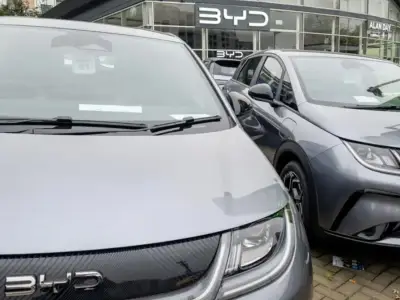
There are now over 90 models of EVs available on the Irish market, a significant increase from fewer than 20 five years ago and less than five a decade ago. Emma Mitchell of the Society of the Irish Motor Industry (Simi) noted the success of previous scrappage schemes: "The scrappage schemes in 1996 and 2010 were very successful. There were around 30,000 cars sold on the last scheme and it ran for 18 months."
Mitchell expects the current scheme to be popular: "It’s positive in the sense that it will increase the number of fully electric cars – which is a good thing – and remove some of the higher-emitting cars." She anticipates the scheme will be oversubscribed quickly: "It won’t run for the six months – it’ll be over much sooner than that."
Targeting Rural and Urban Areas
Professor Brian Caulfield from Trinity College Dublin commented on the distribution of EVs: "The research on sales data today demonstrates that the majority of electric vehicles are being sold in affluent, urban Ireland." He argued that targeted measures like those announced could level the playing field.
Caulfield emphasised the importance of location: "Over 50 per cent of these vehicles are being sold in Cork and Dublin. People that live in urban areas tend to drive shorter distances." He noted that rural drivers, with limited public transport alternatives, travel longer distances and produce higher emissions. "Our research has shown that an electric vehicle in rural Ireland could save 35 per cent more emissions due to the greater distances travelled than those electric vehicles sold in urban Ireland."
The scheme aims to accelerate the transition to cleaner vehicles, reduce emissions, and make EVs more accessible to a broader population.