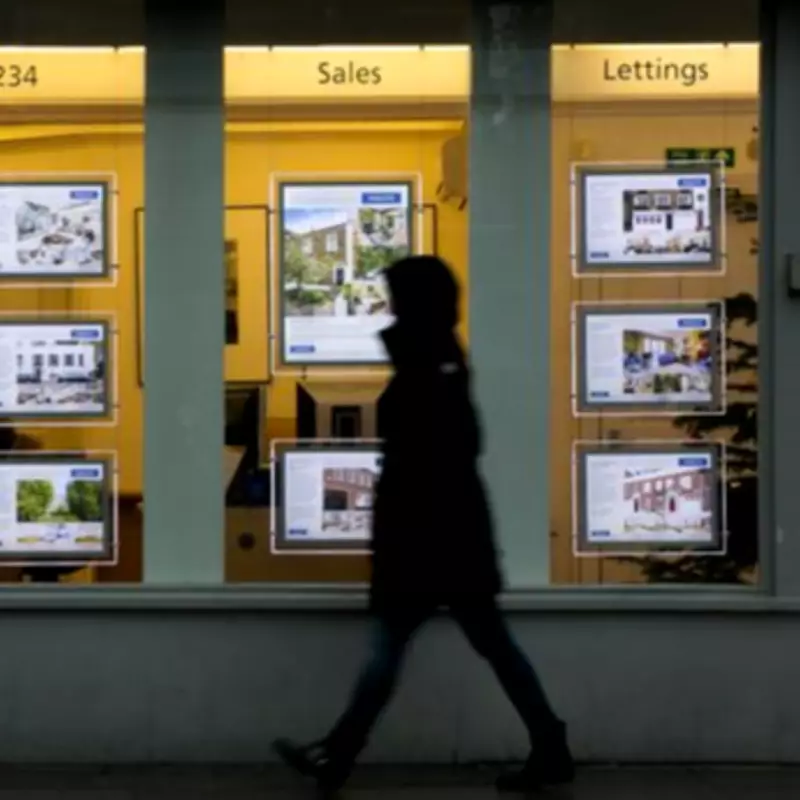
UK House Prices Experience March Decline Amid Global Uncertainty
Halifax has reported a notable shift in the UK housing market, with average house prices falling by 0.5% in March, following a modest 0.3% rise in February. This decline brings the typical property price across the nation to £299,677, reflecting growing economic pressures and external geopolitical factors.
Annual Growth Slows as Regional Disparities Widen
The annual growth rate for house prices has also decelerated, dropping from 1.2% in February to 0.8% in March. This slowdown underscores a broader trend of market volatility, with significant regional variations continuing to shape the landscape. Northern regions are demonstrating stronger resilience, while southern areas face more subdued conditions.
Northern Ireland remains at the forefront of UK annual house price growth, with an impressive 8.7% increase over the past year, pushing average prices to £224,809. Scotland follows with robust growth of 4.4%, resulting in an average property value of £222,716. In contrast, Wales recorded a more modest annual rise of 1.6%, bringing typical home values to £230,909.
England's North-South Divide Intensifies
Within England, the divide between northern and southern markets is becoming increasingly pronounced. The North East saw prices climb by 5% annually to £184,119, while the North West experienced a 3.1% increase, with average homes now costing £247,442. Conversely, southern regions are grappling with price declines. The South East led the downturn with a 1.9% year-on-year drop to £383,573, and London witnessed a 1.2% decrease, bringing average values down to £536,751.
Expert Insights on Market Dynamics
Amanda Bryden, Head of Mortgages at Halifax, highlighted the impact of the ongoing conflict in the Middle East on market confidence. She explained, "The recent slowdown in the housing market reflects widespread uncertainty. Concerns about higher energy prices have driven up inflation expectations, leading to increased mortgage rates. This has reduced optimism about potential interest rate cuts this year, dampening the initial momentum observed at the start of the year."
Bryden emphasized that the future trajectory of house prices will depend heavily on the duration of these external pressures and their broader economic implications, including effects on unemployment. She noted, "Mortgage rates are a critical factor for buyers, especially first-time purchasers who are already navigating the challenges of saving for a deposit while managing borrowing costs. Many are likely to monitor mortgage rate movements closely before committing to a home purchase."
Despite the current challenges, Bryden pointed out that the recent increase in UK mortgage rates has been more moderate compared to the sharp spikes seen during the 2022 mini-budget. Additionally, many households are protected by fixed-rate deals, which could help maintain price resilience even as uncertainty temporarily curbs market activity.
Additional Perspectives on Market Resilience
Katy Eatenton, Mortgage & Protection Specialist at St Albans-based Lifetime Wealth Management, provided further context, stating, "The duration of the Middle East conflict will be crucial for the property market's performance in the coming months. If a ceasefire holds and peace is achieved, conditions may begin to improve, but confidence remains fragile for now. The momentum seen earlier this year has been significantly impacted, though not entirely destroyed, by these international events."
This analysis underscores the complex interplay between global geopolitical tensions and local economic factors, shaping a housing market that remains in flux. As buyers and sellers navigate this uncertain environment, professional advice is increasingly vital for making informed decisions tailored to individual circumstances.