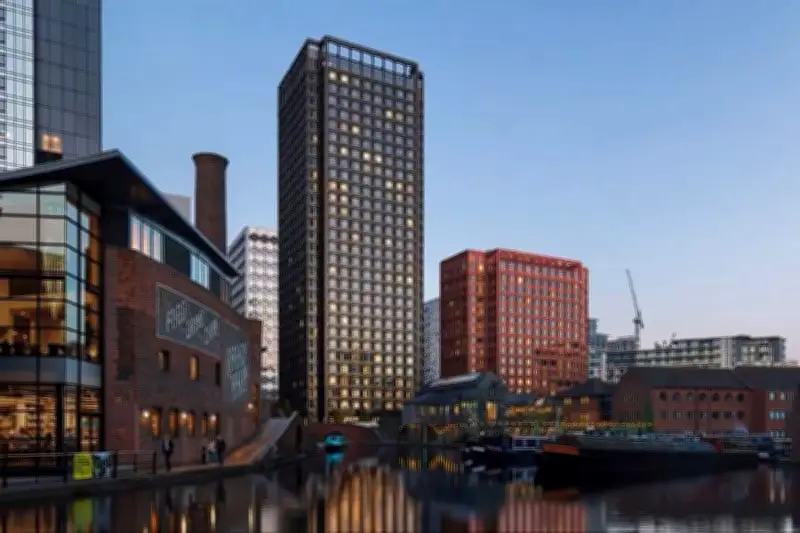
On a cloudy Wednesday afternoon in the Jewellery Quarter, I am being seduced. “And this is where our tenants work from,” says the managing agent, gesturing to a heap of colourful beanbags on beige floor tiles. They’re part of the ‘sky garden’ at Landrow Place, a 15-storey tower block offering stunning city views. The fantasy is powerful: making friends at regular ‘Matcha Mornings’, working out in a slick 24-hour gym, rainy days in the cinema suite. Every amenity on my doorstep. The estate agent calls it “convenience living.”
I’m 29, without a joint income or the bank of mum and dad. Buying a house is out of the question. I’m stuck in private rental purgatory, like 46% of Birmingham residents who rent. The average first-time buyer age ranges from 31 to 35 depending on the neighbourhood. Instead of structural economic changes, developers have alighted on a new product for people like me: Build to Rent (BTR).
What is Build to Rent?
Build to Rent emerged in the UK after a 2012 housing report, the Montague Review, commissioned by the Conservative government. It recommended planning flexibility, release of public sector land, and a dedicated task force to attract institutional investment into large-scale rental developments—a model long established in the US and Germany. Fast forward 15 years, and the sector is booming in Birmingham.
Landrow Place is one of 26 luxury residential developments built exclusively for renters in the city. An additional 37 developments offering 20,266 homes are in the pipeline, making Birmingham the largest BTR market in the UK outside London. Historically, the rental market was dominated by private landlords with single or small portfolios. Now, giant institutional investors—like pension funds and hedge funds—are buying up existing houses and funding new rental properties. Research shows four out of five top BTR developers are funded by private equity, many not based in the UK.
Luxury Amenities for a Stress-Free Life
Unlike private rentals, BTRs often come with premium amenities: 24-hour gyms, co-working spaces, plush lounges, and social events. Maintenance and resident services are provided by onsite management agencies. Marketing videos sell a relaxed, stress-free life to young professionals and couples. But the housing crisis is broadening the demographic, says Alex Notay, CEO of the Housing Forum, representing the entire housing supply chain. “Now divorcees, retired couples, and families are in the mix,” Notay says.
Why the Boom? Population Growth and Property Prices
The reasons behind the rise of BTRs are clear: rampant demand for housing in Birmingham. The city’s population is estimated to grow 7% to 1,230,000 by 2038. Property prices have soared, meaning fewer people can afford to buy. Most will end up in private rentals. This raises the question: is BTR a housing revolution or another precarious stopgap for those seeking a stable home?
This story is part of our in-depth journalism examining the place you live. For full access to local news that matters, consider subscribing.