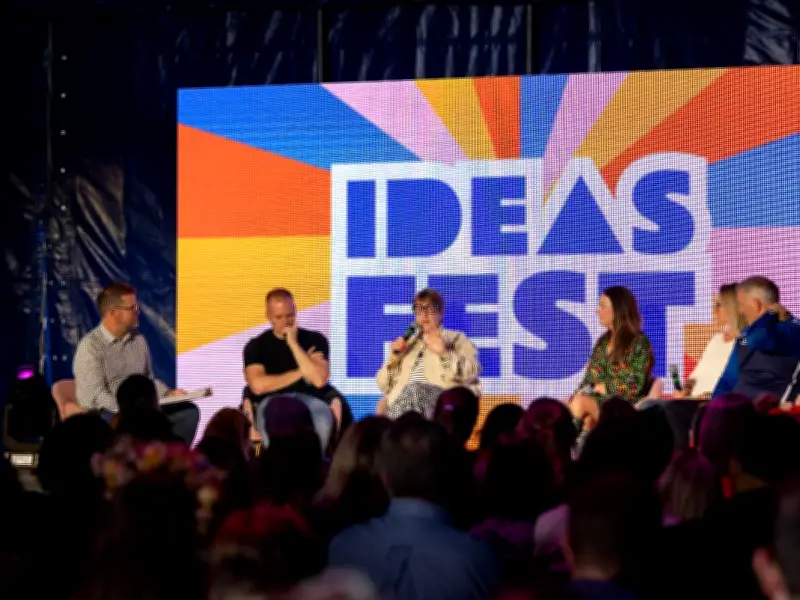
Ideas Fest, the festival-style business event created five years ago to move away from conventional conferences, will return to Champneys Resort in Tring, Hertfordshire, in September. This year, 6,000 people will gather for two days of talks, workshops and informal meetings, with more than 500 speakers participating across stages and tents covering start-up, growth, investment, leadership and exits.
From PowerPoint to festival field
Writing for Business Live, Dylan Jones-Evans, who co-created Ideas Fest, said he has attended more business conferences than he cares to remember. Many follow the same formula, with a windowless hotel function room, a succession of PowerPoint presentations, a buffet lunch and people wearing name badges while trying to work out who might be useful to them.
Good conferences can inform, challenge and connect, but entrepreneurship is not a conventional activity, and entrepreneurs rarely flourish in conventional environments, he argued. Inspired by festivals such as Green Man, the team behind Ideas Fest set out to create an event in a field where founders could hear honest stories, make unexpected connections, test ideas and spend time with people who understand the exhilaration and occasional loneliness of building a business.
Talks, food and music at Champneys Tring
To keep the festival spirit alive, this year's event will include food traders, bars, a wellness area and music from Rick Parfitt Junior and DJ Fat Tony. Alongside established entrepreneurs, there will be people at the beginning of their journey, investors, advisers and others who support growing firms.
Jones-Evans said the numbers matter less than the purpose. In his experience working with entrepreneurs over the last thirty years, entrepreneurship is often presented as a largely technical process: write a business plan, identify a market, secure finance and assemble a team. While all those things matter, anyone who has built a company knows the real journey is far messier, as founders often face decisions with no textbook answer.
Real talk and candid conversations
Ideas Fest is deliberately designed to encourage what the organisers call “real talk”. Speakers are asked to share lessons rather than deliver polished corporate presentations. The best contributions are often those in which an entrepreneur explains a mistake they would never repeat or admits they did not always have the confidence others assumed they had.
Jones-Evans said entrepreneurs benefit from hearing not only what worked but also what failed; not only how much money was raised but also how close a business came to running out of funds; and not only the successful exit but also the personal sacrifices made along the way. Those candid conversations make entrepreneurship more human and help founders understand that difficulty is not evidence that they do not belong.
UK-wide ambition and Welsh connections
The event also provides a platform for ambition from across the UK. Through the Start Up Awards and the Fast Growth Index, Jones-Evans said he encounters thousands of remarkable businesses each year. Many create jobs, develop new products and transform their communities without receiving the attention they deserve. Bringing founders together from every part of the nation matters because ambition is contagious.
This is particularly important for Wales, he added. The country has no shortage of entrepreneurial talent, yet too many founders remain disconnected from the networks, finance and opportunities that could help them grow. If Wales wants to build a more productive economy, it must help ambitious Welsh businesses build relationships beyond their immediate geography while maintaining strong roots in their communities.
Jones-Evans concluded that the real value of Ideas Fest lies not in what happens over two days but in what follows: the introduction that becomes an investment, the conversation that becomes a partnership, the idea that becomes a new product, or the renewed confidence that enables a founder to make one more attempt. Economic development sometimes assumes entrepreneurship can be manufactured through programmes and processes, but successful ecosystems are ultimately built around people, trust and relationships.