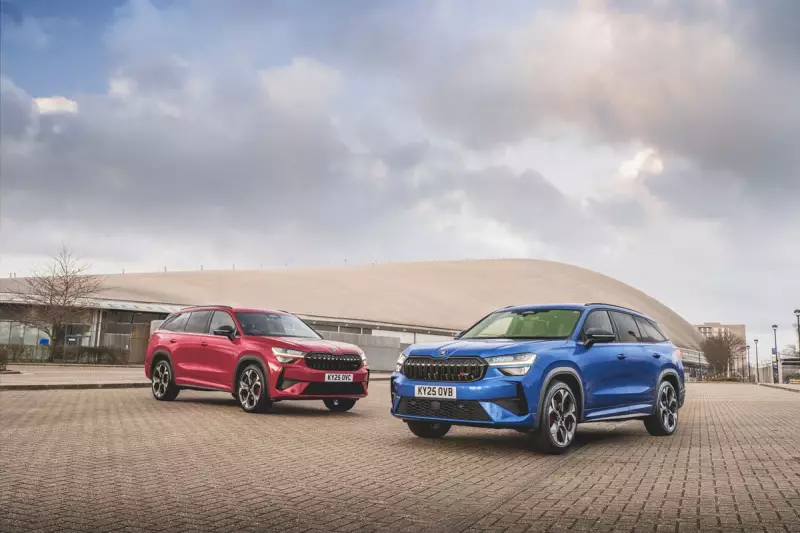
In a motoring landscape often resigned to dull people-carriers, Skoda has attempted to inject some excitement into the school run with the Kodiaq vRS. Launched in early 2026, this seven-seater SUV borrows its mechanical heart from something far sportier, promising a blend of practicality and performance.
Journalist Gareth Butterfield got behind the wheel to see if this family-focused model can genuinely put a smile on a driver's face, or if it's a case of style over substance.
The vRS Proposition: GTI Power Meets Family Space
On paper, the Skoda Kodiaq vRS makes a compelling case for the car-mad parent. Under the bonnet lies a 2.0-litre turbocharged petrol engine sourced directly from the Volkswagen Golf GTI, producing a healthy 262bhp.

This power is sent to all four wheels via a seven-speed DSG automatic gearbox, resulting in a claimed 0-60mph time of just 6.4 seconds and a top speed of 143mph. It's a specification that, on the surface, seems to bridge the gap between family duty and driving enjoyment.
The cabin retains all the clever, practical touches the standard Kodiaq is famous for, including generous space, umbrellas in the doors, and ingenious storage solutions. These are now complemented by sporty aesthetic details to remind occupants they're in the range-topping vRS model.
Driving Dynamics: The Reality of a Heavy SUV
However, the driving experience reveals the inevitable compromises. While the powertrain is potent, in an era of 400bhp-plus performance SUVs, the 262bhp doesn't feel as explosive as the figures might suggest. The car's considerable size and weight mute the sensation of speed.
On a twisting road, the Kodiaq vRS is competent rather than thrilling. The steering is well-weighted but lacks the sharp feedback of a true hot hatch. The ride is comfortable, but the laws of physics mean this large, heavy vehicle cannot disguise its mass when pushed hard through corners, despite ample grip and the availability of dynamic driving modes.
The DSG gearbox is a highlight, delivering swift shifts, though it will intervene and change up automatically if the driver holds onto gears for too long. An artificial exhaust note, dubbed 'Dynamic Sound Boost', is piped into the cabin. It provides an entertaining, V8-like burble on start-up but can become tiresome on a long motorway cruise.
The Verdict: A Compromise, But a Clever One
The ultimate strength of the Kodiaq vRS is the brilliant foundation it's built upon. The standard Kodiaq is renowned for its class-leading practicality, build quality, and usability, and the vRS version does nothing to diminish these core virtues.
It leaves you appreciating that such a car exists. For those who need to ferry a large family but crave a little more sparkle than a standard diesel SUV provides, the vRS fits the bill perfectly. It's a practical seven-seater with a definite fire in its belly.
Yet, the conclusion for the true enthusiast might be different. If your heart truly yearns for driving thrills, the money saved by choosing a standard Kodiaq and spending the vRS premium on a dedicated sports car could be a wiser move.
For everyone else, the Skoda Kodiaq vRS, reviewed by Gareth Butterfield in January 2026, remains a uniquely appealing proposition: a genuinely practical family workhorse that hasn't forgotten how to have a bit of fun, even if it doesn't push your buttons too hard.