Nearly 19,000 alarming images were captured during a two-week AI-powered road safety trial in Birmingham and Wolverhampton, revealing what officials describe as reckless behaviour that puts lives at risk. The trial, funded by the West Midlands Combined Authority in collaboration with police and fire services, used state-of-the-art AI camera systems set up outside Ladywood and Fallings Park fire stations in March.
Trial reveals shocking examples of risky driving
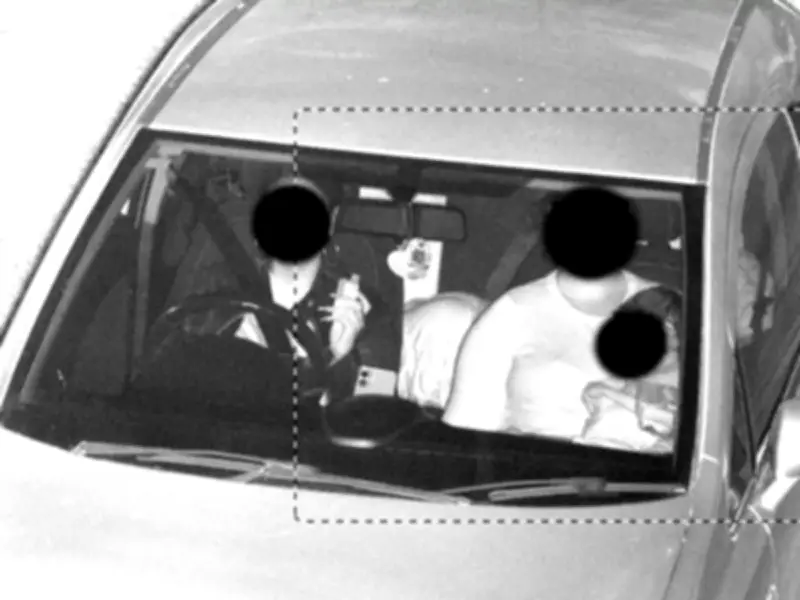
Among the images released by the West Midlands Combined Authority (WMCA) was a front-seat passenger with a small child on their lap with no seatbelt, leaving the toddler completely unprotected in the event of a collision. This was one of dozens of examples of children travelling in vehicles without age-appropriate restraints.
Another image showed a driver holding a mobile phone with both hands, with their eyes on the screen rather than the road. A third motorist was captured holding a phone to their ear, with their other hand on the steering wheel.
Thousands of potential offences recorded
Initial image scans from the trial found 11,144 potential non-use of seat belt offences and 1,163 potential mobile phone use offences in Ladywood. In Fallings Park, there were 6,081 potential seatbelt offences and 757 potential mobile phone offences.
Because it was a trial, there was no follow-up enforcement of the violations. The exercise intended, in the first instance, to help understand the potential scale of the problem.
Officials condemn reckless behaviour
Richard Parker, Mayor of the West Midlands, said: “The number of people risking their own lives and the lives of others, including some very young children, is frankly shocking and far higher than we expected when setting up the trial. The law is clear on seatbelts and mobile phones. I’ve met families who have lost loved ones to reckless driving. They never recover from these tragedies; the grief is always there. People need to stop doing this, it is simply not worth the risk. As we review these results with our Road Safety Partnership and look to next steps, I promise to use every resource available, including new technology like this, to make our streets safer for everyone.”
West Midlands Police and Crime Commissioner and chair of the road safety partnership board, Simon Foster, added: "These initial findings are deeply concerning. Let me be absolutely clear: reducing the number of people killed and seriously injured on our roads remains our absolute top priority. We are closely evaluating these trial results to consider how this advanced AI technology can be deployed for future police enforcement. We cannot tolerate reckless behaviour that puts lives at risk, and we will use every effective tool at our disposal to ensure our roads are safer."
Next steps for road safety technology
Mat MacDonald, West Midlands Road Safety Commissioner, said mobile phone use at the wheel and failing to wear a seatbelt were 'two of the leading causes of death and serious injury on our road network'. He added: "Yet you barely have to leave your front door before you see someone taking these potentially lethal risks. Our work with this cutting-edge technology shows we will stop at nothing to stamp out such behaviours, fostering a safer culture of driving on our streets and preventing yet more families going through the anguish of losing a loved one to avoidable tragedy."
The trial results will now be reviewed by the Road Safety Partnership to consider how the AI technology could be deployed for future police enforcement, with a focus on reducing the number of people killed and seriously injured on the region's roads.