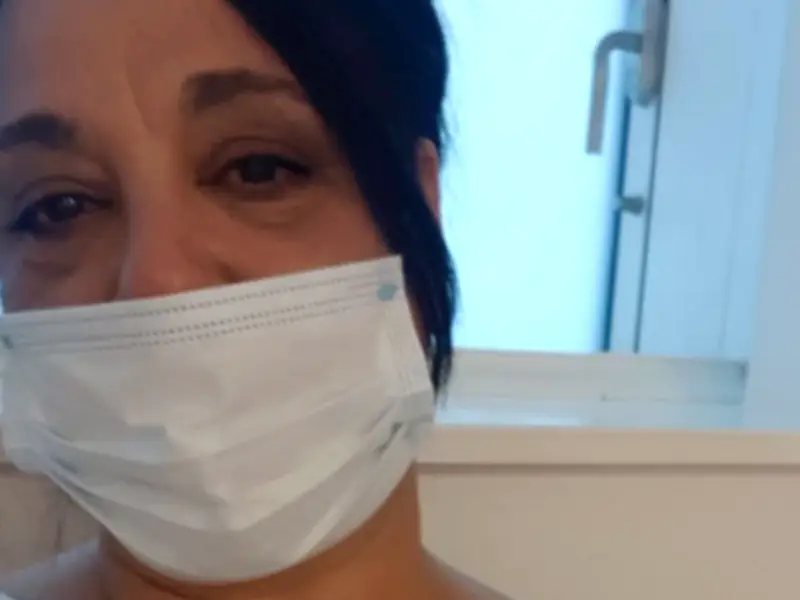
A former Dragon's Den contestant from Birmingham has been left with permanent vision loss in her left eye after NHS doctors failed to diagnose a serious condition despite her displaying classic symptoms. Noora Lewis, 63, a former cosmetics businesswoman, is now speaking out to raise awareness of giant cell arteritis, a condition that requires urgent treatment to prevent irreversible blindness.
Missed opportunities at Birmingham hospitals
Noora presented symptoms including headaches, jaw discomfort, sensitive temples and pain affecting the right side of her face. Despite consultations at Birmingham and Midland Eye Centre and City Hospital, she was not identified as having giant cell arteritis. She began losing her eyesight before receiving the diagnosis almost four months after initially seeking medical help, and it proved too late to stop the irreversible loss of vision in her left eye.
Noora engaged specialist medical negligence solicitors at Irwin Mitchell to examine whether prompt diagnosis and intervention might have prevented her sight loss. Sandwell and West Birmingham NHS Trust, which operates the eye centre and City Hospital, acknowledged a breach of duty. It recognised failings in managing suspected giant cell arteritis properly and conducting the required investigations. The Trust also conceded that, with suitable care, the mum-of-one and grandmother-of-four would probably have escaped complications, including the damage to her vision.

Timeline of missed warnings
Noora visited Birmingham and Midland Eye Centre on 24 May 2021, following a pair of GP appointments. The eye centre initially identified her condition as uveitis — an inflammation within the eye. Her symptoms persisted despite taking pain relief medication, and on 10 June she consulted her GP, who raised concerns about giant cell arteritis. Noora was urgently advised to go to hospital, with a warning that she risked losing her sight without appropriate treatment.
She made her way to City Hospital, where a doctor noted an absent pulse in her right temporal artery — a critical indicator of giant cell arteritis — yet failed to investigate further and sent her home, having administered only a single day's course of steroid treatment. She went back to City Hospital on 14 June where two doctors examined her. Despite her continuing symptoms and previous worries, they failed to conduct any tests to determine whether she had giant cell arteritis.
On 25 July, Noora suffered visual problems in her left eye and was taken to City Hospital. She stayed in hospital for three days while undergoing examinations. Her giant cell arteritis diagnosis was confirmed on 2 August 2021.
Life-changing impact
Noora now finds simple everyday activities challenging, struggling to read, cook, travel and shop without assistance. She now depends on her daughter and friends for help. Noora had worked as a self-employed makeup demonstrator and product promoter and had featured on BBC One's Dragon's Den in 2012, where she presented her beauty product "flick tips".
Jenna Harris, specialist medical negligence lawyer at Irwin Mitchell representing Noora, said: "Noora has been through a life-changing experience and is still struggling to adapt. The impact on her independence, ability to work and emotional wellbeing has been significant.
"While nothing can make up for her ordeal, we welcome the Trust's admission. We're now supporting Noora access the specialist support she requires to help her adjust to life and regain confidence in her day-to-day activities.
"Her experience highlights the importance of recognising the symptoms of conditions such as giant cell arteritis and ensuring urgent treatment is provided to help prevent avoidable harm."
Speaking out to raise awareness
Noora said: "When I was finally diagnosed with giant cell arteritis, I felt angry. Thinking back, I had all the symptoms and can't understand why I was left untreated for so long.
"My life has completely changed since losing my vision. The simplest tasks are now the hardest and I struggle with day-to-day things I used to take for granted, like shopping and using my phone, as letters and numbers appear distorted and can be very confusing.

"At times I even feel like a danger to myself – I've left the gas hob on without realising and now only drive very short distances, often having to rely on a friend or my daughter. It's upsetting because I used to pick my grandchildren up from school and spend a lot of time with them, but I no longer feel it would be safe and don't see them as often as I used to.
"I've always loved make-up and most of my working life was built around it, but I struggle to do my own now. When I was self-employed, I loved attending events and meeting new people. Now, because of my vision loss, I'd struggle to demonstrate my products and no longer feel confident speaking to strangers.
"I don't feel like myself anymore. I used to be the fun one. I loved going out with friends or having people over for dinner, but I lack confidence now and find I'm much more anxious, which is so unlike me. I just want to get back to how I was, spending time with my friends and enjoying life again.
"Losing my vision has had a huge impact on my mental health. I frequently have nightmares about going blind, and I constantly worry about what would happen if something affected my other eye.
"I feel like I'm stuck in limbo, but I'm hopeful I'll be able to get the support I need to move on with my life.
"After reading stories about other people with giant cell arteritis, I was inspired to speak out. By sharing my story, I hope to raise awareness of giant cell arteritis, symptoms to look out for, and the reality of people like me living with the condition."
Dr Mark Anderson, group chief medical officer at the NHS trust, offered an apology for the shortcomings, adding that an inquiry had pinpointed missed opportunities, leading to enhancements in clinical procedures since then. He said: "We have acknowledged that aspects of the care provided fell below the standard we expect and have accepted liability in relation to those failings.
"We recognise the distress caused and the devastating effect that the loss of sight has had on her and her family, and have apologised for this."