A remarkable collection of historical photographs has surfaced, offering a poignant glimpse into the everyday life and work of Macclesfield and its surrounding areas in decades gone by. The images, carefully preserved in the Cheshire Archives and Local Studies, capture a world of horse-drawn transport, agricultural labour, and community gatherings that have long since faded from the modern streetscape.
A Snapshot of Early 20th Century Life
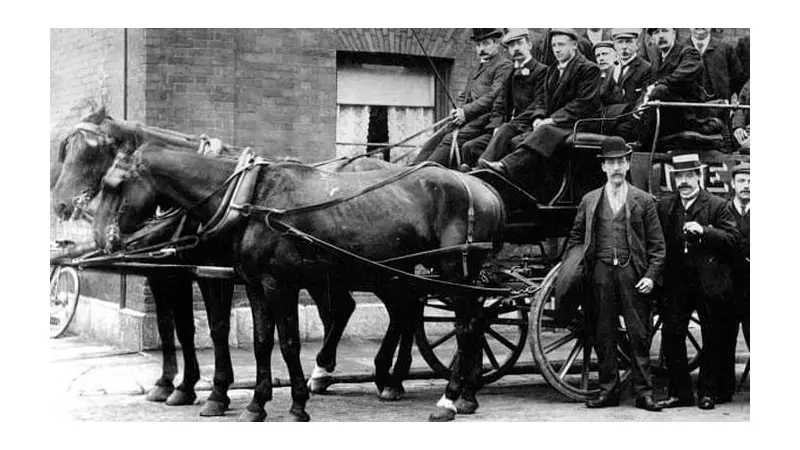
The featured cover image, dating from the 1900s, presents a charming scene of a group of men preparing for an excursion. They are pictured in and alongside a horse-drawn carriage, seemingly ready to depart from The Joiners Arms. This image perfectly encapsulates the primary mode of transport and social leisure before the dominance of the automobile.
Another evocative scene from the same early period shows the hustle and bustle of Market Day at the cattle market in Waters Green, Macclesfield. The photograph is filled with people and animals, with the market buildings and a church forming a distinctive backdrop. It serves as a powerful reminder of the town's agricultural and commercial heart.
Rural Work and Industry Captured on Film
The archives also reveal the hard graft of rural Cheshire. A photograph from the 1930s depicts a plough team hard at work in the fields of Lostock Hall Farm in Poynton. Meanwhile, a shot from the 1920s takes us to the heart of village industry, showing both horses and men at the forge on Park Lane, Poynton.
Further evidence of local commerce comes from an undated image related to the Hollins Steam Laundry company in Langley. It features a man and a boy with a horse and cart, with a building in the background believed to be the laundry itself at River Mills. These photographs collectively tell the story of a community powered by muscle, steam, and skilled hands.
Preserving Community Memory
These enchanting images do more than just document changing fashions and technology; they preserve the texture of community life. From the camaraderie of a group outing to the focused work of the farm and forge, each picture adds a layer to our understanding of the region's social and economic history. The Cheshire Archives and Local Studies performs a vital role in safeguarding this visual heritage, allowing current and future generations to connect with the tangible past of Macclesfield, Poynton, and Langley.
Such collections are invaluable, transforming local heritage from an abstract concept into a relatable narrative filled with familiar landscapes and the faces of those who shaped them. They remind us that history is not just about grand events, but also about the markets, workplaces, and Sunday outings that defined daily existence for our predecessors.