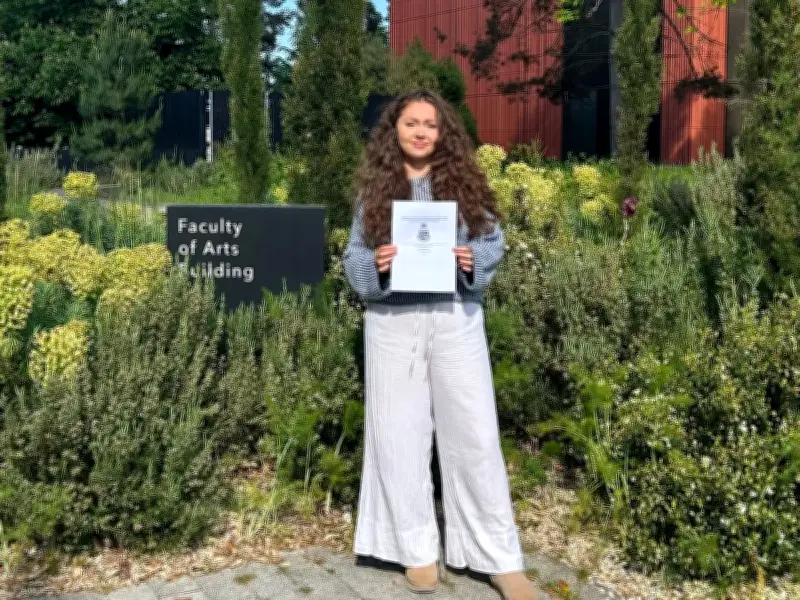
Kara Evans, a first-generation student from Dudley who studied at the University of Warwick, has spoken out about the discrimination she faced because of her Black Country accent, describing it as an "accent tax" that affected her university experience.
Evans, who attended the Russell Group university from a low-income, state-school background, said her accent was treated as evidence of where she came from and where she supposedly belonged. She faced mockery, imitation, and correction from peers and faculty, with some telling her that the way she said certain words was "wrong."
A Culture Shock on Campus
During freshers week, one person on her course refused to speak to her at a society event after learning where she was from. Others hid their bias behind humour, and when she didn't laugh at imitations of her accent, she was told she should "just speak properly" if she didn't want people to comment on it.

Evans said the accent tax meant she was constantly repeating herself, softening how she spoke, and adding context to every statement she made, justifying why she was "hard to understand." She described it as an invisible price to pay, using half her energy managing how she would be received rather than focusing on what she was actually going to say.
Placed at the Back of the Intellectual Queue
In seminars, Evans felt she was "placed at the back of the intellectual queue." When she answered questions, tutors seemed to brush past her perspective, but when someone else without an obvious accent made a similar point, they were "placed on a pedestal" that left her questioning her own capabilities.
Despite not struggling academically, people would react in shock when grades were discussed in class and they realised she was doing just as well, if not better. Her working-class background played into people's assumptions and dismissal of her presence on campus, reflecting Britain's historical class system and the societal hierarchy of accents where working-class accents rank the lowest.
Considering Dropping Out
The culture shock of coming to campus as a first-generation student from a low-income, state-school background in Dudley was significant. Evans said her first term was not a time she would wish to relive, struggling to meet people on her course and having her accent pointed out more times than she could count.
After numerous teary-eyed phone calls home, she considered dropping out, taking a gap year, or transferring to the University of Birmingham to live at home. Although she didn't stray far from home for university—only 50 minutes down the M42—she couldn't shake the feeling that she didn't belong, doubting whether she deserved to be at the university at all despite working hard to meet the requirements of her contextual offer.
Evans said that while progress has been made in opening pathways for people from low-income backgrounds to enter higher education, acceptance remains one of the greatest barriers. Being admitted to university was not the same as being truly accepted. She eventually found her people on campus, but felt the university could have done more to encourage greater acceptance towards students who didn't fit into the traditional Warwick student mould.
While she acknowledged that classism and accent bias are almost inevitable in such institutions, she argued it should not be trivialised, accepted, or normalised.
A spokesperson for the University of Warwick said they are "sorry to hear about this student's experience" and highlighted its social inclusion strategy, stating: "We aim to create an environment in which every student can participate and contribute confidently, regardless of their background or circumstances."