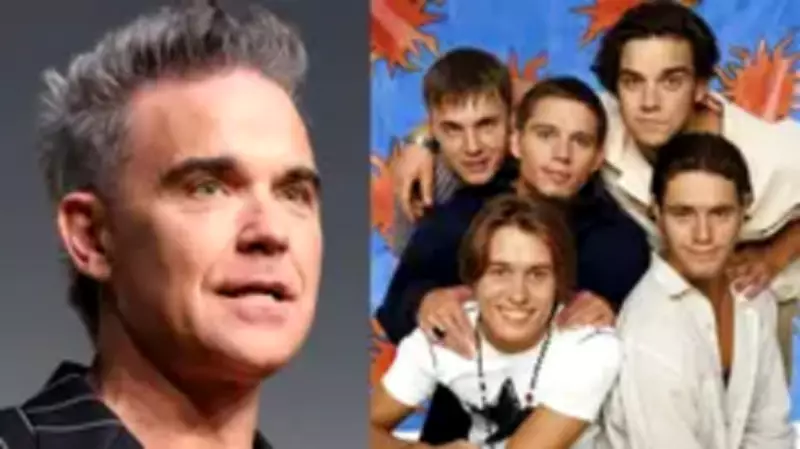
Robbie Williams has broken his silence regarding his appearance in the new Netflix documentary about Take That, expressing profound regret and describing himself as "full of shame" after viewing the series. The pop icon made these candid remarks during a performance in Liverpool, directly addressing a sold-out audience about his feelings towards the show.
Emotional Confession During Liverpool Concert
While performing at Liverpool's Olympia on February 6 as part of his Long 90s tour, Williams paused to discuss the documentary with concertgoers. According to reports from the Liverpool Echo, the 49-year-old singer asked the crowd "Did anybody see the Take That documentary?" before launching into an emotional reflection about his portrayal in the series.
Williams specifically referenced episode two, where he admitted "I'm a right c*** aren't I?" He revealed that he had spent the previous two weeks regretting comments made about fellow band member Gary Barlow, stating "I shouldn't have said that about Gary. Honestly, I've been going to bed with it, [thinking] I was so mean, I shouldn't have said that."
Documentary Explores Band's Complex History
The three-part Netflix documentary charts Take That's remarkable journey from their origins as a Manchester boyband to becoming a global phenomenon. The series revisits both the triumphant highs and painful fallouts that have defined the group's thirty-five year history, including Williams' dramatic departure in 1995 which became one of pop music's most discussed moments.
While the remaining members reunited in 2005 and continued as a trio following Jason Orange's departure, the documentary provides fresh insight into the band's complex dynamics. It explores the relationships between Gary Barlow, Howard Donald, Mark Owen, Jason Orange, and Robbie Williams, balancing celebration of their enduring friendship with honest examination of past tensions.
Gary Barlow's Personal Struggles Revealed
One of the documentary's most poignant moments features Gary Barlow opening up about his battle with bulimia following the band's initial split in 1996. Barlow describes a thirteen-month period where he didn't leave his house, explaining "I'd started to put weight on, and the more weight I put on, the less people recognised me. I thought, this is good — this is what I've been waiting for. A normal life."
This mindset unfortunately spiraled into disordered eating, with Barlow recalling "One day, I thought, 'I've eaten too much, I need to get rid of this food.' You think it's only once, then suddenly you're walking down that corridor again and again." He eventually began turning his life around in 2003, noting that while it took only a few years to reach his lowest point, recovery required a decade of determined effort.
Band's Editorial Control and Advance Screenings
The documentary was directed by David Soutar and created with Take That's full blessing, with the group reportedly handing over complete editorial control to the filmmakers. Both Robbie Williams and former member Jason Orange received advance copies of the series before its public release.
At the documentary's premiere, Mark Owen confirmed to the Manchester Evening News that "We managed to get it to Rob and Jason. Whether they watched it is another thing." Gary Barlow emphasized that the band intended the series to celebrate rather than reopen old wounds, stating "A lot of the things people will be talking about, we addressed years ago. What you're seeing now is real relationships — ones that have lasted 35 years."
Williams' Complex Reflection on His Past
Williams' Liverpool comments revealed a mixture of shame and defiant pride about his past behavior. After expressing regret about his treatment of bandmates, he humorously noted "At rehearsals for Barrowland singing Ego a Go Go, I thought, 'no boy band member has ever left and gone, they're all c****.' Only me! I went from feeling shamed to f****** 'good for you, little Robbie.'"
The documentary combines never-before-seen footage, including clips filmed by Howard Donald over thirty-five years, to explore the band's dizzying rise to fame, their multiple breakups and reunions, and the personal struggles that occurred behind the public spotlight. As Take That steps back into the cultural conversation with this comprehensive Netflix series, Williams' emotional response highlights how past conflicts continue to resonate with band members decades later.