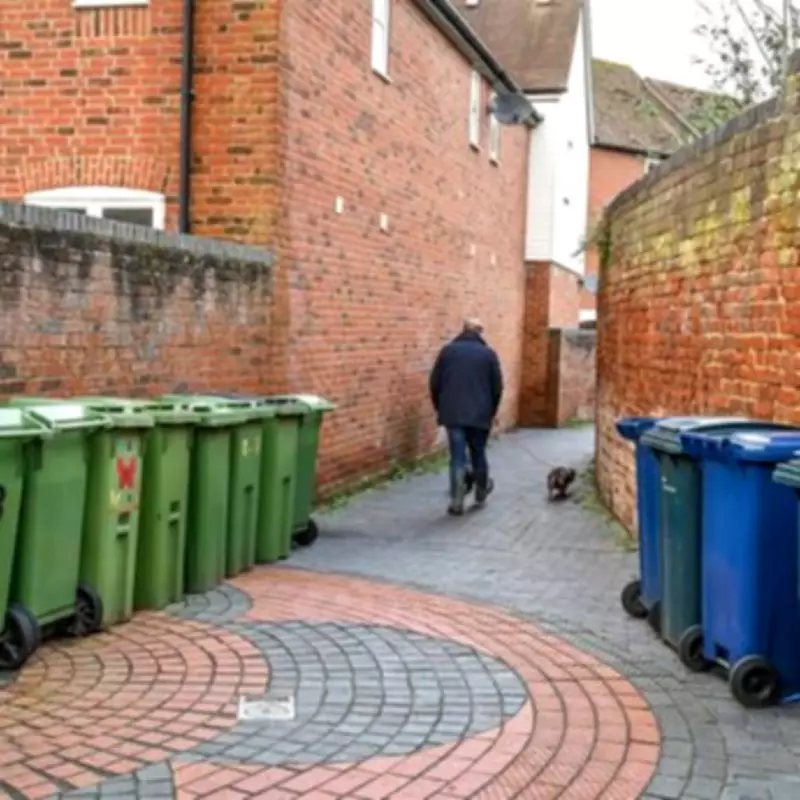
Tewkesbury Proposes Fines for Pavement Bin Offenders
A controversial six-month pilot scheme is being proposed in the historic Gloucestershire town of Tewkesbury, which could see residents facing financial penalties for leaving their wheelie bins on display after collection. The initiative follows a sustained campaign by the Tewkesbury Civic Society, which has raised significant concerns about the impact of 'bin blight' on the town's picturesque conservation area.
Conservation Concerns and Civic Campaign
The Tewkesbury Civic Society argues that bins left on pavements are severely degrading the town's historic streetscape. Alan Purkiss, Chair of the society, stated that the issue affects property values, inward investment, local business, and tourism, despite the challenge of quantifying the exact economic impact. "It's a lovely old town," Purkiss commented, "but if you're disabled, in a wheelchair, or with a buggy, you can't get past sometimes due to the bins."
He highlighted that narrow alleys are particularly problematic and noted that some residents have even threatened to leave the area because of the constant sight of bins outside their homes. The society is pushing the borough council to adopt stricter measures, similar to those in neighbouring areas like the Cotswolds, where enforcement is already routine.
Proposed Enforcement Measures
The council's task force has recommended changing current guidance from a mere "request" to a firm "requirement" that bins be removed from the street promptly after emptying. Under the proposed pilot, households that repeatedly fail to comply would first receive written warnings. Persistent offenders could then face fixed penalty notices as a last resort.
Councillor Murray Stewart, lead member for environmental services at Tewkesbury Borough Council, emphasised that the initial six-month phase would focus on support and education. "We will be working with residents first to understand their specific challenges," Stewart explained. "Any enforcement measures could come later and only if agreed. It would be a last resort."
Resident Reactions Mixed
Local opinions on the proposal are divided. Some residents, like 65-year-old Angela Hanbury, support the move. "Lots of people don't collect them so they could be out there for days," she said. "They are horrible, especially in the summer, they stink. It just makes the town smell." Hanbury added that fines could help make the town "so much nicer and cleaner" for both residents and the many summer visitors.
Retired architect Marty Trembath, 71, was even more forthright: "I hate all the bins. If you come as a tourist, why do you want to see bins everywhere? It's just ugly. Full stop." However, not everyone is in favour. Local doctor Kamila Pavlova, 45, dismissed the idea as "nonsense", citing practical difficulties such as being at work when bins need to be moved.
Broader Implications and Next Steps
The issue touches on wider concerns about accessibility, aesthetics, and community standards. The civic society contends that bins obstruct pavements for wheelchair users and parents with pushchairs, while also ruining the photographic appeal that draws visitors to the town. Purkiss drew a direct comparison with other anti-social behaviours, stating that persistent bin offences should be treated similarly to fines for spitting, dog fouling, graffiti, or littering.
A final decision on the pilot scheme will be made once a fully costed plan is submitted to the full council. The proposal underscores the ongoing tension between practical waste management and preserving the character of historic market towns, setting a precedent that could influence similar communities across the region.