
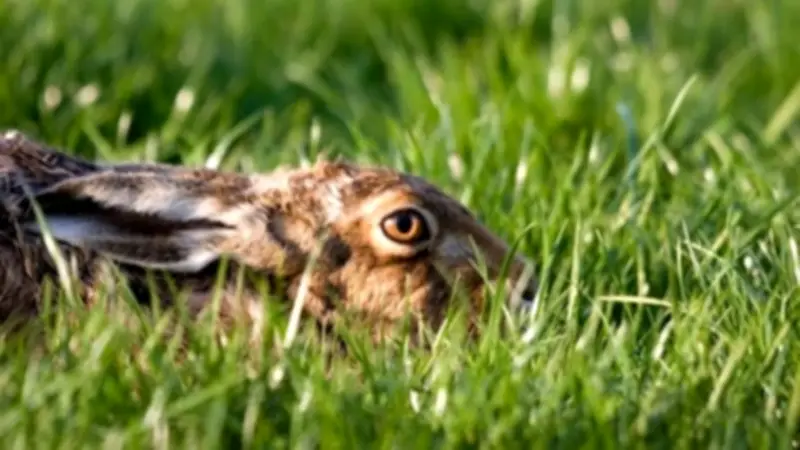
The brown hare, one of the countryside's most astonishing mammals, is being spotted in increasing numbers across Lancashire and Merseyside this summer, according to Alan Wright of The Wildlife Trust for Lancashire, Manchester and North Merseyside.
Wright reports seeing hares closer to home than ever before. He spotted one in a local meadow twice this month and was surprised by another leaping across the road behind his home. Yesterday, while visiting an innovative bullrush project in Merseyside, a hare was seen sitting in the sunshine in a just-cut meadow.
Bullrush project brings hares into view
The sighting came during a meeting with partners on the bullrush project, including local farmers and Ponda, a high quality clothing company. The bullrush are being made into lining for assorted clothing, including puffer jackets. Everyone on the trip spotted the lazy hare, which showed no intention of haring around the fields on a hot summer day.
Brown hares are easily distinguished from rabbits. They are bigger, longer and faster than bunnies, and have black-tipped ears that are pretty unmistakable as identification features. They can be close to a metre long when in full stretch.
Speeds of up to 45mph
In flight, the brown hare is magnificent, stretching its long body and reaching speeds of up to 45mph, earning it the title the Cheetah of the Mosses. It can certainly shift if it needs to.
While mountain hares are native to this country, brown hares are believed to have been introduced in the Iron Age or Roman times. That is such a long time ago that they are now naturalised and accepted as one of our own. They weren't brought as food but for sporting reasons, possibly to race. Their sporting past ended in the UK when legal hare coursing was banned.
Some cruel individuals still illegally set their dogs after these magnificent creatures on the mosses. Wright advises that these are not the kind of people you should approach, but encourages reporting them to the police.
Habitats and breeding habits
Hares prefer open farmland, surrounded by hedgerows and woodland where they can take cover. They feed on grasses and the bark of young trees. They shelter in shallow dips in the hedges and long grass, and in spring they can produce three to four litters of leverets.
For safety, they will leave their leverets in different hiding places. Wright recalls once finding one in the works yard at Brockholes Nature Reserve. He was with the BBC Countryfile team some years ago at Brockholes, very early in the morning. They had promised brown hares, and sure enough a buck and a doe arrived. Three other jacks arrived to bother the jill, and for the next 20 minutes the buck was batting off his amorous rivals, making for a lovely segment on Countryfile.
Wright notes that boxing hares generally happens between courting males and females, when the jill isn't quite ready for the jack's attention. Wildlife has been abundant this summer, and he encourages people to get out of the house to see something spectacular.
The Lancashire Wildlife Trust is seeking volunteers to plant and work on hedgerows to create habitats for brown hares. Support can also be given by becoming one of 30,000 members across the North West. To become a member, go to the website at www.lancswt.org.uk or call 01772 324129. For more information about Cheshire Wildlife Trust call 01948 820728 or go to www.cheshirewildlifetrust.org.uk.