
As autumn approaches, the gangs of corvids begin to mass—heard in trees and seen flying in formation. These birds, including crows, jackdaws, rooks, ravens, and jays, belong to one family, with hooded crows also appearing in Scotland. Their collective nouns range from the familiar to the fanciful, reflecting their behaviour and our perceptions of them.
Clatterings, Murders, and Murmurations
While starlings create the famous swooshing "murmurations," jackdaws produce noisy "clatterings" in local woodlands, and crows gather in sinister "murders." Alan Wright, writing for The Wildlife Trust for Lancashire, Manchester and North Merseyside, notes that "clatterings" is his favourite term, perfectly describing the sound of 300 jackdaws discussing current affairs in a tree.
Magpies boast the most collective nouns, likely due to their frequent sightings and suspicious behaviour. They can be a mischief, a conventicle, a mob, a tittering, or a gulp. Wright loves the idea of a "gulp" of magpies, imagining smaller birds gulping when a magnificent black and white bird scatters them from a bird table. He also pictures them tittering as passersby walk along a country lane, though it might be more of a chattering.
Jays, Ravens, and Rooks: Colourful Corvids
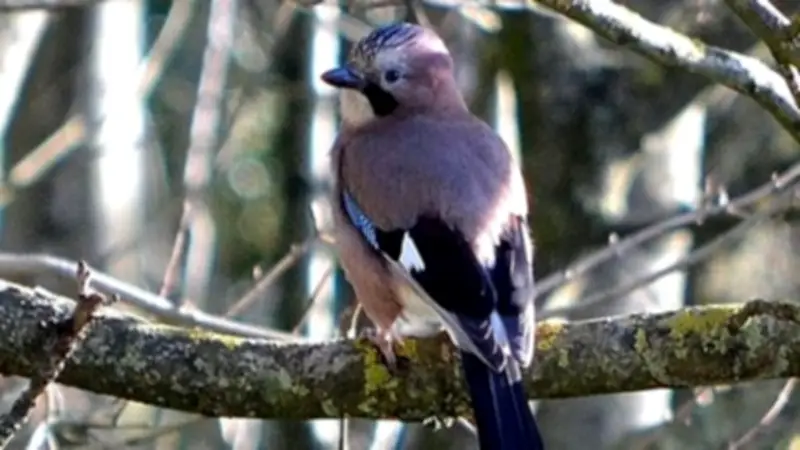
Jays are the most colourful corvids, gathering in a band, a party, or a scold—the latter taking a negative turn. These pinkish-buff birds have a black tail, white rump, black "moustache," and black-and-white wings with a blue patch. Spotting a jay is a delight, but often only the white rump is visible as it disappears into a bush.
Ravens are present in the North West, though Wright has only seen them on the mosses. They have nested on the football stadium and town hall in Wigan, but a conspiracy, constable, or unkindness is unlikely on the local patch. The term "unkindness" reflects ancestors' beliefs about the birds' intelligence as a sign of badness.
Rooks, another corvid family member, are commonly seen at motorway services on routes north, hanging around car parks for snacks. They group in buildings, clamours, or parliaments, and their colonies are known as rookeries. While easy to spot at service stations, rooks are more common in the countryside, with rookeries in churchyards and other areas near food sources in local fields.
Appreciating Corvids in Your Garden
Wright loves the corvids that visit his garden—jackdaws, magpies, and the odd crow—adding drama to the scene. Watching two broods of jackdaw fledglings being fed this year was wonderful. He emphasises the need to love all wildlife and ensure perfect habitats for living and breeding. "Life would be a lot less colourful without birds of all sorts and personalities," he says, "whether they are clattering, tittering, or gulping they are all special."
To become a member of The Wildlife Trust for Lancashire, Manchester and North Merseyside, visit www.lancswt.org.uk or call 01772 324129. For Cheshire Wildlife Trust, call 01948 820728 or visit www.cheshirewildlifetrust.org.uk.