
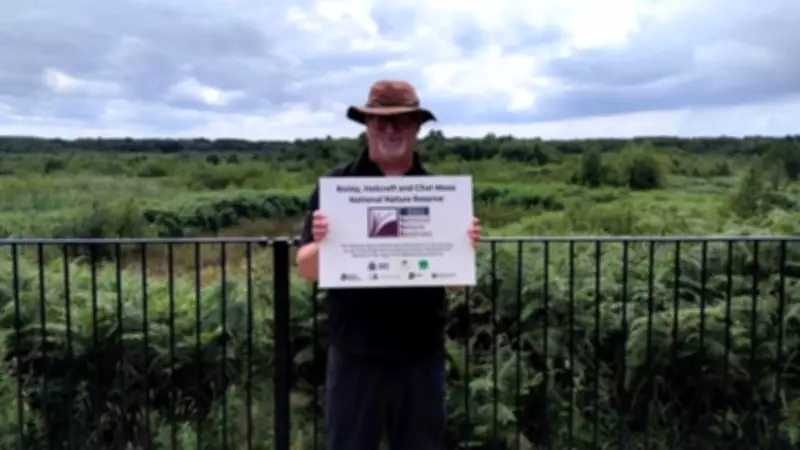
Chat Moss: Lancashire's Ancient Bog Transforms into King's National Nature Reserve
The Lancashire Wildlife Trust is celebrating a monumental achievement as Chat Moss, an ancient peat bog with a history stretching back millennia, has been officially designated as part of one of the King's National Nature Reserves. This remarkable area, now encompassing Risley, Holcroft and Chat Moss, represents thousands of years of natural and human history preserved within its unique landscape.
A Landscape Formed in Antiquity
From around 2500BC, Chat Moss began its transformation into the peat bog we recognise today. Originally covered with birch trees, the area gradually became more acidic, creating the perfect conditions for sphagnum moss to establish itself in the nutrient-poor soil. During this period, oak trees became buried beneath the accumulating sphagnum and peat. These ancient bog oaks, preserved for thousands of years, can still be observed at Little Woolden Moss today, serving as silent witnesses to a distant past.
For centuries, these bogs were perceived as treacherous places, filled with dark pools where one could easily become trapped, often shrouded in mysterious mists and fogs. The very name Woolden derives from the Viking term Vuluedene, meaning "Wolf Valley," suggesting that apex predators may have once roamed these wetlands, adding to their formidable reputation.
Archaeological Discoveries and Strategic Importance
In 1958, a significant archaeological discovery was made just north of Astley Moss. The skull known as "Worsley Man," dating from around 100AD during the Roman occupation of Britain, revealed a person who met a violent end through bludgeoning and beheading. This probable ritual sacrifice hints that the mosslands held deep religious significance for Iron Age communities, marking them as sacred spaces long before modern conservation efforts began.
Chat Moss has played a crucial strategic role in the North-west of England throughout history. Its challenging terrain forced numerous armies to detour on their journeys from north to south. Roman legions constructed roads around rather than through the treacherous bog, while Bonnie Prince Charlie famously diverted to Manchester in 1745 rather than attempt a crossing. The industrial revolution presented new challenges, particularly with the advent of the railway.
Engineering Marvels and Wartime Defence
Engineers faced the daunting question of how to transport huge steam trains across a landscape that even pedestrians approached with caution. Their ingenious solution involved floating the railway on wooden hurdles interspersed with heather, gradually drying tonnes of moss and adding it to embankments until stability was achieved. This remarkable feat of Victorian engineering demonstrates human adaptability in the face of natural obstacles.
During World War Two, Chat Moss served an unexpected defensive purpose. It was utilised as what became known as a permanent starfish site – deliberately set alight to create decoy fires that confused enemy aircraft into mistaking the glowing bog for the bright lights of Manchester. This clever ruse helped protect the city from aerial bombardment during the conflict.
Peat Extraction and Modern Conservation
In the post-war period, peat began to be extracted on an industrial scale using machinery, primarily for use as a growing medium in both domestic gardening and commercial horticulture. Unfortunately, this activity rapidly depleted the peat reserves on Chat Moss, with only two percent remaining today as activities like turf growing continue in some areas.
A significant turning point came in 2012 when mass peat extraction in Greater Manchester ceased, allowing nature to begin its recovery – albeit with considerable assistance from conservation organisations. Today, Chat Moss exists as a patchwork landscape, combining areas of ongoing peatland restoration with drained agricultural land that once formed part of the vast lowland-raised bog system.
A New Chapter as a National Nature Reserve
The designation of Chat Moss as part of the King's National Nature Reserve marks the beginning of an exciting new chapter for this historically rich environment. The area has become an excellent habitat for diverse wildlife, particularly at locations like Cadishead and Little Woolden Moss. These sites now support a fantastic array of plants, birds and insects, including species like the striking Emperor Moth, though the wolves of Viking lore are long gone.
This reserve represents a conservation success story thousands of years in the making, protecting not just natural heritage but also layers of human history that have shaped the landscape. The Lancashire Wildlife Trust continues its vital work in preserving this unique environment for future generations to study and enjoy.