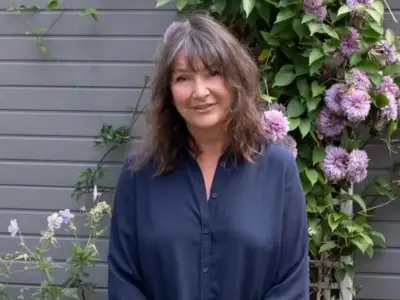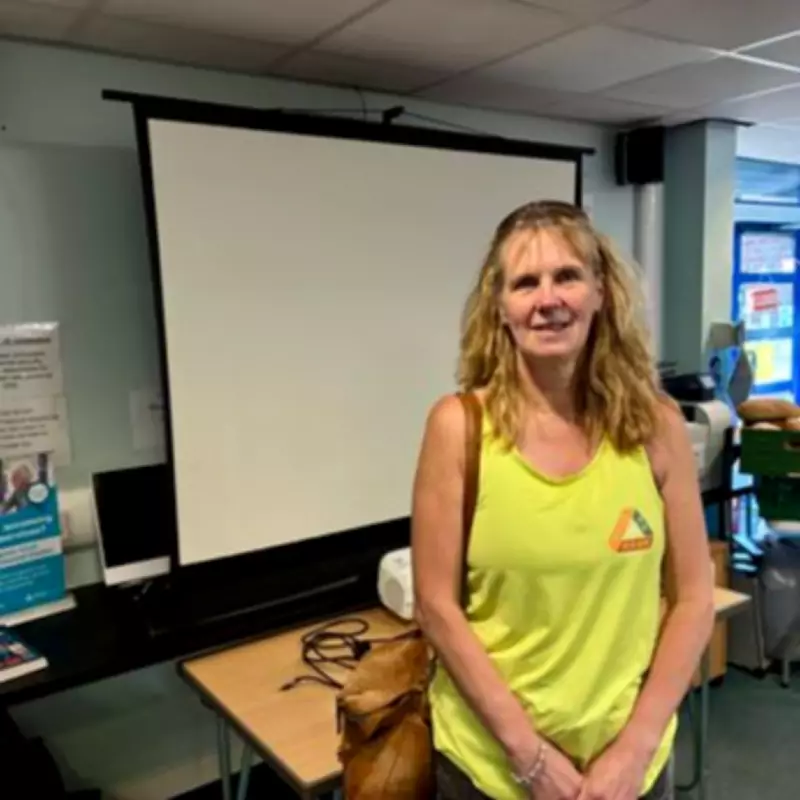
When Lynne Ewington was diagnosed with colorectal cancer, she feared she would never again enjoy running, cycling, or concerts. The 62-year-old from Walsall now wears a stoma bag but has proven that life can still be lived to the full.
A Second Cancer Diagnosis
Three years after surgery for colorectal cancer and just weeks after treatment for a separate primary cancer, Lynne is sharing her story to encourage early testing. She spoke at a Bowel Cancer Awareness Event held at the Hive Community Hub in Willenhall on Wednesday, April 29, attended by medics, cancer survivors, and the West Midlands Cancer Alliance.
Consultants at the event revealed that many patients arrive at Walsall Manor Hospital as emergencies with late-stage cancer, significantly reducing survival rates.

Lynne's Journey
Lynne recalled: "I had a massive bleed and thought, 'this isn't good, I need to get to hospital.' I phoned my partner and said, 'you need to pick me up and take me to A&E.' Dr Muhammad Tayyub was on duty. He took me to surgery for a repair, which found the cancer. The ruptured tumour was cancerous."
Further tests revealed polyps that required removal, leading to a permanent stoma. "I had everything removed, stitched up at the back, and now everything comes out through the bag," she explained.
No Typical Symptoms
Lynne experienced no usual symptoms before her emergency in 2023. "I was getting up at night more and thought it was just age. I was 59 at the time. I was one of the rare victims who ended up in A&E without prior symptoms." She had emergency surgery in May 2023 and major surgery in November 2023. A cyst on her ovary was found but was benign.
"It's not the news you want to hear, but the thought is far worse than the reality. Once you get over that, they know what they're doing. I had total trust in the team and amazing support. It's not the death sentence it used to be," she said.
Living with the 'Little Volcano'
Three years on, all tests are clear. Lynne calls her stoma bag the 'Little Volcano.' "When it erupts, it can erupt! But we still live. I run, cycle, row – there is a great recovery programme that started day two after the operation. It begins with eight weeks, then 8-12 weeks, and a six-month programme. I followed that and got back to running and cycling. I'm also back to concerts. Initially, I thought I'd need a seat, but now I'm right in the middle of it."
She recently faced a second cancer diagnosis. "I found a lump in March and thought 'oh my god,' but it was a new primary cancer. I had surgery in mid-March and am now back out. Going early and overcoming fear is key. From doctor to surgery took five or six weeks."
Lynne urges: "The sooner people get tested, the better. If you catch it early, treatment is less invasive, often just a colonoscopy. It's about getting over the fear of doing the test in the first place."