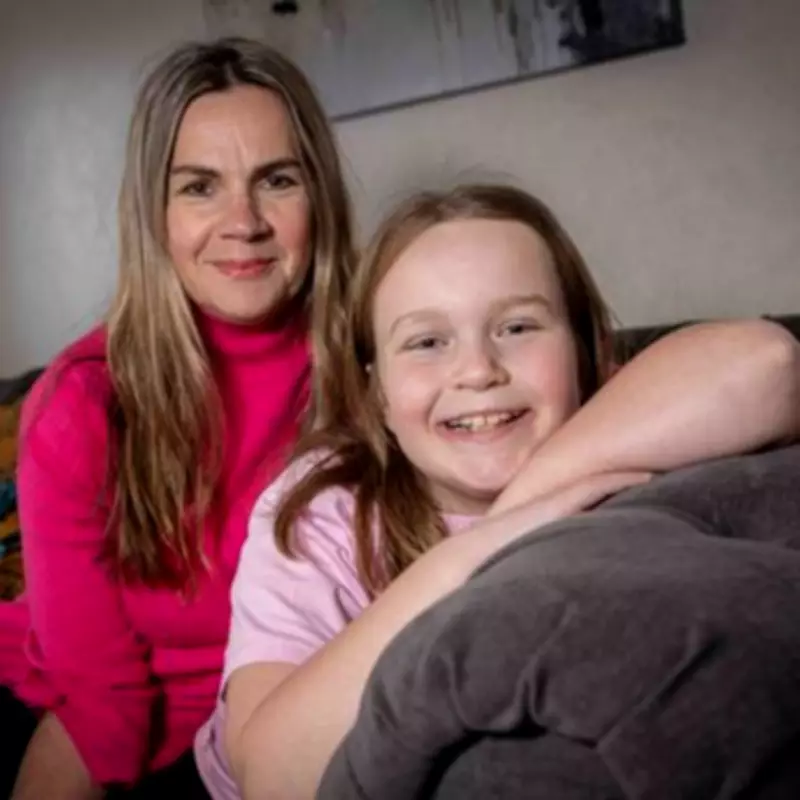
Solihull Mother's Search for Help Leads to Life-Changing Therapy for Daughter's Tics
Zoe Reece, a mother from Dickens Heath in Solihull, watched with growing concern as her daughter Sophie developed multiple tics from the age of four. What began as excessive throat clearing evolved over four years into a complex pattern of movements and vocalizations that included shouting, shoulder shrugging, arm flinging, and even spitting on the floor.
"I counted 12 different tics one day," recalled Zoe, who also has a 17-year-old son. "She would make kissing noises, shake her head violently, and sometimes her body would convulse during cuddles. One time she flung her arm out so forcefully I worried she might dislocate her shoulder."
The Emotional Toll and School Concerns
Zoe described how Sophie's tics seemed to manifest most when she was happy and relaxed at home, contrary to common assumptions that tics are stress-related. "It didn't happen much when we were out or at school," she explained. "I think it was about masking - she only felt comfortable enough to release the tics when she felt safe."

As Sophie approached secondary school age, Zoe's concerns intensified. "I started thinking about what would happen if she was making kissing noises and flinging her arms out in a new school environment," she said. "I didn't want other children to pick on her."
Despite seeking medical advice, Zoe was initially told to simply distract Sophie with water when tics occurred. Teachers were unaware of the issue since Sophie didn't display tics at school. This left Zoe researching on her own and ultimately seeking specialized help.
Finding Specialized Support Through CBIT Therapy
Sophie, now 10, began seeing Laura Gwilt, a Child and Adolescent Therapist at Swift Psychology in Birmingham's Jewellery Quarter. Laura introduced Comprehensive Behavioural Intervention for Tics (CBIT) therapy, an evidence-based approach that has made a significant difference in just six sessions.
"Laura created a safe space where Sophie could talk about what was happening," said Zoe. "Within five minutes of their first meeting, Sophie felt comfortable enough for me to leave the room."
The therapy involved practical techniques including:
- Creating a playful code word "banana" to help Sophie become aware of impending tics
- Developing "competing responses" - alternative movements to redirect the tic urge
- Identifying patterns and triggers in Sophie's daily life
- Building Sophie's sense of control over her neurological responses
Laura explained: "CBIT helps young people notice the early urge that comes before a tic. Once they recognize that moment, they learn a less noticeable action that makes the tic harder to carry out. Over time, this reduces how often or strongly tics occur."
The Importance of Acceptance and Access to Care
Throughout the process, Zoe emphasized acceptance, telling her daughter: "I love your little habits, they are part of you." This approach aligned perfectly with CBIT's philosophy of not trying to eliminate tics completely but rather managing them effectively.
Laura highlighted the critical shortage of tic-specific support in the UK: "Despite being recommended in clinical guidelines, access to CBIT is still very limited. Many families face long waiting lists or receive general support not tailored to tics."
She added that this gap in specialist care can lead to misunderstandings in educational settings, where tics might be mistaken for behavioral issues rather than neurological ones. "Early intervention makes a significant difference," Laura stressed, "but currently many families struggle to access appropriate help when they need it most."
A Brighter Future with Practical Tools
Today, Sophie and her mother have practical strategies to manage tics when they occur. "Sometimes she rolls her eyes when I say 'banana' now," Zoe laughed. "She'll say 'yes mum I know.' But the techniques have worked really well."

The family's experience offers hope to other families navigating similar challenges. By sharing their story, Zoe and Sophie hope to raise awareness about tic disorders and the effectiveness of specialized therapies like CBIT, while advocating for better access to neurological support services for children across the region.