Union Alleges Royal Mail Workers Instructed to Leave NHS Hospital Letters Undelivered
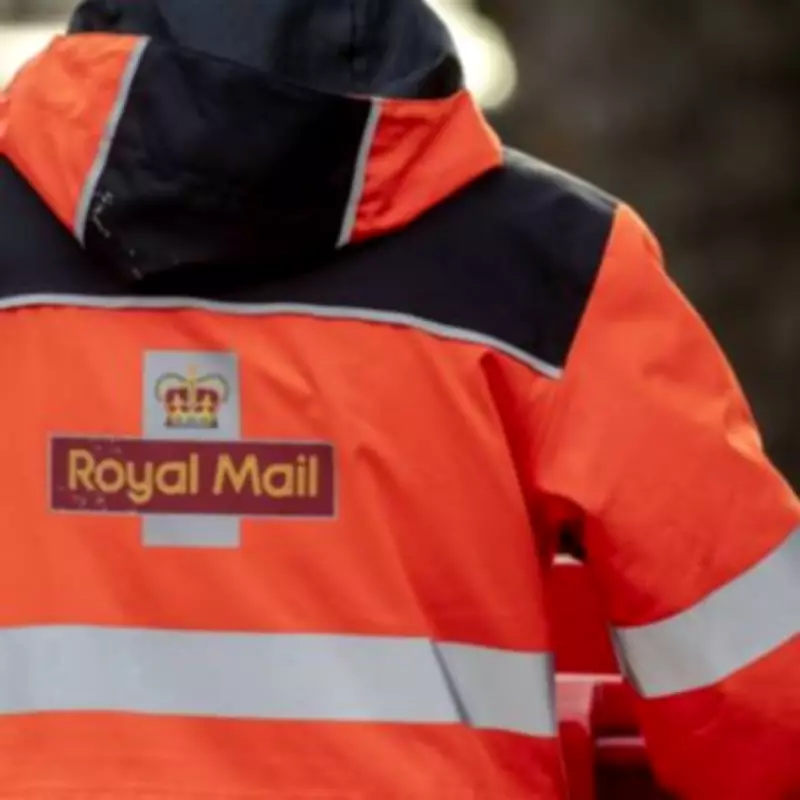
Trade union bosses have made serious claims that Royal Mail workers are being directed to leave hospital and GP letters on racks in order to prioritize parcel deliveries. The Communication Workers Union (CWU) presented evidence to MPs, describing the postal service as currently 'chaotic' and creating a 'demoralizing environment' for frontline staff.
Pyramid Framework for Delivery Priorities
According to the CWU, postal workers operate under a pyramid framework that dictates which items receive delivery priority. Special delivery items reportedly sit at the top of this pyramid, followed by parcels or tracked items, then first-class mail, with second-class mail positioned at the very bottom. Union representatives claim this system results in critical NHS correspondence being deliberately delayed.
Martin Walsh, deputy general secretary of the CWU, told the Business and Trade Committee that Royal Mail faces a significant 'retention crisis' with postal staff 'working harder than they've ever done in really challenging conditions.' Walsh explained that employees often cannot clear their daily workload and feel 'very aggrieved' when instructed to leave doctors' letters and hospital correspondence undelivered to focus on tracked parcels.
Royal Mail's Contradictory Position
Royal Mail has strongly disputed these allegations, insisting there is no management decision to prioritize parcels over letters. Daniel Kretinsky, chairman of Royal Mail's parent firm EP Group, testified that he has 'never heard any instruction, any discussion, or any exchange which would suggest Royal Mail is prioritizing parcels over letters.' Kretinsky categorically stated this is not any management decision and nobody is incentivized to implement such practices.
The billionaire businessman, whose EP Group took over Royal Mail last year, apologized to customers affected by delayed letter deliveries while simultaneously arguing that service quality numbers do not evidence any decline. Kretinsky emphasized that his motivation for purchasing Royal Mail was 'driven by the challenge, not by profit,' though he acknowledged that doing things right would 'create value at the end of the day.'
Specialized NHS Barcode Implementation
Royal Mail recently introduced a specialized NHS barcode system designed to ensure medical correspondence receives faster delivery. However, Kretinsky admitted that currently only a 'minority' of NHS providers utilize this service as it remains relatively new. The company maintains that incorporating parcel deliveries into their service model represents a 'way to preserve Royal Mail for a longer period of time.'
Universal Service Obligation Reform Dispute
Kretinsky argued that service issues cannot be properly addressed until plans for reforming the universal service obligation (USO) are implemented, including controversial proposals to eliminate second-class Saturday post. He stated he could not provide assurances about meeting service improvement obligations without USO reform.
Intensive negotiations between Royal Mail and the CWU regarding these reform plans have been extended until the end of March after the parties failed to agree on nationwide implementation methods. The CWU reports working toward an agreement on alternative approaches following pilot schemes, though general secretary Dave Ward cautioned that while progress continues in talks and industrial action remains undesirable, 'we cannot rule it out.'
Royal Mail currently operates with minimal profitability, according to Kretinsky, who stated the company generates 'roughly zero' profit because all resources have been reinvested into operations. This financial context adds complexity to the ongoing disputes about delivery priorities, staff working conditions, and the fundamental structure of postal services in the United Kingdom.