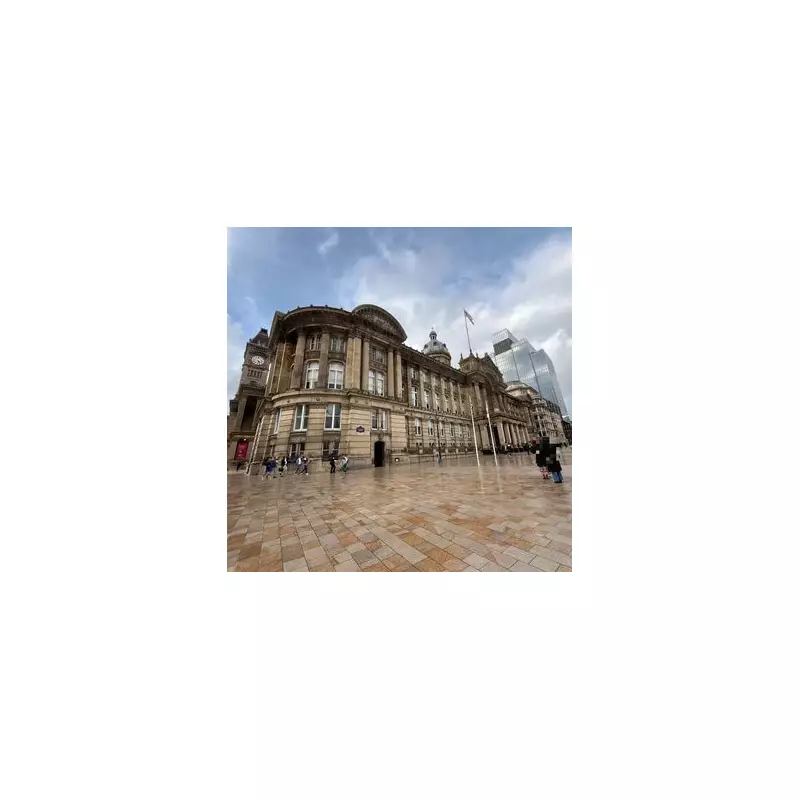
The Government has unveiled a major new funding package for local authorities, with Birmingham City Council positioned as one of the biggest beneficiaries. The multi-year settlement, announced in the House of Commons on Wednesday 17 December, directs billions towards England's most deprived councils.
A Lifeline for Birmingham's Services
Birmingham is set to receive a colossal cash injection to help it run essential services, marking a significant turnaround for the council which declared effective bankruptcy in 2023. The new funding formula is heavily weighted to support areas with the greatest need.
Council Leader, Cllr John Cotton, hailed the move, stating it signals the end of councils living "hand-to-mouth". He confirmed the settlement will mean the council's funding increases by 45% over five years, equivalent to an extra £651.5 million by 2029.
"After 14 long years of Conservatives cutting our funding, we’ve now got a Labour government that is investing hundreds of millions of pounds in Birmingham," Cotton said. He emphasised the money would allow the council to properly fund community services, from keeping streets clean to investing in libraries.
How the New Funding Formula Works
The overall settlement will see £78 billion pumped into local authorities across England over three years. This is the first multi-year funding announcement in a decade and represents a fundamental shift in how money is allocated.
Under the reformed system, the link between funding and levels of deprivation has been dramatically strengthened. Where deprivation could previously account for only 25% of variation in capital funding, it can now drive up to 75% of the allocation. Other factors like coastline, road miles and visitor numbers are also considered.
This change means almost half of all councils (43%) will see their funding fall in real terms, including 70% of shire districts and 67% of inner London boroughs. In contrast, major city councils like Birmingham are among the big winners.
Detailed Figures and Local Reaction
For the coming financial year (2026-27), Birmingham's specific settlement includes:
- £1.103 billion in total fair funding.
- £1.019 billion in baseline funding.
- £427.1 million in tariff or top-up funding.
- £83.8 million for better care funding.
The settlement assumes the council will also impose the maximum permitted council tax rise of 4.99%. Together, these elements provide the council with crucial spending power as it drafts its budget plan for the year ahead, due next month.
Local MPs welcomed the news. Preet Kaur Gill, MP for Birmingham Edgbaston, said it was vital after 14 years of austerity cuts. Home Secretary and Birmingham Ladywood MP, Shabana Mahmood, stated austerity had "decimated public services in our city" and called the announcement "a good day for Birmingham".
Other deprived parts of the West Midlands, including Sandwell, will also benefit. The settlement includes the continuation of a £600 million Recovery Grant to help areas hardest hit by historical underfunding.
Political Debate and Wider Changes
While the government framed the settlement as redressing past imbalances, it faced criticism in the Commons. Shadow local government minister David Simmonds condemned it as a "tax-raising, job-destroying, service-slashing" settlement.
Local Government Secretary Steve Reed defended the policy: "This is a chance to turn the page on a decade of cuts... Today we’re making sure every community has the funding they need to succeed."
Minister Alison McGovern argued that deprivation was a result of "years of broken systems and wrong priorities," and that the new formula tackles this head-on. The deal also introduces other changes, such as allowing councils to keep all additional council tax from new homes to encourage growth.
For Birmingham, still recovering from its 2023 financial distress caused by issues including a failed IT project and equal pay liabilities, this funding provides much-needed breathing space to deliver a legal, balanced budget and rebuild vital services.