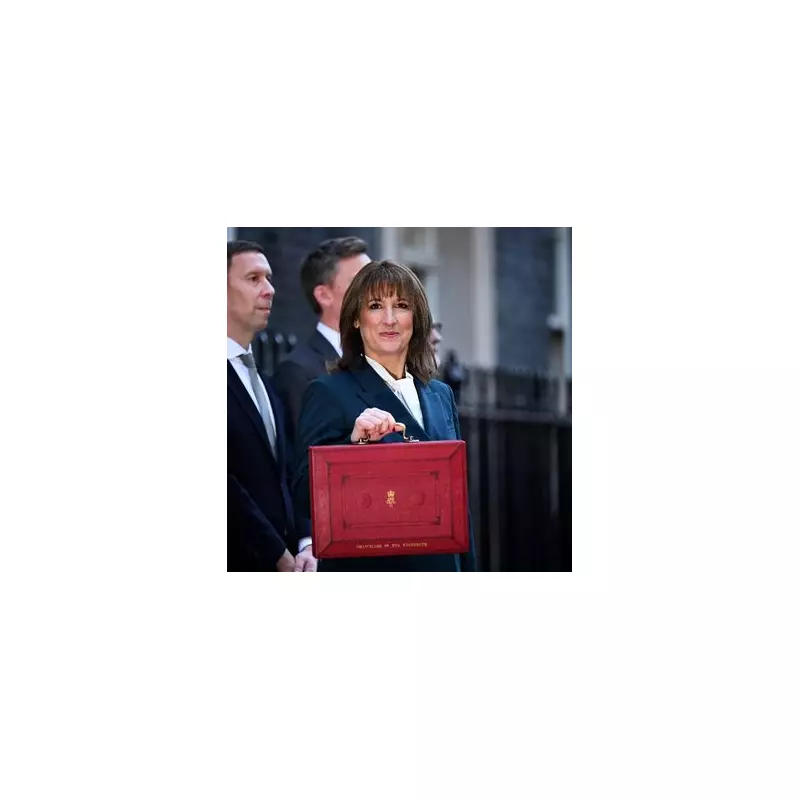
Chancellor Rachel Reeves has delivered her second Budget to the House of Commons, outlining a series of significant tax increases and spending measures that will affect households, businesses, and the wider UK economy for years to come.
Economic Forecasts and Fiscal Rules
The Office for Budget Responsibility (OBR) has presented a mixed picture for the UK's economic future. While it has revised upwards its growth projection for this year from 1% to 1.5%, it has downgraded its predictions for the subsequent four years. Growth forecasts have been cut for 2026 from 1.9% to 1.4%, for 2027 from 1.8% to 1.5%, for 2028 from 1.7% to 1.5% and for 2029 from 1.8% to 1.5%.
Ms Reeves declared she would 'more than double' the fiscal headroom against economic turbulence. The Budget watchdog confirmed the Government's leeway against the Chancellor's day-to-day spending constraint will expand to £22 billion in 2029-30, which is £12 billion higher than in March. Going forward, the Chancellor will request the OBR to evaluate whether she is adhering to her fiscal rules annually during the autumn Budget, rather than biannually.
Major Tax Changes for Individuals and Businesses
In a move that will impact millions of workers, the Chancellor is set to prolong the freeze on income tax thresholds until 2030. This strategy, previously labelled a 'stealth' tax increase, was characterised by Ms Reeves as 'asking everyone to make a contribution'. The OBR projects this freeze will result in an additional 780,000 basic-rate, 920,000 higher-rate and 4,000 additional-rate income tax payers by 2029/30, generating approximately £7.6 billion in 2029-30.
Pension savings will also be targeted through a restriction on salary sacrifice schemes. From 2029, any amount exceeding a new £2,000 cap will be subject to national insurance contributions, a move estimated to generate £4.7 billion in 2029-30. Currently, there is no limit on such contributions.
Property owners face several new levies. A 'high-value council tax surcharge' will be implemented on properties valued over £2 million, effectively creating a 'mansion tax'. Four price bands will be introduced, escalating from £2,500 for a property valued between £2 million to £2.5 million, to £7,500 for a property valued at £5 million or more. This is expected to generate £0.4 billion in 2029-30.
Landlords and investors will see increases, with Ms Reeves announcing: 'It's not fair that the tax system treats different types of income so differently, and so I will increase the basic and higher rate of tax on property savings and dividend income by two percentage points.'
Business, Transport and Social Measures
There was some relief for certain businesses, with the Chancellor revealing she would bring in 'permanently lower' business rates for more than 750,000 retail, hospitality and leisure properties. Ms Reeves described these as the 'lowest rates since 1991'. These reductions will be funded through elevated rates on properties valued above £500,000, including warehouses utilised by 'online giants'.
In a significant move for motorists, electric vehicle (EV) drivers will face a charge of 3p per mile under fresh taxation introduced by the Chancellor, which is anticipated to increase annually in line with inflation. This measure partly aims to compensate for declining fuel duty revenues as more drivers transition to EVs.
The gambling industry will see substantial tax increases, with the levy on remote gaming rising from 21% to 40% next year. Ms Reeves stated this was to discourage participation in a format she described as linked to the 'highest levels of harm'. She will also eliminate bingo duty from next April. These measures are projected to generate £1.1 billion by 2029-30.
In a major social policy shift, the two-child benefit cap is being abolished from April, a move the Chancellor declared is anticipated to lift '450,000 children out of poverty'. The restriction, introduced by the Conservative administration in 2017, has barred parents from receiving universal credit or tax credits for beyond their initial two children. The policy change is projected to cost £3 billion by 2029-30, according to the OBR.
Other notable measures include a reduction of the yearly cash Isa threshold to £12,000 to incentivise investment in equities, and plans to reduce energy bills by an average of £150 from typical household bills starting next year by abolishing the ECO (Energy Company Obligation) scheme.