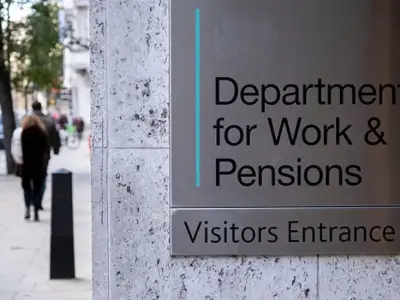
Controversial new legislation granting the Department for Work and Pensions enhanced powers to combat benefit fraud has cleared Parliament, sparking significant concerns about civil liberties and potential state overreach.
What the New Bill Allows
The Public Authorities (Fraud, Error and Accountability) Bill has now passed through both the House of Commons and the House of Lords. It is currently undergoing final procedural checks before receiving Royal Assent and becoming law.
This legislation empowers the DWP to use algorithmic technology to scan the bank accounts of benefit claimants, even in the absence of any specific suspicion of wrongdoing. The government states this is a necessary tool to identify capital exceeding the £16,000 benefit threshold and to tackle fraud and error within the system.

MPs Sound the Alarm on 'Mass Fishing'
During the final debates in the Commons, MPs from opposition parties raised serious objections. Liberal Democrat work and pensions spokesman, Steve Darling, voiced his party's apprehension, labelling the proposed method a blanket approach.
"We still have concerns that there is a blanket approach to this, and effectively, mass fishing will occur with the proposals as before us," Darling stated.
The concerns were echoed by Neil Duncan-Jordan, the MP for Poole, who provided a stark numerical warning. He highlighted the immense scale of the proposed data trawl, pointing out that an error rate of just 1% would have severe consequences.
"If the algorithms are scanning the bank accounts of 10 million people, an error rate of just 1% will result in 100,000 cases where innocent people are wrongly investigated," Duncan-Jordan told the Commons.
Broader Implications for Civil Liberties
The debate extended beyond mere statistics, touching on fundamental principles of British justice. Neil Duncan-Jordan expressed profound disquiet about the precedent the bill sets.
"I’m concerned about what this Bill says about our welfare state, the danger of creating a second-class citizenship where welfare recipients have less civil liberties than the rest of us," he argued.
He further contended that the legislation "turns banks into an arm of the state" and strips away the "presumption of innocence," a cornerstone of the legal system.
Government Assurances and Safeguards
In response to these criticisms, DWP minister Andrew Western sought to provide reassurances. He emphasised that multiple layers of protection are embedded within the process to prevent misuse and protect the vulnerable.
"We’re very clear that nobody vulnerable or otherwise should be de-banked as a result of this Bill," Western asserted. He detailed specific safeguards, including a mandatory human decision-maker at every stage of the process.
"We cannot take a decision based on EVM (Enhanced Verification Model) information in isolation. We must consider all other relevant information," the minister explained. He clarified that the data would feed into existing DWP processes where specialist staff are available to support individuals with complex needs.
Despite these government assurances, the passage of the bill marks a significant shift in the DWP's investigative powers, leaving many to watch closely how these new protocols will be implemented in practice.