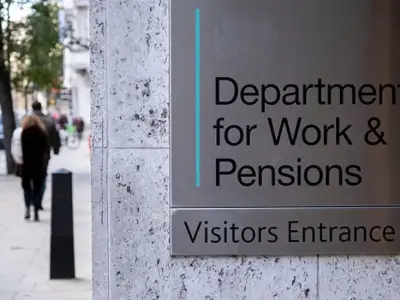
The Department for Work and Pensions (DWP) has announced a significant overhaul of Universal Credit rules, aimed at removing what it calls a "perverse" financial incentive for claimants to declare themselves unable to work. The changes, set to take effect from April 2026, will see the standard allowance increased while reducing payments for some new claimants with health conditions.
Rebalancing Payments to Encourage Employment
Under the current system, the Labour government argues that the high rate of the Limited Capability for Work and Work-Related Activity (LCWRA) element, compared to the standard allowance, creates a situation where some claimants feel financially better off by being assessed as unfit for work. The DWP's new policy seeks to "rebalance" these rates.
The core change involves a dual approach: increasing the Universal Credit standard allowance above inflation annually until 2029/30, while simultaneously reducing the rate of the UC health element for new LCWRA claimants who are not protected. The DWP stated this will "remove the incentive for people to declare themselves unable to work in order to improve their incomes".

Protections for Existing Claimants and Severe Conditions
The government has emphasised that safeguards will be in place. Existing LCWRA claimants and new customers who meet Severe Conditions Criteria or are near the end of life will be protected. Their combined standard allowance and health element will rise in line with inflation for four years.
Meanwhile, the Limited Capability for Work (LCW) element will be frozen. Consequential changes will also apply to legacy benefits, including Employment and Support Allowance (ESA) and associated disability premiums.
Government's Rationale and Expected Impact
The DWP's briefing document clearly frames work as the central pillar of its strategy. It states: "We know that work is the best route out of poverty, and that good work is good for people’s physical and mental health, which reduces pressure on the NHS."
The department contends that once individuals are placed in the LCWRA group, they often receive less routine support to move towards employment and subsequently enter work at low rates. By altering the financial structure, the DWP hopes to benefit society through increased employment, arguing it will provide businesses with a larger talent pool and help individuals improve their circumstances.
This major shift in welfare policy is poised to directly impact thousands of Universal Credit claimants, aiming to reshape the economic incentives around work and health-related support within the benefits system.