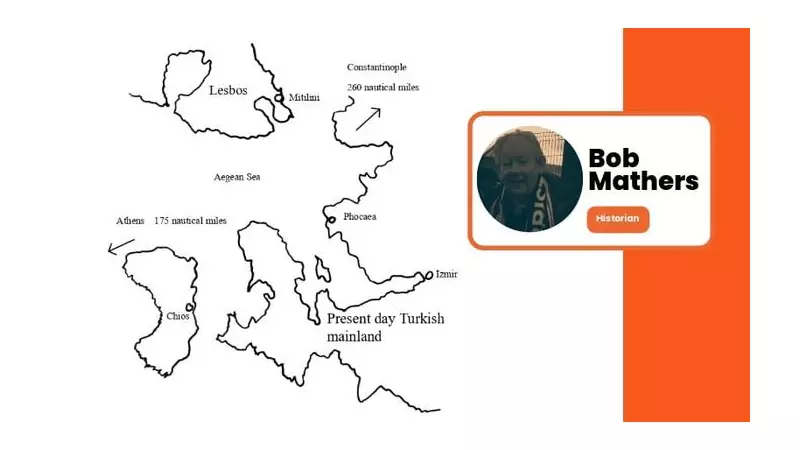
The year 1453 delivered a double blow to English commerce. The Hundred Years' War ended, expelling English merchants from Gascony. Simultaneously, the fall of Constantinople to the Ottoman Turks severed Europe's access to the vital Phocaea alum mines, a dye fixative monopoly controlled by Genoa's Gattilusio clan. For Bristol, a city built on fine cloth exports, the resulting alum price surge caused a trade crisis. Something had to be done.
The Bold Voyage of Robert Sturmy
By 1457, Robert Sturmy, a prominent Bristol merchant, ship owner, and former mayor, devised a solution. He planned a daring expedition to the Mediterranean to secure alum directly. Backed by Bristol's mercantile elite, he obtained a royal licence for a colossal £37,000 worth of trade. His fleet's stated cargo included luxury fabrics and jewels, but the true prize was alum.
The mission was perilous. The Mediterranean was dominated by Venetian and Genoese fleets, with hostile pirates and Catalan rivals lurking. Undeterred, Sturmy set sail in late 1457. Genoese spies in London swiftly alerted their homeland to the Bristol fleet's departure for Pisa and Naples.

A Successful Purchase and a Deadly Ambush
Sturmy's gamble initially paid off. At the Greek island of Chios, near the ancient alum source of Phocaea, he successfully purchased 152 tuns of alum – enough to dominate the English market. This news triggered alarm in Genoa and Venice, whose lucrative trade to England was now under direct threat.
The return journey, however, ended in catastrophe. Off Malta, Sturmy's fleet was attacked. Two ships were captured, their cargo seized. Sturmy and 130 crew were killed. Only a third vessel escaped to bring the grim news to Bristol. The response was swift: every Genoese merchant in England was arrested and their assets confiscated.
The Aftermath and a Lasting Legacy
Historical research reveals this was no random act of piracy. It was a premeditated commercial hit. The attack was led by Giuliano Gattilusio, ruler of the last unconquered alum mines on Lesbos and a key figure in the Genoese Maona di Chios company. His business faced an existential threat from Sturmy's venture.
The financial loss was staggering, equivalent to nearly £1.5 billion in today's money. A commission of principal Bristol investors, including William Canynges and Philip Mede, calculated fines for the released Genoese merchants.
This disaster had profound consequences. Historians argue it convinced many Bristol merchants to abandon the treacherous Mediterranean, redirecting their gaze and ambitions westward towards the Atlantic Ocean. This pivotal shift in focus would ultimately shape the city's future as a hub for transatlantic exploration and trade.
Historian Bob Mathers, who is writing a book on medieval Bristol, details this episode and others in 'Mediaeval Bristol: A Short History (1066-1497)', due for publication next year.