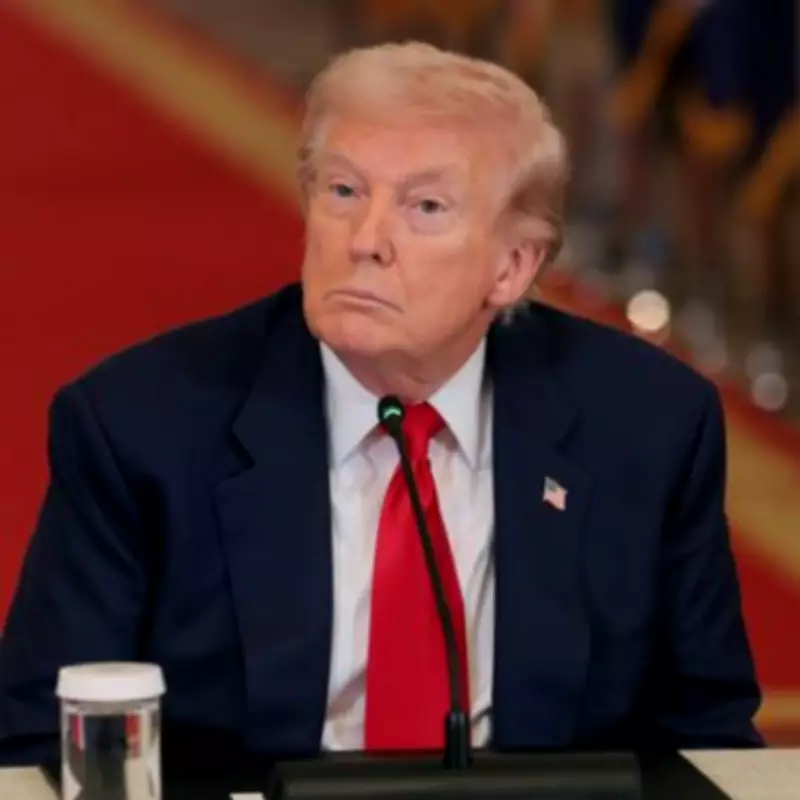
Trump Declines Iran's Ceasefire Offer, Demands Better Terms
US President Donald Trump has openly rejected a ceasefire request from Iran, boasting in an exclusive interview with NBC News that the proposed agreement was not satisfactory. The 47th president dismissed calls from the United Nations and global leaders to de-escalate hostilities, insisting that any deal must be "very solid" before the United States would consider negotiations.
Trump's Stance on Ceasefire Conditions
"Iran wants to make a deal, and I don't want to make it because the terms aren't good enough yet," Trump declared. When pressed by NBC about specific conditions he would accept to end the conflict, he refused to disclose details, stating, "I don't want to say that to you." However, he acknowledged that Iran would need to abandon any nuclear ambitions to secure an agreement.
Trump downplayed Iran's military capabilities, asserting, "The only power Iran has can be closed off relatively quickly—the power of dropping a mine or shooting a relatively short-range missile." He added confidently, "But when we get finished with the shoreline, they're not going to have that power either." According to reports, he claimed US airstrikes have "totally demolished" most of Iran's Kharg Island and may target it further "just for fun."
Contradictory Reports on Ceasefire Efforts
Trump's assertion that Iran sought a ceasefire conflicts with analysis from the Institute for the Study of War (ISW), a non-partisan research organization. The ISW reported that neither Iran nor the United States is prepared for ceasefire discussions, despite mediation attempts by Oman and Egypt. Sources indicated the Trump administration rejected diplomatic efforts by Middle Eastern allies to initiate talks.
Uncertainty Over Iran's New Supreme Leader
In the same interview, Trump cast doubt on the status of Iran's new Supreme Leader, Mojtaba Khamenei, who succeeded his father after a fatal airstrike. "I don't know if he's even alive. So far, nobody's been able to show him," Trump said, adding, "I'm hearing he's not alive, and if he is, he should do something very smart for his country, and that's surrender."
Khamenei's absence from a scheduled public address has fueled global speculation about his health. An unnamed source in Tehran claimed he sustained severe injuries, including the loss of at least one leg, during a US or Israeli strike, and is receiving treatment at Sina University Hospital under heavy guard. Iranian state television confirmed injuries but provided no specifics, while an internet blackout hampers independent verification.
Turkish Foreign Minister Hakan Fidan told the Associated Press he does not know the extent of Khamenei's injuries but stated, "what we know is that he is alive and functioning." This follows assurances from Iran's foreign minister that there is "no problem" with the new leader, contrasting with US Defense Secretary Pete Hegseth's claim that Khamenei is "wounded and likely disfigured."
The ongoing conflict and diplomatic stalemate highlight the volatile situation in the Middle East, with Trump's rejection of ceasefire terms underscoring the high stakes involved.