
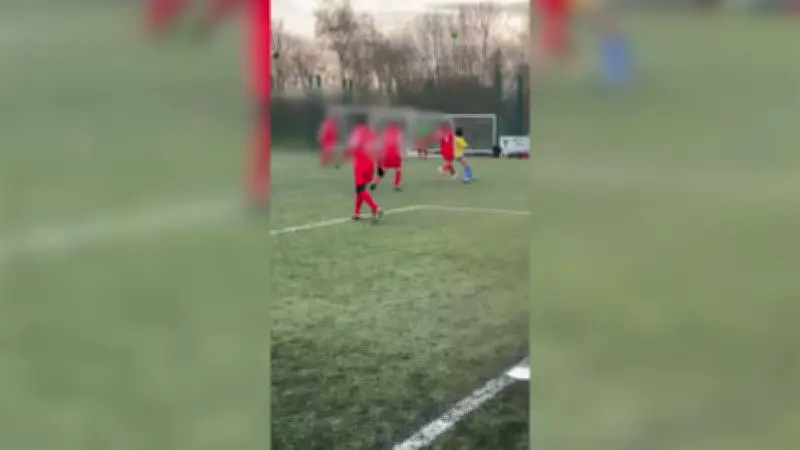
A footballer born without arms has spent six seasons at Solihull Moors Foundation after being refused the chance to play competitive matches as a teenager because of league rules. Callum Smith, now 23, grew up in Nuneaton and trained with able-bodied amateur clubs, holding his own against players who did not share his physical disability.
Yet despite proving his quality in training, Smith was unable to take part in games due to restrictions beyond his control. The league rules and insurance concerns meant he could only watch from the sidelines, a frustration he has now spoken openly about in an interview with BirminghamLive.
A teenage talent stuck on the sidelines
Smith said the experience left him feeling short-changed, especially as his coaches could see exactly what he was capable of. "It was a bit of a shame, I wasn't able to play competitively on matchdays and could only train," he explained. "I was missing out on that experience and the managers were miffed, they could see what I was capable of."
He insisted that his ability was on par with his non-disabled peers. "I could hold my own against able-bodied players, but league rules prevented that from happening," Smith said. "I wouldn't say I was better than all of them, but I felt we were all on the same skill level."
Why league rules got in the way
Smith did not question the reasoning entirely, acknowledging the practical difficulties that his situation presented. "I understood it though - because I've no arms, I would take a fall head first," he said. "It's probably a lot of paperwork which they don't want to deal with. But it's the same if anyone fell over, anyone could get injured in the same way."
He was adamant about his own capability: "I've a physical disability but was more than capable of holding my own against able-bodied people." That confidence eventually led him to Solihull Moors Foundation, where he discovered a different side of the game.
Disability football: more than a kickabout
Smith admitted that he initially held a misconception about disability football, seeing it as purely social rather than competitive. "I always had the connotation that disability football wasn't competition, I thought it was just a social aspect," he said. "But when I first saw a training session at the Moors Foundation, I saw the level was actually quite high."
That realisation came after just one session, and he was quickly given the chance to prove himself in a match setting. "I could see this was something I could enjoy and I saw the competitive element, I had originally perceived it as a kick around," he recalled. "I was only training for a couple of weeks before I was called up and my first match had that competitive level I was hoping for."
Playing without prejudice
For Smith, the best part of his time at Solihull Moors Foundation has been the way he is treated by teammates and opponents alike. "Nobody saw me as a player with no arms, there was no-one walking on eggshells because they could see I would get stuck in," he said.
That inclusive environment has also changed the minds of his own friends. "I've had mates come down and join in to play, they had the same perception as me and didn't think it would be that competitive," Smith explained. "When they trained, they realised there's a real edge to this."
He summarised the philosophy at the club succinctly: "I would say the foundation take the dis out of disability and looks for your ability in a football environment."
Breaking down barriers
Scott Langford, disability and inclusion manager at Solihull Moors Foundation, said the club's mission goes beyond football. "Our job is to break down barriers, regardless of the ability, and use football as a tool," Langford said. "From a community aspect, we're inclusive in everything we do and the environment is treated like a family."
Langford stressed the developmental side of the programme: "It's about developing players in the right positive environment and we implement that across all our programmes."
He also wants to challenge public perceptions of disability sport. "When people think of the word 'disability' in football, people might think of wheelchairs, but that's only a certain part," he said. "I would implore people to come down and look at what we've got, it will change people's mindsets about what disability can do in the world. There's no limit."
Callum Smith's journey shows that with the right support and attitude, a physical disability does not have to limit footballing ambitions. His six years with Solihull Moors Foundation stand as testament to the power of focusing on ability rather than disability.