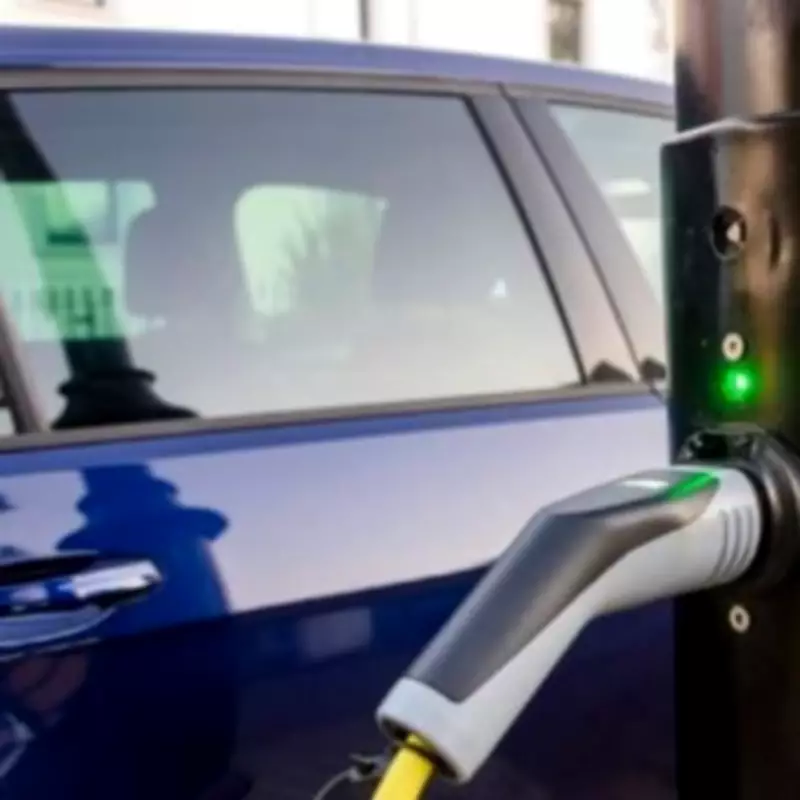
Funding Crisis Threatens UK's Public EV Charging Network Expansion
A stark warning has been issued regarding the future of public electric vehicle charging infrastructure across England, Wales, and Scotland. A comprehensive new report highlights that severe budgetary constraints within local authorities are creating significant barriers to the essential expansion of EV charge points.
Council Budgets Identified as Primary Obstacle
The Authority Insight Report, conducted by charge point operator Believ, surveyed 101 local authorities. A striking 75 per cent of councils identified pressure on their own budgets as the foremost obstacle to developing public EV charging networks. This financial strain is compounded by additional challenges that threaten to stall progress nationwide.
Further findings reveal that two in three councils point to insufficient central government funding as a critical barrier. Meanwhile, 42 per cent of authorities report facing considerable logistical and delivery challenges when attempting to install new charging infrastructure.
Industry Leaders Call for Urgent Action
Guy Bartlett, Chief Executive Officer of Believ, emphasised the pressing need for systemic change. He stated that unlocking adequate funding, streamlining bureaucratic processes, and expanding clear guidance must become immediate priorities. Bartlett stressed that responsibility lies jointly with the charging industry and government, asserting that with effective partnerships, the UK can develop an EV charging network accessible to all motorists.
Echoing these concerns, Ginny Buckley, chief executive of the EV advice platform Electrifying.com, highlighted a growing North-South divide in charging availability. She warned that the lack of reliable charging infrastructure in northern cities is directly undermining driver confidence in electric vehicles. Buckley cited the example where a single London borough possesses more chargers than five major northern cities combined, sending a discouraging message to drivers outside the South.
Report Details Eight Key Barriers
Believ's report, titled Accelerating the UK's EV Future, systematically identified eight principal barriers hindering the rollout of public EV charge points. These were ranked in order of significance as follows:
- Budgetary issues related to council finances
- Budgetary issues concerning government funding
- Logistical and delivery challenges
- Low local EV ownership and demand
- Public sector procurement challenges
- Lack of clear siting guidance
- Regulatory constraints
- Resident reticence and opposition
Councils Seek Funding Reform and Greater Autonomy
The research indicates a strong desire among local authorities for reform in how funding is allocated. 71 per cent of councils, with this figure rising to over three-quarters among rural and semi-rural authorities, expressed a preference for more direct access to the Local Electric Vehicle Infrastructure (LEVI) fund. They seek to move away from the current tiered distribution system which many find cumbersome.
Additionally, 43 per cent of respondents indicated they want greater autonomy over budgetary decisions related to EV infrastructure projects, suggesting that localised knowledge could lead to more effective deployment.
Infrastructure and Internal Delays Compound Problems
Technical and operational hurdles are further complicating efforts. A significant 71 per cent of councils reported encountering problems with existing local power infrastructure managed by Distribution Network Operators. Alarmingly, 29 per cent experienced delays of at least six months due to these grid-related issues.
Internal organisational challenges are also prevalent. 47 per cent of authorities cited internal process delays as a factor, while 41 per cent pointed to resource constraints within their own teams as a contributing barrier to progressing EV charging projects.
This collective evidence presents a clear picture of a public EV charging rollout at a critical juncture, requiring coordinated action between local government, national policymakers, and the private sector to overcome these multifaceted challenges.