Driving Instructor Reveals Overlooked Technique That Can Slash Fuel Bills
Annie Winterbourn, known online as Theory Test Practice, has highlighted a simple yet effective driving method that could help motorists save a substantial amount on their fuel expenses. The former driving instructor and social media content creator emphasised that many drivers are unaware of this approach, which focuses on smoother vehicle operation.
The Smooth Driving Method Explained
Winterbourn detailed the technique, stating: "If you drive smoother, so you accelerate more gradually, and you look well ahead, and you see what's happening, then just come off your accelerator pedal to gradually slow down." She explained that this method of gradually building up speed and reducing it can lead to significant fuel savings.
"Gradually building up speed, gradually reducing speed - that can save fuel. It can save quite a lot of fuel, actually," she said. "If you do that, you could save yourself about 15% in your fuel costs. See what can you achieve if you drive smoothly?"
Her advice centres on anticipatory driving: "So drive smoother, stop racing away and slamming your brakes on. Look well ahead, plan well ahead. And you will save yourself money overall."
RAC Backs Up the Fuel-Saving Advice
The RAC motoring organisation supports Winterbourn's recommendations. The group advises: "The best advice is to drive as smoothly as possible, gently using the steering, accelerator and brakes."
They provide additional technical insight: "When slowing down, it's important to remain in gear as the fuel cut-off switch in a fuel injection engine is then activated, meaning virtually no fuel is used while braking."
Constant Speed and Cruise Control Considerations
The RAC further explains that maintaining a constant speed is key to fuel efficiency: "One of the keys to saving fuel is driving at a constant speed. Cruise control can do this effectively on flat surfaces, making your driving as fuel-efficient as possible by negating unnecessary acceleration."
However, they caution about using cruise control on varied terrain: "If you were to use your cruise control regularly, not on flat roads, you would encounter problems that would increase your fuel consumption. This is because your cruise control would be slower to react to gradient changes, meaning when reaching the brow of a hill - at which point you would normally take your foot off the accelerator to maintain more of a constant speed when descending - your cruise control will keep the power on for a little longer as it's unable to see the gradient change in front of you."
Driving in this way regularly would lead to worse fuel consumption, they note, highlighting the importance of manual control in certain situations.
Most Fuel-Efficient Roads Revealed
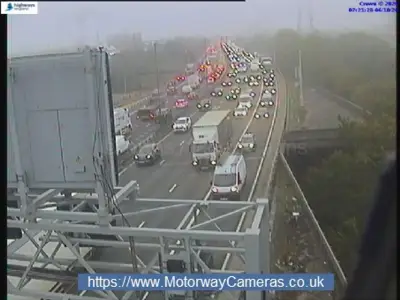
Interestingly, the RAC identifies motorways as the most fuel-efficient roads in the country, rather than quiet extra-urban dual carriageways or 20mph city streets. They explain: "This is where you can leave the car in top gear and gently cruise along, using minimal fuel."
This combination of expert driving instruction and established motoring organisation advice provides motorists with practical, evidence-based methods to reduce their fuel expenditure through more conscious and smoother driving habits.