M6 vs M6 Toll: Rush Hour Experiment Uncovers Major Time Difference
In a revealing test of motorway efficiency during peak traffic hours, a YouTube content creator has demonstrated the significant time savings offered by the M6 Toll compared to the main M6 carriageway. The experiment, conducted on a Friday afternoon rush hour, showed a staggering difference of over 47 minutes between the two routes.
The Rush Hour Challenge: Gailey Interchange to Corley Services
Jon Jefferson, known online as Auto Shenanigans, embarked on this comparative journey to determine just how much time drivers could save by opting for the toll road. Starting from junction 12, the Gailey Interchange, and heading to Corley services, Jon took the main M6 while a fellow driver simultaneously traveled the M6 Toll.
The M6 Toll, which opened in 2003, has long advertised potential time savings of up to 25 minutes. However, Jon's experiment aimed to put these claims to the test under real-world rush hour conditions. With toll prices starting from £4 for a class 2 car and reaching approximately £11.40 for the full stretch from junction 11 to the M6 and M42 junction, the financial cost was a key consideration alongside time efficiency.
M6 Journey: Traffic Snags and Unexpected Closures
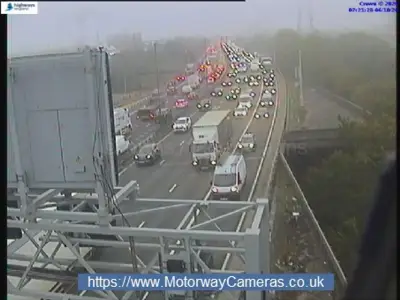
Jon's experience on the main M6 carriageway quickly highlighted the challenges familiar to many regular commuters. Within minutes, he encountered heavy traffic at the Ray Hall Triangle, an interchange he described as "lovely" but fundamentally flawed in its functionality. After just 15 minutes on the road, progress had slowed to a crawl, prompting Jon to express his frustration with the Friday afternoon rush hour conditions.
The situation deteriorated further when a crash necessitated the closure of part of the motorway, forcing Jon to consider alternative routes. Although traffic began moving again as he reached the diversion point, the disruption had already significantly impacted his travel time. As he approached his destination, another lane closure served as what he called a "final kick in the nuts," compounding the delays.
M6 Toll: Smooth Sailing to the Finish Line
Meanwhile, the driver on the M6 Toll experienced a markedly different journey. While Jon battled congestion and closures on the main carriageway, the toll road user enjoyed relatively unimpeded travel, arriving at Corley services well before Jon's eventual arrival.
When the times were finally calculated, the results were striking. Jon's M6 journey took 1 hour, 24 minutes, and 51 seconds, while the equivalent trip on the M6 Toll required just 37 minutes and 44 seconds. This represented a time saving of 47 minutes and 7 seconds during rush hour conditions.
Comparative Analysis: Rush Hour vs. Afternoon Travel
Interestingly, Jon had previously conducted a similar test during non-peak afternoon hours, which yielded different results. In that experiment, the main M6 took 32 minutes and 44 seconds, while the M6 Toll required 26 minutes and 6 seconds—a difference of just over 6 minutes.
This contrast underscores how traffic conditions dramatically affect the value proposition of the toll road. During lighter traffic periods, the time savings are modest, but during rush hour, they become substantial. As Jon concluded, the 47-minute saving during peak hours is "enough time to complete another length of the M6 Toll with time to spare."
The experiment provides valuable insights for Midlands commuters weighing the cost versus time equation of their daily travels. While the M6 Toll comes with a financial price tag, its ability to bypass the congestion that plagues the main M6 during peak hours offers a compelling alternative for those prioritizing time efficiency over cost savings.