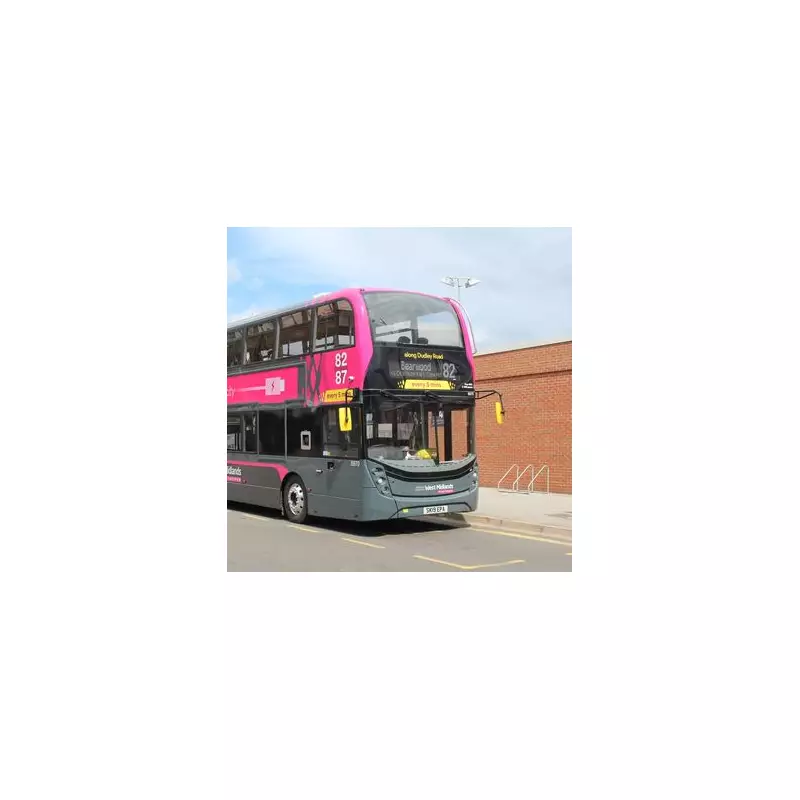
Passenger numbers on buses across the West Midlands have fallen significantly, with officials pointing to a recent hike in the national fare cap as a primary cause.
Fare Hike Coincides with Passenger Drop
New figures presented to the West Midlands Combined Authority's Transport Overview and Scrutiny Committee reveal a clear downturn. Between July and September 2025, there were 57,768,872 bus boardings in the region.
This marks a decrease of 2.21 per cent compared to the same period in 2024, when 59,071,487 journeys were made.

Claire Williams, Director of Network Resilience at Transport for West Midlands, stated that the increase in the national bus fare cap to £3 in January 2025 is considered a key driver behind this decline.
Multiple Factors Behind the Trend
While the fare rise is a major factor, it is not the only challenge facing the bus network. Claire Williams outlined additional pressures contributing to the drop in usage.
She cited a reduction in the commercial bus network, as operators grapple with rising costs and lower revenues. Furthermore, increasing congestion across the region is leading to longer and less reliable journey times, making bus travel less attractive.
"Between these two periods we have also seen a reduction in the overall commercial bus network as a result of operators seeking to reduce the impact of reducing costs and reduced revenue," Williams explained.
"Across the region, bus journey times are increasing due to the impact of worsening congestion."
Rail and Metro See Contrasting Growth
The decline in bus patronage stands in contrast to growth on other forms of public transport in the West Midlands during the same quarter.
Rail usage saw a 3.26 per cent increase, with 67,124,932 boardings between July and September 2025, up from 65,003,174 in 2024. However, this growth remains below the national average of seven per cent.
The region's Metro tram system experienced even stronger growth, with passenger numbers rising by 7.83 per cent to 2,239,690.
One area of resilience for bus services is the concessionary travel scheme. Williams noted that usage here is rising, as passengers with free travel passes are less sensitive to price changes.
Plans to Halt the Decline
Transport authorities have outlined measures aimed at stabilising and improving bus services. Grants are being provided to prevent significant service cuts during the transition to a franchised bus network.
The terms of these grants include a commitment to prevent fare increases above the rate of inflation.
"We continue to provide grants to prevent significant and detrimental bus service cuts," said Williams.
Plans are also underway to deliver bus corridor improvement schemes designed to speed up journeys and enhance customer satisfaction. The broader programme of bus reform is seen as the long-term strategy to tackle the worrying decline in passenger numbers.