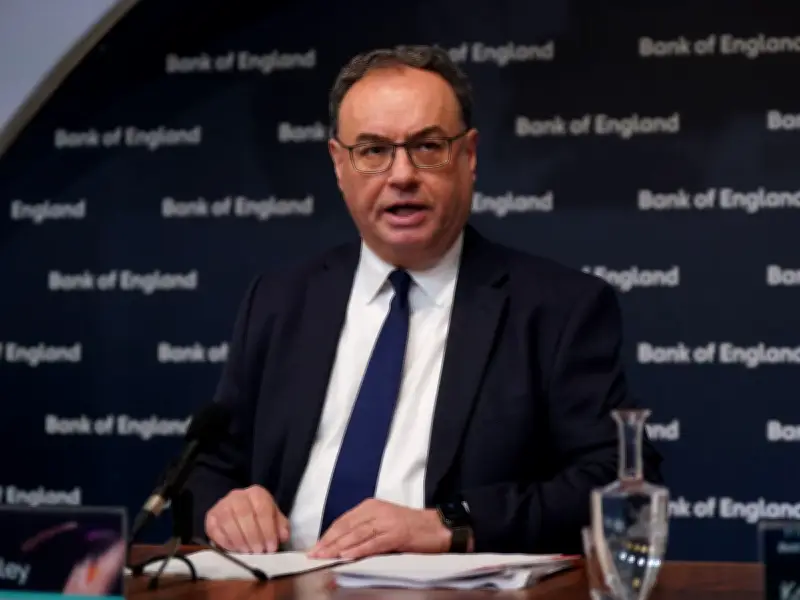
The Bank of England has decided to hold interest rates at 3.75%, signaling a willingness to accept a slower return to its two per cent inflation target. The decision came from a divided Monetary Policy Committee (MPC) vote, with Governor Andrew Bailey warning that inflationary pressures remain in the pipeline despite recent falls in energy prices.
MPC Decision and Economic Context
Bank officials revealed they are closely monitoring the outcome of a peace agreement between the US and Iran, which has pushed international oil and gas prices downward and alleviated concerns over a looming economic crisis in the UK. However, the Bank cautioned that it still anticipates inflation will creep upwards this year, climbing above 3.3 per cent from its current rate of 2.8 per cent.
Minutes from the MPC decision showed that members were required to assess how swiftly the Bank could bring inflation down to two per cent and how long it would be willing to accept sluggish growth. The majority of members concurred that elevated bond yields and mortgage costs affecting businesses and households were already acting to reduce inflation over time, tempering inflationary pressures and enabling the Bank to avoid raising interest rates.
Impact of Energy Prices and Peace Deal
The Bank signalled that its inflation outlook had been revised downwards following the peace deal's impact on energy markets, alongside unexpected figures from within the UK suggesting price pressures had begun to ease. Governor Andrew Bailey, who supported holding interest rates, described a drop in oil prices to below $80 per barrel as encouraging, though he cautioned that they remain elevated compared to levels seen before the Iran conflict began.
"Whatever happens in the future, the higher energy prices of the past four months mean there's already some inflationary pressure in the pipeline," Bailey said. Discussing his vote to hold interest rates steady, he indicated he was willing to accept inflation remaining above the Bank's two per cent target in the medium term.
"Our remit recognises that attempting to bring inflation back to target too quickly may cause undesirable volatility in output," he wrote. "Given the context at present of softness in the real economy and uncertainty around the scale and duration of the shock to energy prices, tolerating temporarily above-target inflation as part of a return to target is an appropriate way to approach the trade-off, providing inflation expectations remain contained."
Dissenting Votes and Future Risks
The two Bank policymakers who voted in favour of raising interest rates were chief economist Huw Pill and external member Megan Greene. Both Pill and Greene cautioned that businesses and households could be more vulnerable to inflation shocks than they were back in 2022, when Russia's full-scale invasion of Ukraine sent gas prices soaring fourfold.
Pill argued that an interest rate rise would help curb spiralling wage and price-setting pressures, and "put the MPC in a good place from which to respond" to the current situation. Catherine Mann, who voted to hold interest rates on this occasion, appeared to indicate that an early rate rise could unsettle businesses and households, despite elevated pricing measures needing an activist hike. She said she had time to assess whether workers would push for higher wages, which could drive prices above expected levels.
Fellow members who voted alongside her indicated they would be willing to raise interest rates should tensions in the Middle East flare up once more. The MPC also cautioned that it would need to reach an early judgement on whether second-round effects—whereby rising wage pressures drive up prices—would take hold across the UK, given that a delayed rate rise may prove insufficient to bring inflation under control swiftly enough.
Some economists have argued that a sluggish jobs market and moderating wage growth, particularly within the private sector, would result in weaker second-round effects than those witnessed following the outbreak of the war in Ukraine in 2022.