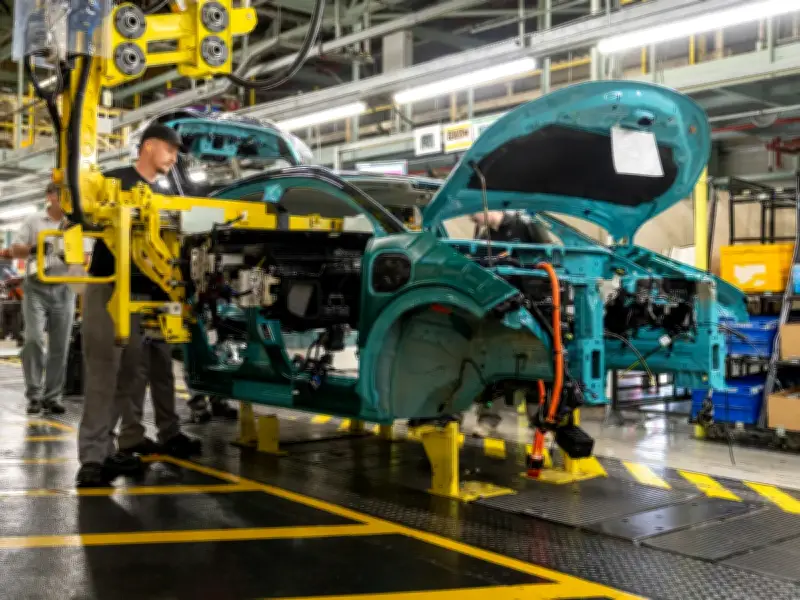
Nine companies across the North of England, including the Nissan plant in Sunderland, have secured backing from the Government's £4bn Drive35 programme, underscoring the region's pivotal role in the transition to electric vehicles. The initiative, managed by the Department for Business, Innovation, Science and Trade, aims to accelerate the electrification of the automotive industry and is expected to support hundreds of skilled jobs.
Key beneficiaries and projects
Among the recipients, Gateshead's Turntide Technologies has been awarded £17m for a project to speed up production of new flux motors, while Manchester's Watercycle Technologies has secured £3m to demonstrate how lithium for vehicle batteries can be recovered from waste. Companies in County Durham, Stockport, Brighouse, and Sheffield have also received financial support.
Industry minister Blair McDougall highlighted the strategic importance of the investment: "Britain invented the modern motor industry and we're determined to ensure the next generation of vehicles are designed and built here too. This investment will secure skilled jobs, strengthen our manufacturing heartlands and help drive the reindustrialisation of Britain."
Turntide's expansion and job creation
As part of its project, Turntide will expand its Gateshead production and R&D campus while reestablishing a dedicated component and validation facility in Cramlington, Northumberland. The company stated that the initiative, dubbed "Project Supreme," will facilitate the creation of new jobs.
CEO Steve Hornyak explained: "Project Supreme is an important step in scaling next-generation electric motor technology production in the U.K. for the global market. By enabling high volume axial flux motor production through automation and overall cost reduction, we're driving wider adoption of more efficient, lighter electric powertrains across automotive and industrial applications."
Watercycle's lithium recovery breakthrough
Watercycle Technologies' project, called ReLiVE, focuses on producing battery-grade lithium from waste sources, aligning with the UK's Critical Minerals Strategy to establish domestic lithium production and reduce import reliance. Co-founder Dr Ahmed Abdelkarim commented: "ReLiVE directly supports the UK's ambition to build a secure, domestic supply of battery-grade lithium. The Government's Critical Minerals Strategy sets a clear goal to establish large-scale UK lithium production and reduce our reliance on imports.
"By demonstrating that high-purity lithium can be produced from circular, low-carbon sources here in the UK, ReLiVE can help turn that ambition into reality. It shows how British innovation can support the transition to zero-emission transport while building the strategic capabilities the country needs for a more resilient battery supply chain."
ReLiVE represents a significant step in scaling Watercycle's technology from pilot operations towards commercial lithium production, showcasing a circular approach to lithium refining at a scale not yet seen in the UK.
Government's 2030 phase-out commitment
The Government has reiterated its commitment to phasing out the sale of new petrol and diesel cars by 2030 as part of efforts to cut emissions and tackle climate change. Despite reports suggesting ministers might consider softening the target to ease the cost of living, a Government spokesperson insisted they remain "committed to the 2030 phase-out date."
However, shadow transport secretary Richard Holden has called on the Government to abandon the 2030 target, reflecting ongoing political debate over the pace of the transition.