Nuclear Turbines, a spin-out from defence giant BAE Systems, has secured £15 million in funding to advance its high-temperature turbine technology that promises to replace traditional steam turbines in nuclear power generation. The Manchester-based start-up aims to drastically reduce the cost of nuclear energy by adapting turbine technology commonly used in jet engines and gas-fired power plants.
Funding details and investors
The funding round was led by IQ Capital, with participation from Rhapsody Venture Partners, Zero Carbon Capital, and Empirical Ventures. The capital will be used to build large-scale test rigs and expand the team as the company works to commercialise its innovative system. Nuclear Turbines says its technology eliminates the need for expensive steam infrastructure, solving both cost and scale challenges that have historically hindered nuclear power adoption.
Technology and applications
The company's system is compact enough to be deployed on industrial sites, offering an alternative to grid-connected electricity for powering data centres and factories. It builds on the advancements of conventional small modular reactors (SMRs) but takes a different approach: designing the power generation system first and then fitting a reactor to it. This reverse engineering is intended to maximise efficiency and minimise cost.
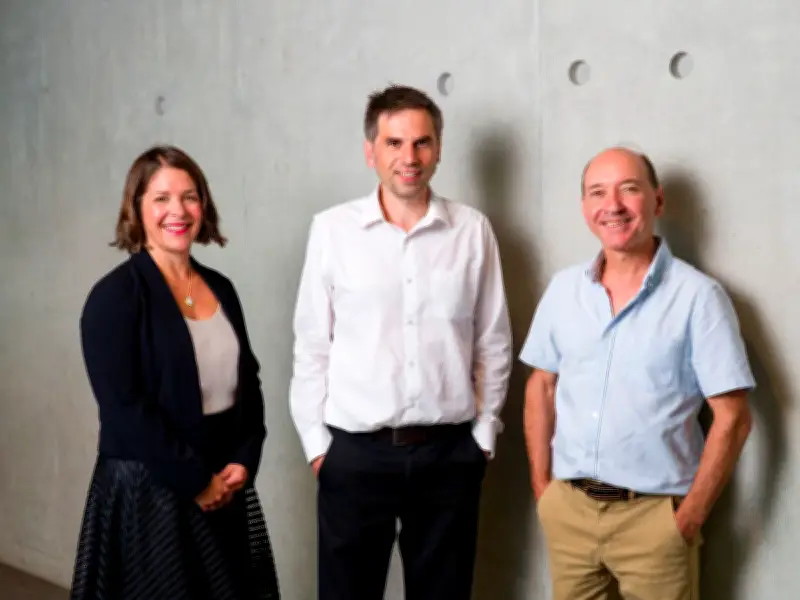
Co-founder Jeremy Owston, a former BAE Systems principal engineer, developed the business alongside nuclear engineer Tim Abram, with support from Empirical Ventures' venture studio. The company has also appointed Lauren Dickerson, formerly of Centrica, as its chief commercial and strategy officer.
Quotes from leadership and investors
Jeremy Owston, co-founder of Nuclear Turbines, said: "The nuclear industry has always designed reactors first, then figured out what to do with the heat. We flipped this script: we started with the cheapest way to generate power and designed a reactor to fit. If we're serious about reindustrialising while meeting climate goals, we need energy that's clean and cheap. We've created the only tech that solves both, from the UK."
Jordan Billiald, principal at IQ Capital, said: "This is the first time I've seen an SMR design that genuinely solves the economic and sustainability equation, and it's at a time when market dynamics, Government ambition and regulatory reform are creating unprecedented opportunity. Nuclear Turbines is perfectly positioned to capture that opportunity and to make sure the UK is not left out of the global nuclear race. With its deep engineering and nuclear heritage, the UK has a real right to win in this space, and Nuclear Turbines is the kind of company the UK venture ecosystem needs to back."
BAE Systems support and broader impact
David Ewing, head of technology commercialisation at BAE Systems, said: "The launch and funding of Nuclear Turbines demonstrates the power of Launchpad to turn bold ideas into high-growth businesses with the potential to address critical national challenges. Built on exceptional engineering expertise and innovative technology, Nuclear Turbines reflects our commitment to accelerating breakthrough innovation beyond defence and supporting UK growth, industrial resilience and energy security."
The funding round comes at a time when the UK is seeking to bolster its energy independence and meet net-zero emissions targets. Nuclear Turbines' technology could play a key role in decarbonising industrial processes and data centres, which are increasingly energy-intensive. By replacing steam turbines with a more efficient direct gas-cycle system, the company claims it can achieve lower levelised cost of electricity (LCOE) compared to traditional nuclear plants.
Future plans
With the new funding, Nuclear Turbines plans to scale up its test rigs to demonstrate the technology at a commercial scale. The company is also looking to grow its engineering and commercial teams, building on the expertise of its founders and new hires. The goal is to have a fully operational prototype within the next few years, paving the way for deployment on industrial sites across the UK and globally.