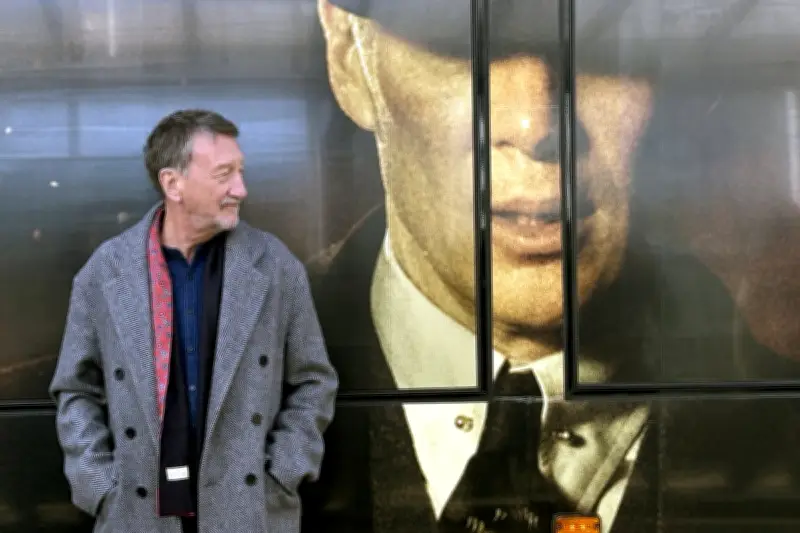
Peaky Blinders creator Steven Knight has expressed his delight after the West Midlands was officially designated as a production hub for film and television. The announcement, welcomed across the region, marks a significant milestone in establishing Birmingham and the wider area as a permanent home for major UK screen productions.
For years, the West Midlands has provided the backdrop for countless international hits, most notably the six-season epic that told the story of the Shelby family. Now, the region will become an official destination for productions, with the infrastructure and investment to match its reputation.
A personal victory for Steven Knight
Knight described himself as "thrilled" by the decision. He has been a tireless advocate for the region's screen industries, regularly highlighting the enormous talent base in the Midlands. The production hub designation is a clear recognition of that promise and a direct result of his campaigning.
Knight's own Digbeth Loc. Studios is at the core of these plans. The multi-million-pound complex, housed in a former warehouse in Birmingham's creative quarter, has already hosted major shoots and will expand to accommodate more productions.
Economic boost to the West Midlands
The hub status is expected to trigger a substantial economic boost. Officials say it will create hundreds of skilled jobs each year, from set builders and electricians to editors and post-production specialists. The impact will be felt beyond the studios, with hotels, transport providers, and catering companies benefiting from the regular presence of film crews.
Regional leaders have long argued that too much production spend goes to London and the South East. This designation is designed to address that imbalance, keeping more of the multi-billion-pound industry in the Midlands.
Strategy and investment
The decision follows a coordinated strategy by the West Midlands Combined Authority and local councils, working closely with major broadcasters and streaming platforms. Part of the plan includes significant investment in studio facilities and sound stages, as well as training schemes to ensure local workers can fill the new roles.
Experts point to the success of other regional hubs, such as those in Yorkshire and Scotland, as a template for how the West Midlands can leverage its unique identity and strong cultural heritage.
Building a 'Hollywood of the Midlands'
The Digbeth area, often compared to London's Shoreditch for its independent vibe, is set to become the epicentre of the UK's newest production cluster. It houses the Digbeth Loc. Studios, the Birmingham Royal Ballet, and numerous creative tech firms, making it a natural home for the hub.
Architecturally, the historic buildings of the area offer versatile backdrops that can double as Victorian streets, modern offices, or industrial sites – a major draw for period dramas and contemporary action films alike.
Legacy of Peaky Blinders
Peaky Blinders proved that stories rooted in the Midlands could capture global audiences. The show's success has led to a surge of interest in Birmingham as a filming location, and the new hub will build on that legacy.
Knight has consistently said that the industry must nurture and retain local talent, and he hopes the hub will create pathways for young people from all backgrounds into the creative sector.
Training and skills development
With the production hub official, colleges and training providers across the West Midlands are gearing up to offer more courses in film production, screenwriting, and craft skills. This is crucial because a shortage of skilled workers has previously forced some productions to bring in crews from London.
The creation of an officially recognised hub will help justify government and private funding for these programmes, ensuring the region can sustain a continuous pipeline of work.
A sustainable production centre
In an industry increasingly focused on environmental sustainability, the West Midlands hub will aim to lead the way. With facilities located close to the city centre, producers can reduce travel distances and use more efficient energy systems in the filmmaking process.
The region's commitment to net-zero targets aligns with the industry's push to cut emissions, making it an attractive partner for studios that value sustainability.
What happens next?
Now that the designation is official, work will accelerate on expanding Digbeth Loc. Studios and other regional sites. A series of announcements about major productions commitment to the area are expected in the coming months.
For Steven Knight, this is the beginning of a long-awaited transformation. The West Midlands has always had the stories and the talent, he says, and now it has the official seal of approval to become a global production centre.
The West Midlands is set for a starring role in British filmmaking – and one of its most famous sons will be watching with pride.