Rachel Reeves, the Labour Party Chancellor, is facing calls to introduce a major overhaul of haulage rules, as experts warn that the UK's Plug-In Truck Grant is being absorbed by larger fleets, leaving smaller firms at a disadvantage.
Grant Structure Favours Large Operators
TwentyForty, a specialist consultancy, has claimed that the grant structure for electric trucks disproportionately benefits large operators placing volume orders. In a warning to Reeves, the firm stated: "The sticker price gap is closing fast. Grant-supported tractor units are leasing at diesel-equivalent rates." However, it added: "Over half of UK HGVs sit in fleets of 10 or fewer, and there's no ring-fencing to protect their access. If SMEs can't join the transition, it doesn't happen."
Chinese Manufacturers and Refurbishment Options
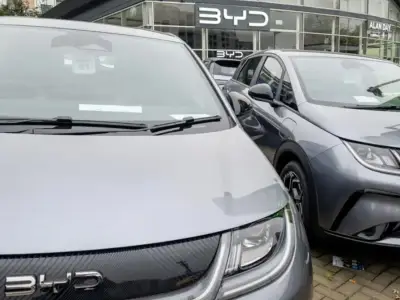
TwentyForty noted that Chinese manufacturers are offering chassis that undercut European OEMs by a third, while diesel-to-electric refurbishment is providing a cheaper route for capital-constrained operators. Despite these opportunities, the current grant system remains a barrier for small and medium-sized enterprises.
Energy Costs and Charging Infrastructure
The consultancy highlighted that delivered power in Northern Europe will not fall below 20p/kWh, and operators should model on 18-20p as their base case. At these prices, electric trucks are still 15-25% cheaper to run than diesel, but this advantage depends on depot charging. "Once public charging exceeds 20% of total energy, the TCO case erodes fast," the firm warned.
Depot power is described as a binding constraint, with over 100 trials confirming that virtually no operator has enough grid capacity. Connections cost between £5,000 and £5 million and can take up to three years. The Depot Charging Scheme still does not cover DNO upgrade costs, which is the single biggest infrastructure expense most operators face.
Insurance and Residual Values
TwentyForty also pointed to hidden blockers in insurance and residual values. While operators report no premium difference, EV claims inflation runs at 25% versus 10% for general motor, and insurers are writing off repairable vehicles. On residual values, there is no used market for electric trucks in the UK, meaning finance providers are pricing blind. A government-backed Residual Value Guarantee has been designed, modelled, and published but remains unimplemented.
Industry Awareness
The biggest risk, according to TwentyForty, is that 70% of the industry is not paying attention. UK electric HGV registrations sit at roughly 1%, against 4.5% in Germany and 14% in the Netherlands. "The commercial case is real and getting stronger. But it only matters if the operators who need to act actually hear it," the firm concluded.