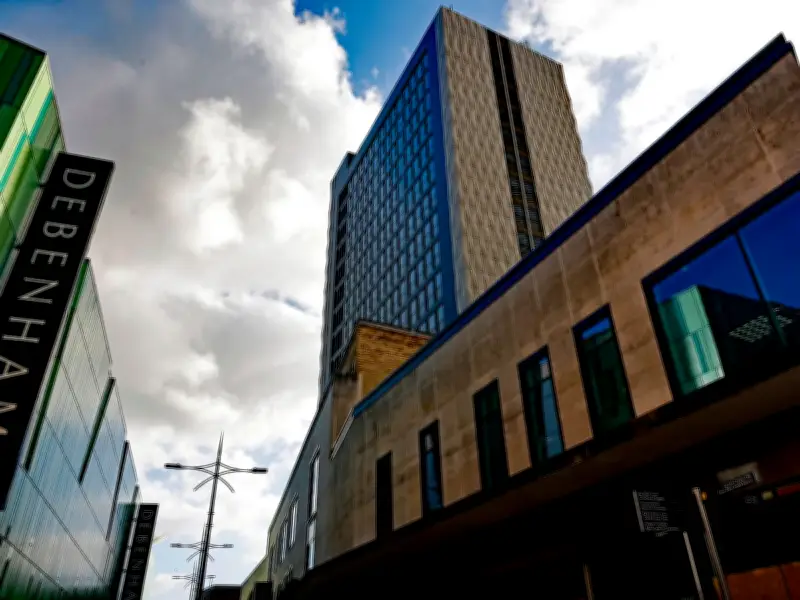
Garrison Barclay Estates, the developer behind the Chartist Tower regeneration in Newport, has warned that the award-winning four-star Mercure hotel may have to close unless Newport City Council agrees to a new ground lease deal that fairly reflects post-Covid trading conditions. The hotel, which opened in 2022, employs over 40 people and generates an annual economic impact of £10 million for the city, according to chief executive Andrew McCarthy.
Developer Invested £11m in Scheme
Garrison Barclay Estates invested £11 million of its own cash reserves to create a 140-bedroom hotel in the building, once occupied by P&O. The scheme also provides around 25,000 sq ft of office space and 15,000 sq ft of retail space, of which 12,000 sq ft is let, including a revamped Barclays Bank branch. The total cost of the regeneration project has been around £21 million, including bank debt and £1.6 million of grant and loan support from the Welsh Government, provided via Newport Council.
While the hotel, operated under a management contract by Mercure, has maintained strong occupancy levels since opening, profit margins have been eroded by inflationary pressures. The office element is currently empty after its only occupier, the Newport Argus, relocated, leaving the developer liable for empty business rates.
Ground Lease Payments Set to Rise
The current relief on the long-term ground lease with the council expires in December 2027. As it stands, the scheme will incur an annual ground lease payment of £315,000, compared with around £220,000 before Covid. Garrison Barclay Estates said that, despite multiple independent reports supporting a reduction in the ground rent, repeated representations to the council have failed to secure a new arrangement.
As an alternative, the company has proposed a revenue-sharing model under which the council’s ground rent would increase as a percentage of revenues as more tenants are secured for the office and retail space and the hotel’s EBITDA improves. Under the plans, the annual lease payment to the council could reach £220,000. The company said the proposed model would provide the council with full transparency through access to the scheme’s accounts.
Council Responds
Newport Council said the Chartist Tower project has received significant public sector funding. A council spokesman stated: “Newport City Council has provided considerable financial support to the developer in relation to Chartist Tower. It is also owed significant sums of money as, to date, the developer has not paid the interest on the council-provided loan in line with the agreement.” The spokesman added that the developer has approached the council for more financial support on more than one occasion, and the council has consistently refused. The council is currently considering the latest proposal, but stressed that “taxpayers’ money is precious” and that due diligence is undertaken. The council noted that the hotel is “thriving and attracting thousands of guests” and that new businesses have opened in Chartist Tower in the last 12 months.
However, Garrison Barclay Estates disputed the council’s characterization. The company said that during development, the council required the project to proceed with approximately 40% less grant funding than originally available, and around £600,000 of grant was converted into a loan after construction had commenced, altering the agreed funding structure. The company stated it has not asked for further public funding, but only for a review of the historic ground rent to bring it into line with current market conditions.
Hotel Could Close Without Agreement
Without a new ground lease deal, McCarthy said the hotel could have to close. He confirmed there is already interest from housing associations and that local authorities across the UK have concluded they need to be more realistic about ground lease rents to sustain and attract commercial investment. McCarthy explained: “If you look back 20 years, councils could expect, for example, a large department store to pay around £1m a year from a ground lease. However, those days are gone. The ground rent structure for Chartist Tower was originally established when the building was occupied by a department store and office accommodation, and it no longer reflects the economic reality of operating a modern city-centre hotel.”
To support its case, the company commissioned independent property and valuation advice from Carter Jonas and BNP Paribas Real Estate. Additionally, Rockingham Partners has offered specialist assistance to help the council understand how other local authorities have addressed similar issues.
The company has given the council until July 17 to reconsider its position. If there is no change, it said it would have no alternative but to consider putting the hotel up for sale. McCarthy warned: “If we have to sell this asset, the most likely route for new owners to sustain the existing ground lease would be through securing a contract to accommodate asylum seekers or by converting the property to social housing. We believe either outcome could have significant implications for Newport city centre, including its economic vitality, visitor appeal and wider regeneration ambition.”
Wider Regeneration Ambitions Unfulfilled
McCarthy added that the company invested in Newport on the back of council plans to bring further investment into the city, including a proposed knowledge quarter, which has failed to materialize. The number of hotel visitors originally envisaged from delegates attending conferences at ICC Wales has yet to be achieved. He said: “While the hotel is award-winning and close to 100% occupancy, our revenue per room would be improved if more events and investment in the city, as promised, were realised.”
The hotel received the TripAdvisor Travellers’ Choice Award for the third consecutive year in 2025. Garrison Barclay Estates has also raised its concerns with the new Plaid Cymru Welsh Government, asking it to intervene to help ensure the continuation of one of Newport’s most important city centre businesses.