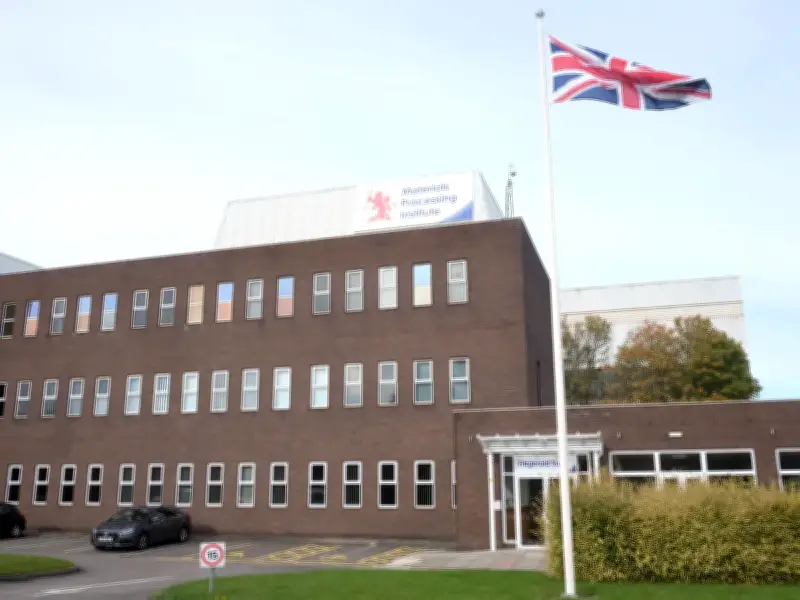
The Materials Processing Institute (MPI), a cornerstone of industrial innovation on Teesside, has formally applied for a Company Voluntary Arrangement (CVA), a legal mechanism for insolvent companies to repay creditors over an extended period. The move follows a turbulent financial period marked by significant cashflow pressures and a substantial number of redundancies, as revealed in recent court filings and the organisation's 2025 accounts.
Background and Role of MPI
Based in Middlesbrough, MPI is a not-for-profit research organisation with a proud history spanning nearly eight decades. It serves as a hub for pioneering research in advanced materials, industrial decarbonisation, and digital technologies, operating state-of-the-art laboratories, a metal alloys production site, and office spaces for numerous small and medium-sized enterprises (SMEs). Until recently, the institute employed around 70 staff, all of whom have been affected by the ongoing restructuring.
The CVA application marks a critical juncture for an organisation that has been a linchpin of the region's manufacturing sector, fostering innovation and supporting the UK's transition to greener industrial practices.
Financial Difficulties and Restructuring
According to the 2025 accounts, which were published in recent weeks, MPI experienced a challenging trading year, resulting in losses and acute pressure on short-term cash flows. In response, management initiated a comprehensive restructuring programme aimed at slashing costs and boosting operational efficiency. The accounts explicitly state: “The company has experienced a challenging trading period during the year, resulting in losses and pressure on short-term cash flows. In response, management has initiated a restructuring programme aimed at reducing the cost base and improving operational efficiency. The company is currently in advanced discussions with its creditors regarding the implementation of a Company Voluntary Arrangement (CVA).”
The restructuring has already led to a significant number of redundancies, though the exact figure has not been disclosed. Directors have underscored the necessity of financially restructuring MPI's balance sheet, a process now being executed through the CVA. The accounts further note: “The successful approval and implementation of the CVA is a key component of the company's financial restructuring. The directors have prepared cash flow forecasts and projections, which incorporate the anticipated impact of the restructuring activities and the proposed CVA. These forecasts indicate that, subject to the successful outcome of the CVA, the company will have sufficient resources to continue trading and meet its liabilities as they fall due for a period of at least 12 months from the date of approval of these financial statements.”
Investment and Innovation Amidst Challenges
Despite the financial turmoil, MPI has continued to invest heavily in cutting-edge research infrastructure. Over the past four years, total capital investment in new equipment and facilities has exceeded £10 million. Notable additions include a seven-tonne electric arc furnace at its Green Steel Centre on Eston Road, making it a unique facility in the UK, and a hydrometallurgy plant for recycling electric vehicle batteries. The institute has also developed a pilot-scale hydrogen gas network to explore fuel switching, hydrogen reduction processes, and heating applications.
These projects have been supported by substantial public funding, including a £2.9 million grant from Innovate UK, part of UK Research and Innovation. Similar sums have been awarded in recent years, underscoring MPI's significance to national industrial strategy. However, the accounts reveal difficulties in diversifying away from grant reliance, which has contributed to the current financial predicament.
Going Concern Uncertainty
The auditors' report highlights a material uncertainty that could cast significant doubt on MPI's ability to continue as a going concern. The accounts state: “However, the requirement to successfully agree and implement the CVA, represents a material uncertainty that may cast significant doubt on the Company's ability to continue as a going concern. If the CVA is not approved or the anticipated support is not maintained, the company may be unable to realise its assets and discharge its liabilities in the normal course of business.”
This stark warning underscores the precariousness of MPI's situation. The CVA's approval is now paramount to securing the organisation's future, preserving its legacy of innovation, and safeguarding jobs in the region.
Impact on the Region and Industry
MPI's struggles have broader implications for Teesside's industrial landscape. As a key player in the region's manufacturing ecosystem, its research supports local SMEs and contributes to national efforts in decarbonisation and advanced materials. The loss of such a facility would be a significant blow to the UK's research capabilities and economic resilience.
The CVA process will involve creditors voting on a proposal to repay debts over time, with the outcome expected in the coming months. If approved, MPI can continue trading, albeit with a leaner operation. If rejected, the organisation could face insolvency, potentially leading to closure and further job losses.
Local business leaders and politicians are closely monitoring the situation, with many expressing hope that a viable solution can be found. The institute's director, in a statement, emphasised the importance of the CVA for the company's survival: “We are committed to navigating these challenging times and ensuring that MPI emerges stronger and more sustainable. The CVA is a critical step in our restructuring, and we are confident that with the support of our creditors, we can continue our vital work.”
Future Outlook
As MPI awaits the CVA decision, the organisation remains operational, continuing its research and support for SMEs. The directors are optimistic that the restructuring will stabilise finances, allowing MPI to refocus on its core mission of driving innovation in materials science and industrial sustainability.
The coming months will be decisive. Stakeholders, including employees, creditors, and the wider community, are watching closely, aware that the outcome will shape the future of one of Teesside's most iconic research institutions.