The UK economy expanded by 0.4 per cent between April and June, according to official figures, though the outlook is expected to deteriorate as the year progresses. The Office for National Statistics (ONS) revealed the quarterly result was accompanied by a surprise growth figure of 0.3 per cent in June, surpassing analysts' expectations.
Figures for May were revised downwards from 0.1 per cent growth to zero growth. City economists surveyed by Bloomberg had forecast second-quarter growth of 0.4 per cent, while June data was anticipated to show a decline in total product value of 0.1 per cent.
Services sector leads growth
The services sector provided the primary boost to the UK economy over the three-month period, expanding by 0.5 per cent. Production remained stagnant with no change from the first quarter, while the construction sector struggled to gain traction with growth of just 0.3 per cent, as reported by City AM.
"Growth slowed in the second quarter of the year, following a strong start to 2026, but remained relatively robust," Liz McKeown, director of economic statistics at the ONS, said. "Within services, computer programming and advertising continued to perform strongly, as they have done throughout the year, while wholesale was a notable area of weakness."
Second-quarter growth fell short of the activity recorded in the first three months of the year, when the UK's official statistical body reported that GDP had risen by 0.6 per cent.
Economists warn of fading tailwinds
Schroders senior economist George Brown said the UK economy had demonstrated "resilient" qualities, though he cautioned that he suspected "seasonal quirks are flattering activity in the first half of the year, with growth likely to lose some steam later in 2026".
Yael Selfin, chief economist at KPMG, agreed, warning that "temporary tailwinds are likely to fade, and higher prices continue to squeeze households' purchasing power". "Growth is expected to moderate in the coming months as the impact of higher prices and borrowing costs filter through to households and businesses," Selfin said.
She further noted the figures had come as a surprise, with consumers having benefited from warm weather and having thus far weathered recent economic turbulence "remarkably well". The ONS indicated that "sporting events", widely interpreted as a reference to the World Cup, had provided a boost to consumer spending.
Political and geopolitical pressures mount
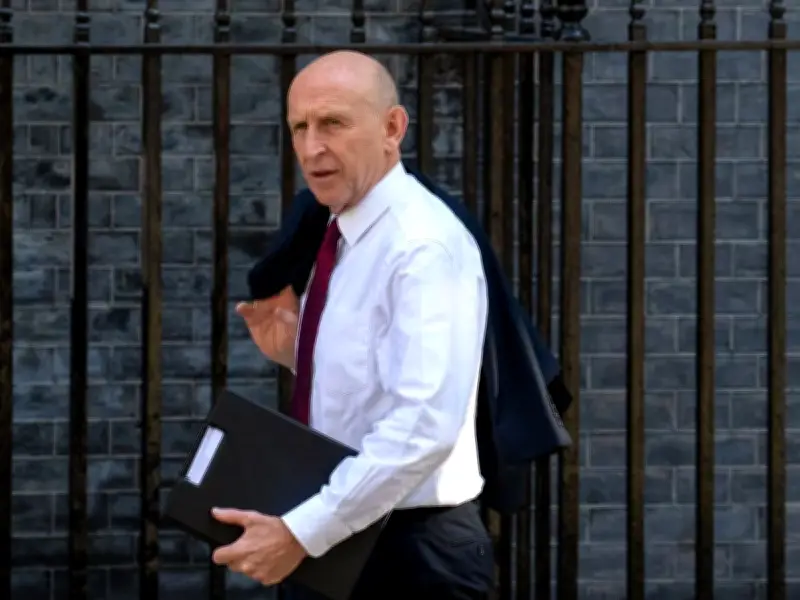
The deceleration in output and activity may unsettle Prime Minister Andy Burnham and Chancellor John Healey as they brace for a challenging Budget. Both senior figures were cautioned that the UK economy's trajectory hinged largely on President Trump's decisions and Iran's conduct across the Middle East, as well as the reopening of the Strait of Hormuz.
According to Bloomberg, Treasury officials warned the senior ministers that the UK economy would expand by just 0.3 per cent should the strait remain blocked for the remainder of the year. The Bank of England has similarly indicated it would increase interest rates if the strait stays closed for the rest of the year.
Independent forecasters have painted similarly bleak pictures for the UK economy. Economists at EY have cautioned that the UK economy could tip into recession in a scenario where oil and gas supplies fail to leave or transit through the Gulf region, which accounts for roughly a fifth of global supplies.
Recent figures have highlighted that government spending has been a substantial driver of economic growth. Healey faces mounting pressure from business leaders to deliver a confidence-boosting Budget against an increasingly gloomy economic backdrop.
Devolution is expected to be one of the centrepiece policies at the Budget, with the Chancellor having previously championed regional investment bodies to stimulate growth. However, economists at Capital Economics have cautioned that reduced fiscal headroom and a raft of spending commitments on energy policy support and defence could compel him to raise approximately £25bn through tax increases.
Responding to the latest growth figures, Healey said: "I know people are worried about the impact of the conflict in the Middle East on their cost of living, which has been too high for too long and it has added pressure on British businesses. This is an active, hands-on government, putting British interests first – giving breathing space to those feeling the strain, making our country more resilient and bringing hope back. We've seen the fastest growth in the G7 this year, but we now need to double down and drive growth in every postcode."
Shadow chancellor Sir Mel Stride added: "Our economy is struggling because Labour have no plan for growth. Labour have mismanaged the economy with their tax and borrowing spree, leaving it weak and vulnerable to the effects of shocks like the Iran War. Yet Andy Burnham is gearing up to tax and borrow even more, doubling down on those failures."