Unemployment at 'Crisis Levels' in Birmingham Wards Despite Regeneration Boom
A stark warning has been issued by Birmingham councillors, revealing that unemployment has reached what they describe as "crisis levels" in specific areas of the city. This alarming assessment follows a detailed inquiry that examined the effectiveness of major regeneration projects in creating sustainable employment for local residents.
Regeneration Investment Fails to Translate into Local Jobs
The inquiry highlighted that "millions, if not billions, of pounds worth of investment" is flowing into Birmingham through regeneration schemes such as Smithfield, Ladywood, and Druids Heath. These projects are expected to generate "thousands, if not tens of thousands, of jobs and training opportunities." However, the investigation raised serious concerns that this investment is not translating into tangible benefits for Birmingham's workforce.
Labour councillor Katherine Iroh presented a bleak picture during a recent meeting discussing the inquiry's findings. "Across our city, regeneration is accelerating but too many Birmingham residents are still not benefiting from the jobs and skills that regeneration should bring," she stated emphatically.

Shocking Disparities in Unemployment Rates
The statistics reveal troubling disparities across Birmingham. The city's overall unemployment rate stands at 13.6 percent, more than double the West Midlands average and nearly triple the national average. However, the situation becomes particularly dire in specific wards.
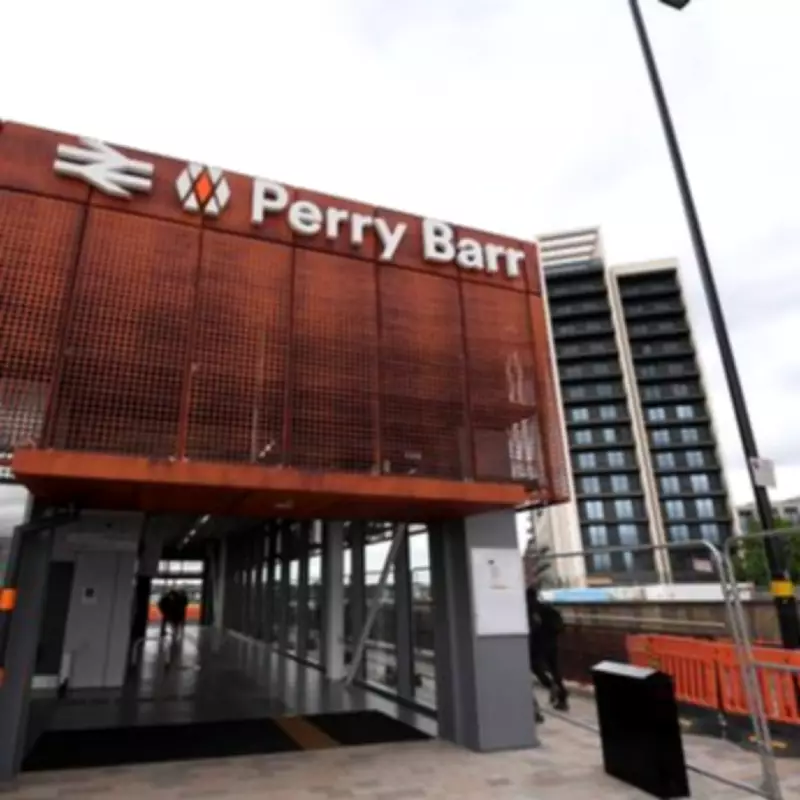
According to the inquiry, unemployment reaches 28.4 percent in Perry Barr and 24.9 percent in Ladywood. These figures stand in stark contrast to more affluent areas such as Sutton Coldfield, where unemployment is just 2.4 percent, and Selly Oak at 6.9 percent.
"In wards such as Perry Barr and Ladywood, unemployment stands at crisis levels," Councillor Iroh declared. She further noted that youth unemployment approaches one in five, creating a generation at risk of being left behind despite the city's economic transformation.
Inquiry Findings and Cross-Party Concerns
The inquiry committee, which engaged with council officers, further education college principals, university representatives, and HS2 contractors, reached several critical conclusions:
- There is insufficient evidence that regeneration schemes are creating sustainable jobs for Birmingham residents
- Job and skills programs are overly focused on construction, requiring broader opportunity expansion
- The council and its partners must adopt fundamentally different approaches to make meaningful change
- Lessons from the pandemic and Commonwealth Games need proper reflection and implementation
- The city lacks analysis of future job requirements
- Birmingham urgently needs an integrated skills pathway
- Apprenticeship opportunities for young people must increase in both number and variety
Liberal Democrat councillor Jon Hunt emphasized the critical nature of the issue: "This question of access to skills and training is critical to making a difference to people's lives. The problem we've had in Birmingham is too many young people have not had access to learning those skills."
Conservative councillor Clifton Welch stressed the council's fundamental responsibility: "Creating the right environment for job creation and raising skills across Birmingham has to be one of the most fundamental roles of Birmingham Council."
A City of Untapped Potential
Labour councillor Lisa Trickett acknowledged Birmingham's inherent strengths while criticizing current approaches. "Birmingham remains a fantastic city, a city of opportunity," she said. "This city is made up of huge assets and a young population that is hungry for opportunity and has the capacity to grasp it. But what we're not doing is connecting it up – we are continuing to use old approaches and old ways of working that were proved to fail."

Council Leader Acknowledges 'Tale of Two Cities'
Ahead of local elections, council leader John Cotton addressed the unemployment challenge when questioned about Birmingham Labour's message to voters. "It needs to be about the great opportunities here in this city," he stated. "We are the youngest and most diverse city in the country. We know we've got problems when it comes to unemployment, too many people still feel locked out of growth in this city."
Cotton acknowledged what he described as a "tale of two cities" when asked whether residents in disadvantaged communities are benefiting from incoming investment. "That is unacceptable," he told the Local Democracy Reporting Service. "Too many people still are left behind when it comes to being able to access the jobs and opportunities that are growing in the city."
The council leader highlighted persistent issues including children growing up in poverty and significant life expectancy gaps between the city's richest and poorest residents. "That's what we've got to fix," Cotton emphasized. "That's why it's so important, having turned around the finances of the council, we're now in a position to work with the Mayor, government, business and communities to break down those barriers."
The inquiry has made several recommendations to address these systemic issues, including ensuring all regeneration programs incorporate comprehensive jobs and skills plans aligned with a citywide strategy. As Birmingham continues its transformation, the challenge remains to ensure that economic growth benefits all residents, not just those in already prosperous areas.