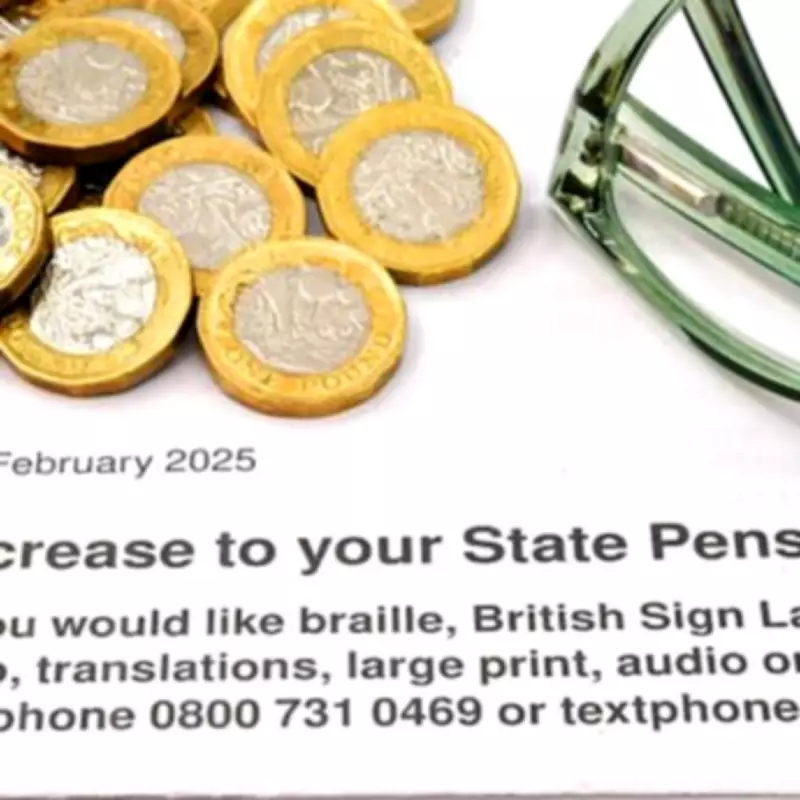
State Pensioners Face DWP Rule Change That Could Widen Financial Gap for Millions
State pensioners across the UK have been issued a stark warning regarding a Department for Work and Pensions (DWP) rule change that threatens to exacerbate the existing two-tier pension system. This development comes as payment rates for the state pension are set to increase in April, highlighting growing concerns about retirement inequality.
Expert Analysis Reveals Potential Problems
Andrew Prosser, head of Investments at the investing platform Invest Engine, has voiced significant concerns about the policy approach. "Using a fixed age of 65 rather than linking the exemption to the state pension age does potentially create a problem over time," Prosser explained. He emphasized that as the pension age rises, the gap between the two will widen, meaning some individuals will qualify for benefits earlier than their official retirement age while others miss out entirely.
"Tying the exemption to the state pension age would have been a more logical and future-proof approach," Prosser continued. "That said, pushing the age too high risks excluding those with a genuinely shorter investment horizon, so there's a balance to strike."

Timeline of State Pension Age Increases
The state pension age is scheduled to increase in stages starting from April 2026, reaching 67 by April 2028. Furthermore, established policy dictates that the state pension age will increase from 67 to 68 between 2044 and 2046. These gradual rises form the backdrop against which the DWP rule change must be evaluated.
Prosser highlighted broader implications: "There is a risk that this kind of policy reinforces the idea that savings are only there to be spent within your own lifetime, rather than also being a way to build longer-term wealth." He noted that in reality, many people use Individual Savings Accounts (ISAs) not just for retirement spending but to support family members or pass wealth on to future generations.
Potential Tax Consequences and Investment Limitations
The investment expert warned that people could end up paying more tax under the new allowances. "For under-65s who prefer holding over £12,000 in cash, the cap may mean that beyond that level, they keep extra cash outside an ISA in taxable accounts," Prosser explained. "That friction may either translate into 'why bother saving more cash?' and more consumption, or it could result in cash holders paying more in tax. Neither is a good outcome for those looking to build long-term wealth."
Prosser advocated for a more flexible approach that supports both spending and continued investing, arguing this would better reflect how people actually use ISAs in practice. "Discouraging investing later in life could unintentionally limit those longer-term benefits, particularly as people live longer," he cautioned.
This DWP rule change represents a significant policy shift with far-reaching consequences for millions of state pensioners, potentially widening financial disparities and altering retirement planning strategies across generations.