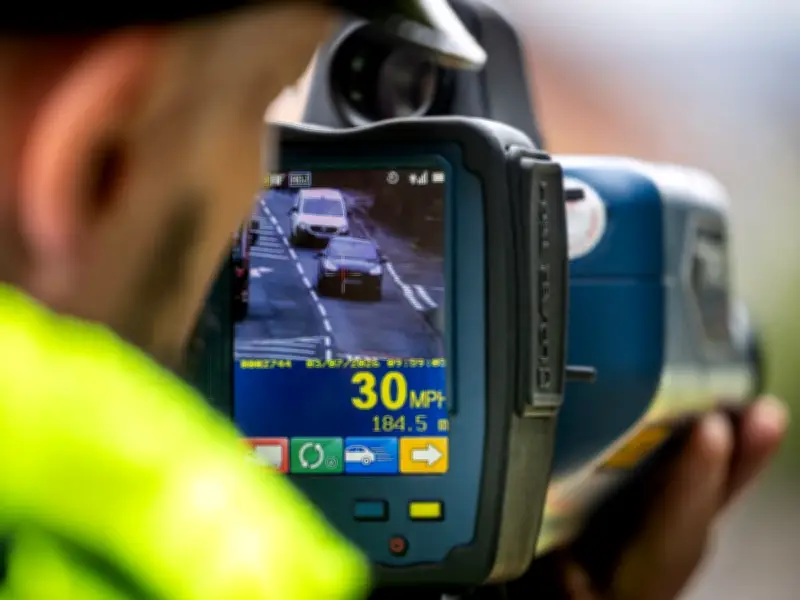
The Police Service of Northern Ireland (PSNI) has deployed three new TruCAM II handheld speed cameras as part of a three-month pilot scheme with the Northern Ireland Road Safety Partnership. These devices can operate "anywhere, at any time, on any road," including during hours of darkness, and can detect speeding vehicles from distances up to one kilometer.
How the New Cameras Work
The TruCAM II cameras record moving footage and produce high-definition images that can be processed without stopping vehicles at the scene. This streamlines speed enforcement and allows officers to issue fixed penalty notices by post, similar to those from safety camera vans. Chief Inspector Celeste Simpson, Head of the PSNI's Road Policing Unit, stated: "They can record moving footage and provide a high-definition image which can be processed without the need to stop the vehicles at the scene, streamlining the process of speed enforcement."
Addressing Road Safety Concerns
Chief Inspector Simpson emphasized that the cameras address public concerns about speeding enforcement, particularly on rural roads. "We often hear police aren't doing enough to tackle speeding on our roads, especially on rural roads. Having these cameras means we reach those roads where it isn't suitable to deploy NIRSP safety camera vans, where there's a proven history of collisions and where there is community concern," she said.

The devices will initially be used by the Road Policing Unit and can be deployed flexibly across Northern Ireland. Simpson added: "As well as NIRSP safety camera vans and average speed cameras, this state-of-the-art technology should serve as a deterrent to anyone who thinks speeding is acceptable and they can get away with it, especially off the main roads."
Fatal Collision Statistics
Since the start of 2026, as of July 6, 36 people have died in road traffic collisions in Northern Ireland. Chief Inspector Simpson described these as "devastating losses. Lives changed in an instant and forever." She stressed that reducing serious and fatal collisions is a priority for the PSNI, and tackling excessive speed—one of the "fatal five"—is key to this effort.
The "fatal five" include speeding, carelessness, not wearing a seatbelt, driving under the influence of alcohol or drugs, and using a mobile phone while driving. Simpson urged: "Our message to everyone on our roads is remember the ‘fatal five’ - slow down; don’t be careless; always wear your seat belt; don’t drink or take drugs and drive and never use your mobile phone while driving."
Impact on Motorists
For anyone speeding, the new cameras can detect violations before the driver even notices the device. "By the time they've seen it, it will be too late. They will have been detected and receive a notification in the post, the same as if detected by NIRSP safety camera vans," Simpson warned. The pilot scheme aims to improve road safety and change driver behavior as part of Operation Lifesaver.