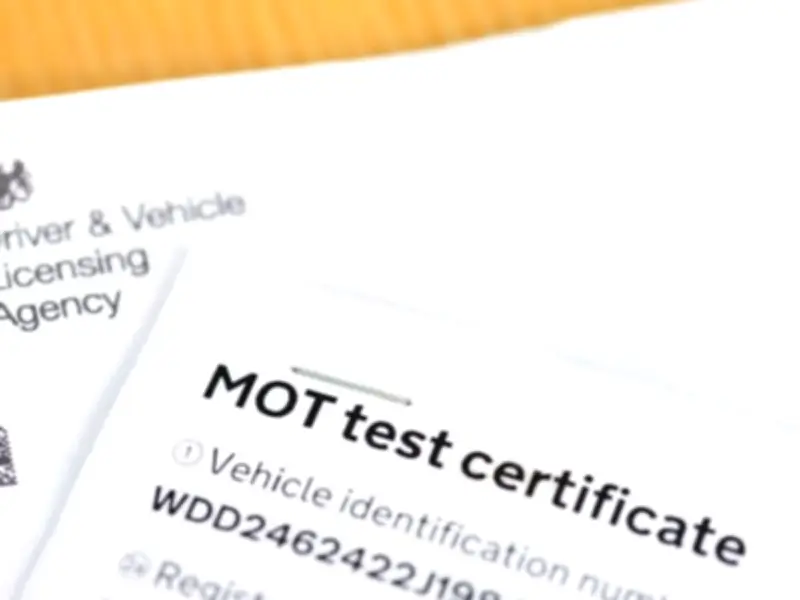
Drivers using tinted or darkened number plates could face an immediate MOT failure and fines of up to £1,000, according to vehicle recycling marketplace National Scrap Car. The company reports that searches for "darkened number plates" have increased by 22 per cent over the past three months.
Expert Warning on Legal Compliance
Saul Turner, motor expert at National Scrap Car, has cautioned motorists against the modification. "I'd steer clear of them," he said. "The rules around number plates are there for a reason - to keep everyone safe - so your registration must be clearly visible at all times."
Mr Turner emphasised the importance of readability: "It needs to be readable by other people on the road, the police and cameras, so anything that makes it harder to identify your car can become a problem."

Risks Beyond Fines and MOT Failure
He also highlighted the ease of purchasing such plates online, noting that some are marketed misleadingly. "If you search for tinted number plates online, you'll find them for sale really easily and some are advertised in a way that makes them sound completely fine to use on the road - when they are illegal."
The expert warned that modifications can have long-term consequences for vehicle owners. "A poor modification can make a vehicle really difficult to sell and, in some cases, practically unsellable," he said. He also pointed out potential insurance complications: "We see customers who've modified their car, then been involved in an accident and had problems with their insurer paying out because the modification wasn't declared."
Window Tint Regulations and Enforcement
The rules for tinted front windscreens and front side windows depend on when the vehicle was first used. There are no restrictions for tinting the rear windscreen or rear passenger windows.
For vehicles first used on or after 1 April 1985, the front windscreen must allow at least 75% of light through, and the front side windows must allow at least 70% of light through. For vehicles first used before that date, both the front windscreen and front side windows must allow at least 70% of light through.
It is illegal to fit or sell glass (or a vehicle already fitted with glass) that breaches these tinting rules. The police and Driver and Vehicle Standards Agency (DVSA) examiners use light measuring equipment to check window tint levels.