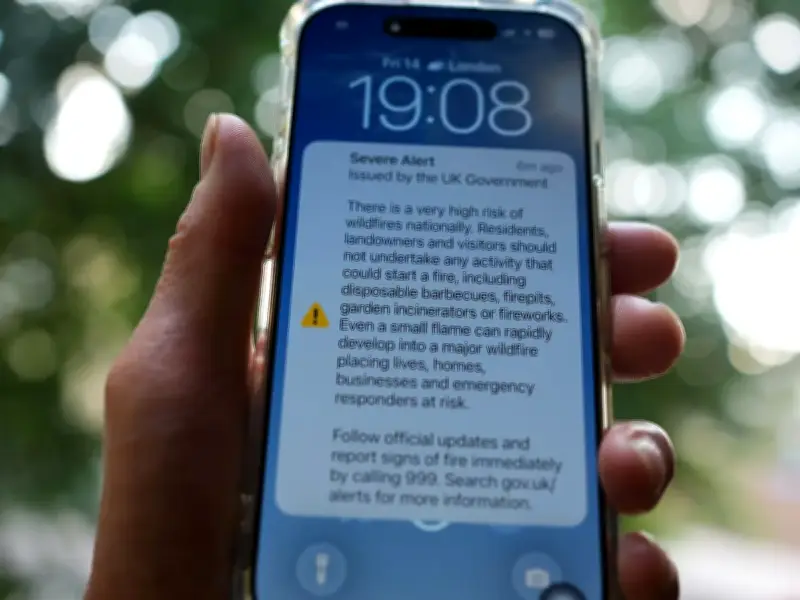
Millions of people across the UK had their Friday evening plans interrupted by a loud, jarring alert from the government. The Emergency Alert, sent at around 9pm, warned of the ongoing threat from wildfires and urged recipients to take precautions to prevent further blazes.
The alert came as a surprise to many, despite the system being tested almost a year ago. That test was heavily publicised in advance, but Friday night's message arrived without warning, leaving people in living rooms, restaurants, theatres and other venues scrambling to understand what was happening.
What is the Emergency Alert system?
According to the UK government's official website, Emergency Alerts are 'a UK government system that provides warning and advice in a life threatening emergency'. The alerts are sent by emergency services or government departments and can be issued for a range of threats, including wildfires, severe flooding and extreme storms.

The alerts are location-based, meaning they are only sent to people in the affected area. This allows the government to target specific incidents, such as a flood in one town or a fire in another, without alarming the whole country unnecessarily.
What to do when you receive an alert
When an alert arrives, the government advises that you stop what you're doing, read the message, and follow any instructions it contains. If you are driving or cycling, you should find a safe and legal place to stop before reading the alert or taking any further action.
It is important to note that it remains illegal to use a handheld device while driving, even if you receive an alert. The government stresses that safety on the road takes priority over checking the message immediately.
The alert on Friday night was sent in response to the ongoing wildfire risk across the country. Recent fires, including the devastating blaze in Stourbridge that destroyed 19 homes and displaced a significant number of residents, have highlighted the severity of the situation. The message urged people to avoid activities that could spark new fires, such as barbecues in dry areas or discarding cigarettes irresponsibly.
Why Friday's alert took many by surprise
Unlike the test alert issued last year, which was preceded by widespread publicity and warnings, Friday night's alert came without any prior notice. This has led to confusion among some recipients, who were unsure whether the message was genuine or a mistake.
The government has not yet commented on why no advance warning was given, but it is likely that the urgency of the wildfire threat prompted an immediate alert. The system is designed to be used in life-threatening situations where every second counts, and officials may have judged that a warning would have delayed the message unnecessarily.
For those who missed the alert or want to know more, the government's website provides detailed information about the Emergency Alert system, including how it works and what to expect. Residents are encouraged to familiarise themselves with the system so they know how to respond if another alert is issued.