Birmingham's Pivotal Role in the Titanic Disaster Revealed
Today marks the 114th anniversary of the world's most infamous maritime catastrophe – the sinking of the RMS Titanic. The colossal passenger liner tragically sank in the North Atlantic Ocean on April 15, 1912, at 2:20 a.m., following a collision with an iceberg less than three hours earlier.
Birmingham held a crucial, yet long-forgotten, connection to the ill-fated vessel, with one of the city's own inventions playing a vital role in saving lives from the so-called 'unsinkable' Olympic-class liner.
A Cinematic Discovery Uncovers Historical Link
Remarkably, this significant link remained unknown to the present team at ACME Whistles until a chance discovery during a cinema visit. The Birmingham-based firm, located in the historic Jewellery Quarter, had supplied whistles to the White Star Line ship before its doomed maiden voyage.
The ship departed Southampton for Cherbourg, then proceeded to Queenstown (now Cobh, Ireland), before its intended final destination of New York – a journey it never completed.
ACME Whistles' current leadership, however, remained unaware of their company's involvement in the disaster for decades. The revelation came when Managing Director Simon Topman watched the blockbuster film Titanic in its entirety with his children.
"As the film approached its dramatic climax, Rose watched her newfound lover sink beneath the Atlantic waves, then she picked up a whistle and blew it forcefully," Mr. Topman recalled. "The sound was heard by sailors desperately searching for survivors, leading to her rescue. I immediately knew the original whistle used had to be an ACME product. Could we have supplied whistles to the Titanic itself?"
He was so captivated by this realization that he missed the remainder of the film, rushing back to the factory to investigate. There, within an ancient, oil-stained ledger containing complete records since 1870, he found definitive proof: ACME had supplied thirty whistles to the White Star Line specifically for use on the Titanic in 1912.
Recreating History with Original Tools
Although ACME whistles were featured in the film, with Kate Winslet famously blowing one in the final scenes, the Birmingham company only became aware of their authentic historical connection after viewing the movie. Executives had no idea their historic product appeared on screen in one of the highest-grossing films of all time, which still ranks fourth on the all-time list.
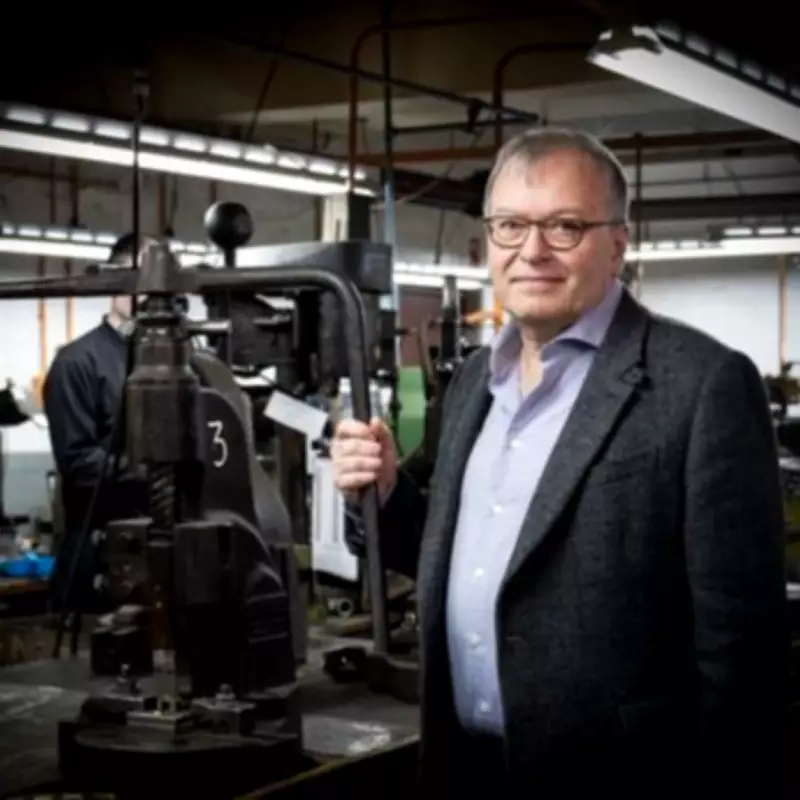
From the factory records, Mr. Topman subsequently uncovered the original tooling and detailed documents still preserved in the Birmingham workshop. "From that ledger, I went to the oak pigeonholes in the press shop and found the original tooling used to manufacture those whistles," he explained.
"We then meticulously remade fifty perfect replicas using the original tools and machinery that would have been operational at the time, all within the same workshop. It was our own Titanic discovery – we had been completely unaware for decades that we had made that profound connection all those years ago."
The Lifesaving Function of Whistles Aboard Titanic
Whistles served a critical function aboard the Titanic, employed by officers to signal commands, summon assistance, coordinate lifeboat operations, and maintain order during the chaotic evacuation. Historical accounts indicate that Fifth Officer Harold Lowe utilized an officer's whistle during the sinking, with the ACME Thunderer widely believed to be the specific type used during that era.
Ben McFarlane, Head of Sales and Marketing at ACME Whistles, emphasized the enduring legacy: "We remain in the same building where the original whistles supplied for the Titanic were manufactured, and we still operate some of the same machinery. This is something truly special for Birmingham and its rich heritage as the City of a Thousand Trades."
Founded in 1870, ACME Whistles relocated to its Jewellery Quarter factory in 1909 and would have supplied the White Star Line shortly thereafter. The company continues to operate from the same Barr Street premises today, still utilizing the original workshop, fly presses, tools, dies, and traditional hand-finishing techniques that have been passed down through multiple generations.