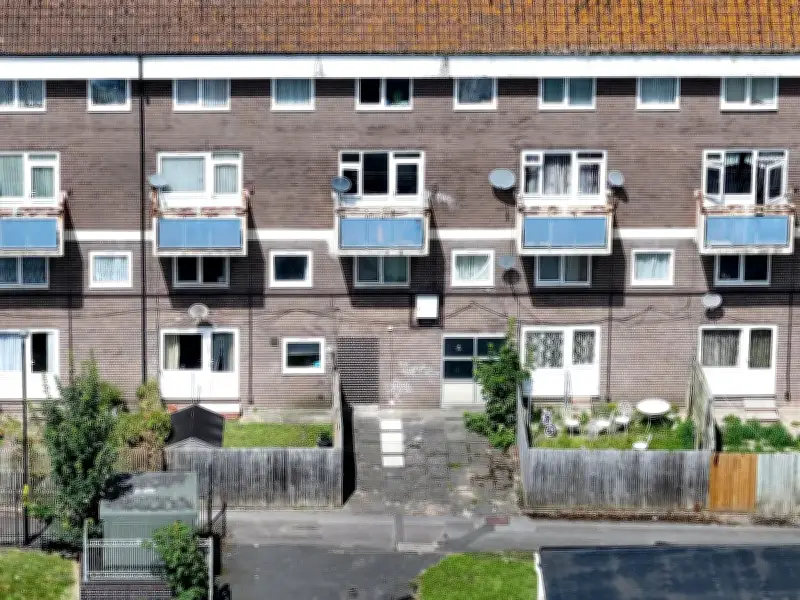
Birmingham City Council is losing more than 400 council homes every year under the Right to Buy scheme, with sales dramatically outpacing the construction of new properties, a BirminghamLive data investigation has found.
Since the start of 2020, the council has sold 2,323 homes to tenants under Right to Buy rules – an average of over 400 per year. In the same period, only 480 new council homes were built, fewer than 100 annually, a ratio of one built for every four sold. The council also acquired 755 homes, bringing total additions to 1,235 against 2,323 lost.
Impact on Housing Register
Some 35,000 households in Birmingham are currently on the council's housing register, with many bidding for rare vacant properties. Some have waited over a decade, living in overcrowded conditions, temporary flats, or with family. Thousands of children remain stuck in B&Bs, homeless centres, and other temporary fixes, often at huge additional costs.
Former councillor and housing expert Scott Brereton likened the policy to a leaky bucket: "Every time we build new council homes, others disappear through Right to Buy and Right to Acquire. We're trying to fill the bath with the plug pulled out." He added: "The biggest irony? Thousands of former council homes are now owned by private landlords and rented back to councils at far higher cost to the taxpayer."
Calls for Abolition
Critics argue that only the best council properties are sold, stripping the portfolio of desirable homes while leaving rundown ones. The policy, introduced in 1980 under Margaret Thatcher, was hailed as a leveller, but many now say it should be ended, as done in Wales in 2019 and Scotland in 2016.
David Cusack, former head of housing in Birmingham, said ending Right to Buy was vital: "It should not be viewed as stopping people with aspirations to buy, but as protecting a valuable public asset for future use by people who need it." Tom Murtha, a lifelong social housing campaigner, said: "Quite simply it should be banned completely. It is the main cause of the current housing crisis." Edward Harkins, a housing activist, condemned the system as "inequitable, iniquitous, bad economics and insanely counter-productive", noting Scotland's 2016 scrapping brought no electoral backlash.
Government Reforms Announced
Under Keir Starmer's Labour government, a consultation recommended tightening rules rather than abolishing. From April this year, new measures include increasing the minimum tenancy period from three to ten years, capping discounts at 15% of property value, and a 35-year exemption for new social homes.
Councillor Baber Baz, Cabinet Member for Housing, said the council aims to deliver 1,083 affordable homes each year through partnerships with registered providers and developers. "Birmingham is facing unprecedented pressure on its housing register and a shortage of available social housing," he said. "Years of underinvestment and the loss of homes through right to buy year-on-year has led to a national housing crisis."
Annual figures show losses: 2020: 337 sold, 103 built; 2021: 437 sold, 46 built; 2022: 467 sold, 151 built; 2023: 403 sold, 85 built; 2024: 302 sold, 30 built; 2025: 377 sold, zero built; 2026 (so far): 119 sold, 60 built. The council has also purchased homes, including 213 at Perry Barr village in 2024.
The council added: "We welcome recent changes by Government aimed at giving councils greater flexibility to use Right to Buy receipts and to protect existing social housing stock. However, the long-term challenge remains substantial, and increasing the supply remains a national challenge that needs a national solution."