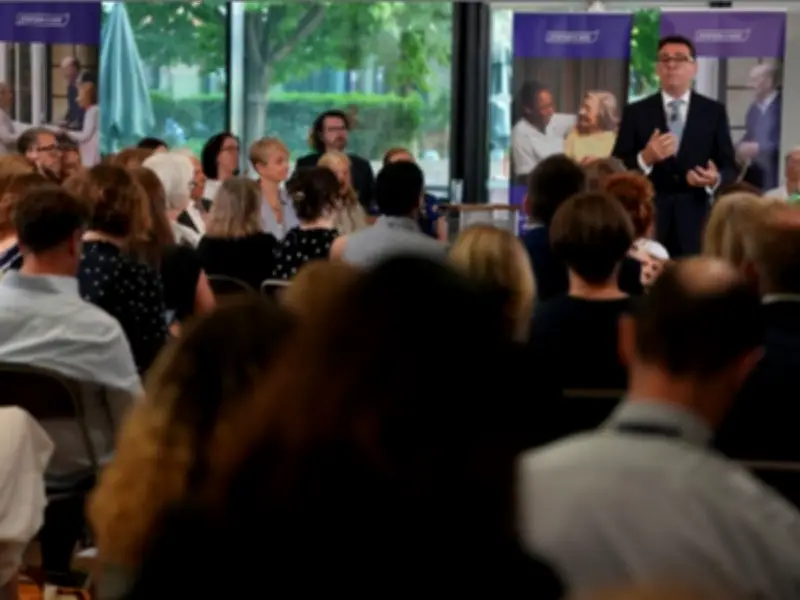
Prime Minister Andy Burnham has outlined plans to reform social care in England, targeting a change in NHS bed usage for patients aged over 65. The Labour leader, who succeeded Sir Keir Starmer as Prime Minister just over a week ago, is making social care the centrepiece of his premiership. His proposals aim to alleviate pressure on NHS wards by addressing the longstanding issue of bed-blocking, where thousands of patients remain hospitalised despite being medically fit to leave, often due to a lack of adult social care capacity.
Workforce Integration and Pay Reforms
Burnham, the MP for Makerfield, announced that his reforms will immediately focus on elevating the social care workforce. A key measure involves linking the social care workforce with the NHS workforce, creating clear career progression routes, better pay, enhanced training, and improved job security. The government stated: "The Prime Minister set out that social care reform was essential not only for those actively needing support, but also for the long-term future of the NHS. A failure to tackle the broken social care system has piled pressure on NHS services with thousands of people stuck in hospital beds despite being medically fit to leave, some of which are due to a lack of capacity of adult social care services."
Cross-Party Talks and Casey Review
In a speech delivered on Wednesday, Burnham emphasised the need for cross-party collaboration to achieve lasting reform. He said: "We will not get the care service we all want until we improve the strength and the capability of care at the very front of the service. And that means lifting up the social care workforce as best we possibly can. Yes, in terms of pay, but also in terms of training and the wider support we give them; the security of their roles." He added: "The third announcement is to start, right now, initiating cross-party talks on social care. And yes I have been here before, and yes I do have some of the scars of that, but it’s the right thing to do. I stood on the steps of Downing Street just a few days ago and I said I wanted to create a new way of doing politics in this country. More problem solving, less point scoring. And this is the first big test of that. And I mean what I say. We won’t fix this through politics as usual. We have to bring a different approach."
Impact on Over-65s and NHS Capacity
The proposed changes are specifically targeted at patients over 65, who constitute a significant proportion of those affected by delayed discharges. By integrating social care more closely with NHS operations, Burnham hopes to reduce the number of elderly patients occupying acute beds when they could be cared for in community settings. The plan includes bringing forward the Casey Review, which is expected to provide recommendations on improving the social care system. The government has not yet specified a timeline for implementation, but Burnham stressed the urgency of addressing the crisis.
Political Context and Next Steps
Burnham's announcement marks his first major policy initiative since taking office. The Prime Minister has positioned social care reform as a defining issue of his premiership, acknowledging past failures and the need for a new political approach. The cross-party talks are set to begin immediately, with the aim of building consensus on long-term funding and structural changes. Critics, however, have questioned whether such talks can succeed given previous attempts have stalled. Burnham remains optimistic, stating that the current crisis demands a break from conventional politics.