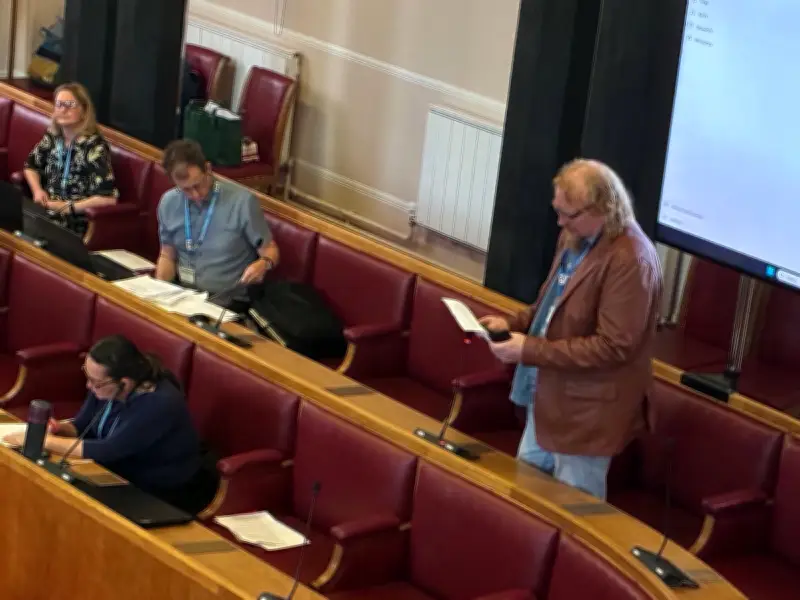
Plans to convert the former Citizens Advice Bureau centre in Dudley into a 13-bedroom house in multiple occupation (HMO) have been rejected by councillors who cited fears over crime and anti-social behaviour. The decision, taken at a meeting of Dudley's Planning Committee on July 28, went against planning officers' recommendation to approve the scheme with conditions.
Police concerns over high crime area
Committee members were told that West Midlands Police had objected to the application at Marlborough House on St James's Road. The force highlighted that the site lies within a high crime area and that no security management plan had been submitted to address risks. Councillor Ivor Robinson, who represents the St James's ward, told the committee that residents were 'deeply concerned'.
He said: "The area experiences significant policing demand and crime prevention is a material planning consideration. We should not be approving development that has the potential to place further pressure on an area already facing these challenges."
Condition insufficient to reassure members
Although the application included a condition requiring a security management plan to be approved by council officers before occupation, several councillors remained uneasy. Councillor Peter Drake voiced strong concerns about public safety, noting: "We have evidence for that – the police themselves say it's a high demand, high crime area by the standards of Dudley. There is a risk by putting a 13 bed HMO there that it will inevitably make it riskier."
Not all committee members shared these fears. Councillor Asif Ahmed argued that HMOs are not inherently problematic: "You get good HMOs and bad HMOs, it all depends on how it is managed. We are working on assumption again – not everybody in an HMO is a criminal. My best friend at university worked in a top ten law firm and he lived in an HMO for four years. I'm not going to assume that HMOs are filled with bad people; I'm going to base my decision solely on planning grounds."
Rejection despite lack of evidence
Despite being advised that there was no evidence to suggest future residents would commit crime, the committee voted overwhelmingly to reject the application. The decision underscores the weight given to community safety and policing concerns in planning deliberations, even when objective data linking HMOs to increased crime is absent. The refusal marks a significant local planning outcome, reflecting residents' anxieties about pressure on already stretched police resources in the area.