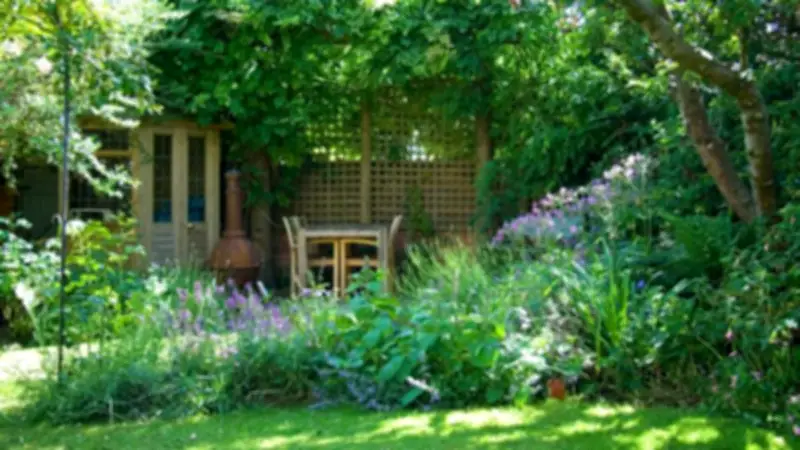
Recent heatwaves have highlighted the value of shady outdoor spots, and north-facing gardens are perfectly suited for such conditions. While sun-loving crops may struggle, these gardens remain lush, green, and refreshingly cool during hot weather. Despite initial doubts about damp, mossy corners, a wide variety of shade-tolerant plants can thrive with proper planning.
Understanding Shade Types
Success in a shade garden relies on texture, leaf shape, and structure rather than bright flowers. Not all shade is the same, so observe how light moves across your garden. Damp shade, often found at the base of walls or fences where moisture lingers, is ideal for ferns and hostas. Dry shade, common under mature trees or large shrubs where roots absorb water, requires tough plants and ample mulch. Partial or dappled shade, receiving a couple of hours of morning or evening sun, offers more flexibility.
Lynne Moore of Moore And Moore Plants, a specialist in shade-tolerant and woodland plants, notes, "The assumption is that if you have a north-facing garden it doesn't get the sun so therefore it's shady and you can't do anything with it. People don't consider how the light levels change hour to hour, day to day." She adds that even a south-facing garden can have low light levels due to high walls or trees.

Soil Types and Plant Choices
The soil type in your garden determines which shade-tolerant plants will thrive. For sandy soil, which drains quickly, choose drought-tolerant plants like hardy geraniums, bergenia (elephant's ears), and Euphorbia amygdaloides var. robbiae (Mrs Robb's Bonnet). Clay soil, often heavy and shaded, benefits from a thick layer of compost or well-rotted manure; try hellebores, astrantia (masterwort), and blue-leaved hostas. Chalk soil dries out rapidly under trees; opt for Japanese anemones, epimediums (barrenwort), and campanula (bellflowers). Loamy soil mimics woodland floors and is ideal for Siberian bugloss, Japanese painted ferns, astilbe, and bleeding hearts.
Embrace Foliage for Year-Round Interest
"With shady gardens we have to think about foliage a lot more than with sunny borders, where it's all about the 'pretties' and we don't think about the leaves," says Moore. "In the height of summer in a full shaded garden, the leaves are important because they're going to add interest through different textures and colours." Hostas, known for their foliage, also produce spikes of flowers, adding vertical interest.
Design Tricks to Brighten Shady Spaces
Since light is limited, visual tricks can make a north-facing garden feel brighter and more inviting. Use plants with variegated leaves, such as variegated ivy, which act like mirrors to catch available light. Paint fences or walls in light, neutral colours like off-white, pale grey, or soft cream—avoid stark white, which can appear clinical in cold light. A well-placed garden mirror can bounce light into dark corners, while a still water feature reflects the sky and brings light down to ground level.
For further reading, consider books like Beth Chatto's Shade Garden: Shade-Loving Plants for Year-Round Interest (£23.21 at Blackwells), The New Shade Garden: Creating a Lush Oasis in the Age of Climate Change by Ken Druse (£33.25 from Bookshop.org), Glorious Shade: Dazzling Plants, Design Ideas and Proven Techniques for Your Shady Garden by Jenny Rose (£20.55 on Amazon), and How to Garden: Gardening in the Shade by Alan Titchmarsh (£11.09 on Amazon). Prices correct at time of publication.