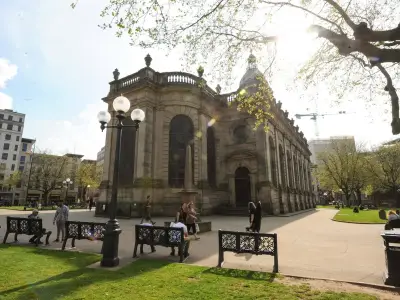
For many, advancing years bring a wave of nostalgia, a longing for the perceived simplicity and magic of Christmases past. Dr Steve McCabe, reflecting on a lifetime of festive seasons in Birmingham, argues that while the trappings change, the core magic of togetherness and celebration in the city endures.
Sparkhill Memories and the Spirit of the 1960s
Dr McCabe's own childhood Christmases were shaped by vivid experiences in Sparkhill. He fondly recalls the full-sized Nativity scene erected annually in a local park, a tradition sadly ended after vandals destroyed it. Another cherished memory is the excitement of walking to the end of Castleford Road in the dark to watch Father Christmas's grand arrival into Birmingham, destined for Lewis’s department store.
The pilgrimage to Lewis’s to meet Santa was a major event, with families queuing for hours. A photograph from one such visit remains a proud possession. This personal magic, he notes, often fades in teenage years but is joyfully rediscovered through one's own children.

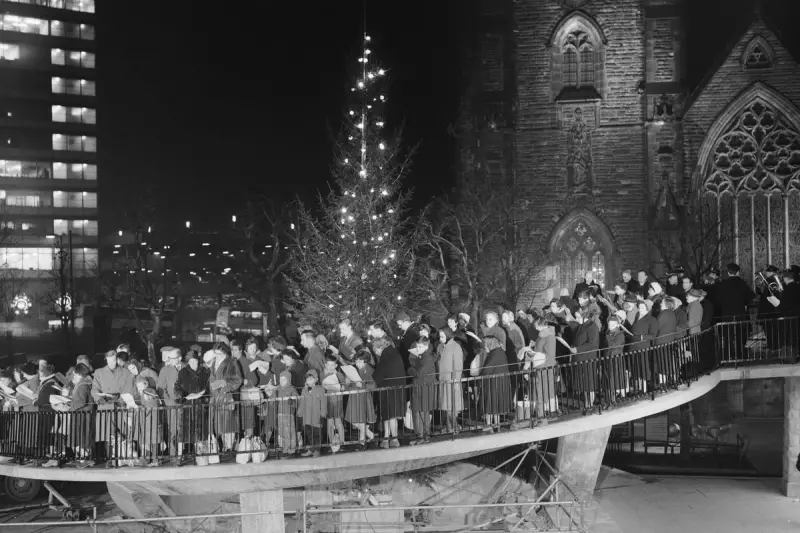
Evocative photographs from the 1960s, like those of carol services on the spiral ramp of the old Bullring Centre with St Martin's Church in the background, transport him back. The original Bullring Shopping Centre, opened in November 1963, was then considered state-of-the-art. A visit to its mammoth Woolworths – a store seen as essential to Christmas until its 2008 liquidation – was a festive highlight.
The Ever-Evolving Tapestry of Christmas Tradition
While sentimentality tempts us to view the past as more traditional, Dr McCabe cautions that Christmas itself is a historical fusion. The celebration of Christ's birth on 25th December wasn't established until 226 AD. In Britain, pre-Roman Celts marked the midwinter solstice on 21st December with festivals of light. The Romans introduced Saturnalia, a week-long feast starting 17th December.
The date was later adopted by the Christian church. For centuries, Christmas was a religious feast, though the Puritan attempt to ban it in 1647 sparked rebellions and was swiftly abandoned.
The 'traditional' Christmas we know today is largely a Victorian creation, shaped by industrialisation and urbanisation. Turkeys, present in Britain since 1526, became a mass festive food in the mid-1800s. Christmas trees were popularised by Prince Albert. The modern Father Christmas, bringing gifts from the North Pole, emerged from 19th-century American stories.
Birmingham's Festive Present: Change and Continuity
For the last 175 years, Christmas has maintained a consistent shape, though its religious aspect has diminished for many in favour of family, feasting, and friendship. In Birmingham, some rituals have transformed. While online shopping has reduced the throngs in physical stores, huge crowds now flock to the annual Frankfurt Christmas Market.
One unwavering tradition over 2,000 years is the festive works party in Birmingham's pubs and clubs. Television remains central to 25th December, though with far more choice. Meanwhile, the Victorian tradition of card-sending is declining due to digital communication and rising postage costs.
Dr McCabe concludes that Christmas is a remarkably resilient celebration, surviving political and religious upheaval by constantly evolving. It absorbs new cultures and adapts to changing tastes. The heartfelt hope is that the fundamental desire for people to come together in peace and love will always remain paramount. For Christmas 2025, that wish for togetherness is what truly keeps the magic alive in Birmingham and beyond.