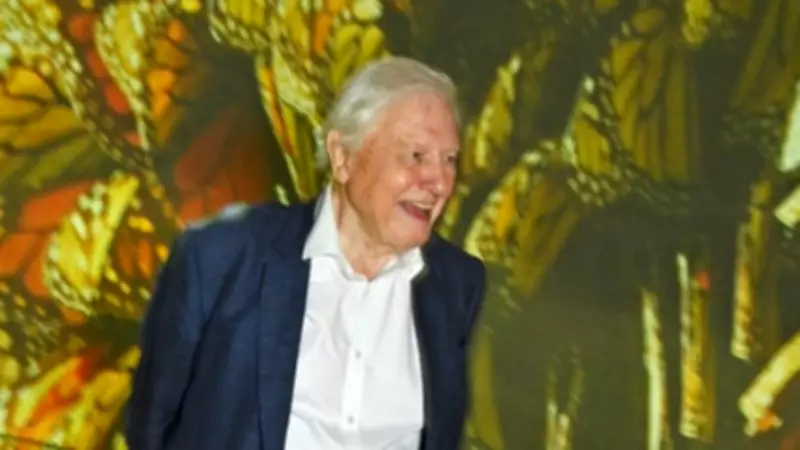
What do you give someone for their 100th birthday? For Sir David Attenborough, the answer is a tiny, unassuming parasitic wasp. Scientists have named a newly-discovered Chilean insect after the legendary naturalist to honor his century of life and work.
Discovery of Attenboroughnculus tau
Researchers at the Natural History Museum in London have identified a new genus and species of wasp, hidden for decades in museum collections. The insect, named Attenboroughnculus tau, was discovered during a detailed review of archived specimens. The species name tau refers to a distinctive T-shaped marking on its abdomen.
The naming coincides with Sir David's 100th birthday on May 8 and reflects his lasting influence on biodiversity science and public engagement with nature, according to researchers.
Inspiring a Generation of Scientists
Dr Gavin R Broad, principal curator of insects at the museum, said Attenborough's early documentaries shaped his career. "When I was far too young, I learned about taxonomy from David Attenborough's 'Life on Earth' series and resolved to be a taxonomist. Amazingly, I ended up a taxonomist, so I have Sir David to thank for that."
The wasp is exceptionally small, measuring just 3.5 millimeters. It was originally collected in 1983 in Chile's Valdivia Province but sat unidentified in museum collections for over 40 years. Volunteer Augustijn De Ketelaere spotted it as a new species during a review.
Unique Features and Scientific Significance
Further analysis revealed a unique combination of anatomical features, including a strongly curved abdominal segment, subtle tooth-like structures on its ovipositor, and distinctive wing and leg structures. These differences were significant enough to classify it as a new genus, increasing the number of known genera in its subfamily to just four.
Attenborough has previously highlighted parasitoid wasps in his documentaries, calling them 'body snatcher wasps' in The Trials of Life.
Importance of Museum Collections
Researchers say the find underscores the scientific value of museum collections, which continue to yield new discoveries long after specimens are collected. The museum is expanding digitization through its NHM Unlocked programme to improve access and support research into overlooked species.
To mark Sir David's centenary, the museum offers public displays, including the immersive exhibition Our Story with David Attenborough (running until August) and a bronze inscription in the gardens featuring one of his reflections on nature.
Jennifer Pullar, science communications manager and co-author, said: "We hope to inspire global scientists to take another look in their collections to see if there is something small that could contribute to our collective understanding and therefore the future of our natural world."
The research is published in the Journal of Natural History under the title "The description of a new genus of Pedunculinae (Hymenoptera: Ichneumonidae) from Chile and a key to the world genera."