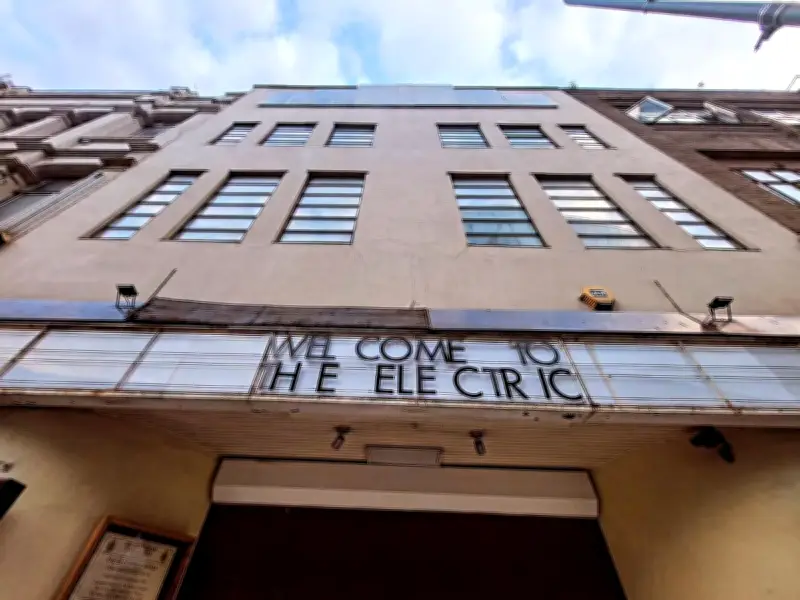
Birmingham City Council's Planning Committee is set to deliberate on Thursday, August 13, whether to include the shuttered Electric Cinema on its local heritage list. This move comes as part of a broader review of five 'cultural heritage sites' in the city, with the iconic Station Street venue among those under consideration.
What Does Local Listing Mean?
The council's local listing scheme currently encompasses over 440 sites across Birmingham. If approved, the Electric Cinema would join the likes of The Crown pub, another vacant Station Street establishment, on this register. According to the council, local listing serves as formal recognition of a site's significance at the local level, making it 'a material consideration within the planning process.' However, it is crucial to note that this designation does not confer statutory protection.
Despite this limitation, the council asserts that local listing 'assist[s] in identifying assets that make a positive contribution to Birmingham's historic environment.' This distinction is vital for residents and campaigners who have rallied for the cinema's preservation since its closure in February 2024.
Campaign for Protection Intensifies
Since the Electric Cinema ceased operations, a vocal campaign has emerged demanding its safeguarding for future generations. This year alone, firefighters were called to prevent the cinema's iconic sign from collapsing, while unsettling interior photographs captured by an urban explorer fueled concerns about the building's deteriorating condition.
The cinema's historical importance is undeniable: until its closure, it held the distinction of being the oldest working cinema in the country. Campaigners had hoped for a spot on the National Heritage List for England, but the Department for Culture, Media and Sport rejected that application. In contrast, The Crown pub, also on Station Street, enjoys national listing due to its music heritage—it was the venue where Black Sabbath first performed together and a launchpad for other notable Birmingham artists—yet it too remains closed and unused.
Other Sites Under Review
The Planning Committee's agenda for next week includes several other potential additions: Cherry Reds Cafe Bar on John Bright Street, The Gazette Buildings on Corporation Street, the medieval moat and Yardley Ridge and Furrow Earthworks at Old Yardley Park, and the Old Windmill pub on Dudley Road. Each site must satisfy at least one of six criteria for local listing: historic interest, architectural interest, archaeological interest, evidential value, communal value, group value, townscape value, or rarity.
Councillor Deborah Harries, cabinet member for culture, expressed enthusiasm: "It's great to see such a variety of sites being recommended for Birmingham's Local Heritage List, which reflect the city's architectural, cultural, social and industrial history. I'm especially pleased to see The Electric Cinema included as, until it closed in 2024, it was the oldest working cinema in the UK so played a vital role in our city's cultural heritage. This further underlines the council's commitment to recognising the significance of our city's heritage which is valued by our residents and communities."
The Electric Cinema's Rich History
Constructed in 1885 as the Birmingham Pantechnicon, the building was originally a furniture warehouse designed by William Wykes. It transitioned to a cinema in 1909, with Bertie Crewe, a prominent theatre architect, overseeing the conversion. Over the decades, it underwent several transformations, operating as the Tatler News Theatre from 1937, and later as the Select Picture House and the Jacey Cinema.
In a report prepared for the Planning Committee, Birmingham City Council highlights the building's significance: "Historic England identified the building as an important reminder of the history of Station Street, Birmingham's cinema heritage and the wider development of the city, concluding that its significance lies principally at the local rather than national level. Beyond its architectural and historic interest, the building possesses considerable communal and cultural significance through its longstanding role as a place of entertainment, social interaction and collective experience for generations of Birmingham residents."
The report further states: "For more than a century the cinema contributed to the cultural life of the city and forms part of the shared memory of successive communities who used the building for recreation and cultural participation. Its continued use as a cinema until 2024 created a rare continuity of function and reinforces its importance as a living part of Birmingham's entertainment heritage. The strong public response to its closure demonstrates the value attached to the building by local communities and highlights its significance as a landmark within Birmingham's cultural identity."
The council concludes: "The building therefore possesses strong communal, evidential, historic and townscape value, as well as significant intangible heritage value derived from the memories, traditions and cultural associations connected with over a century of cinema-going. It remains a rare survivor of Birmingham's early cinema heritage and an important component of the historic character of Station Street."
Impact and Next Steps
While local listing does not offer the same protection as national designation, it signals the council's acknowledgment of the Electric Cinema's importance. This recognition could influence future planning decisions, potentially encouraging preservation efforts. For campaigners and residents, the decision on August 13 will be a pivotal moment in the ongoing effort to secure the cinema's future.
As Birmingham continues to evolve, the fate of its historical landmarks remains a pressing concern. The Planning Committee's deliberations will not only determine the Electric Cinema's status but also reflect the city's broader commitment to preserving its heritage amidst urban development.