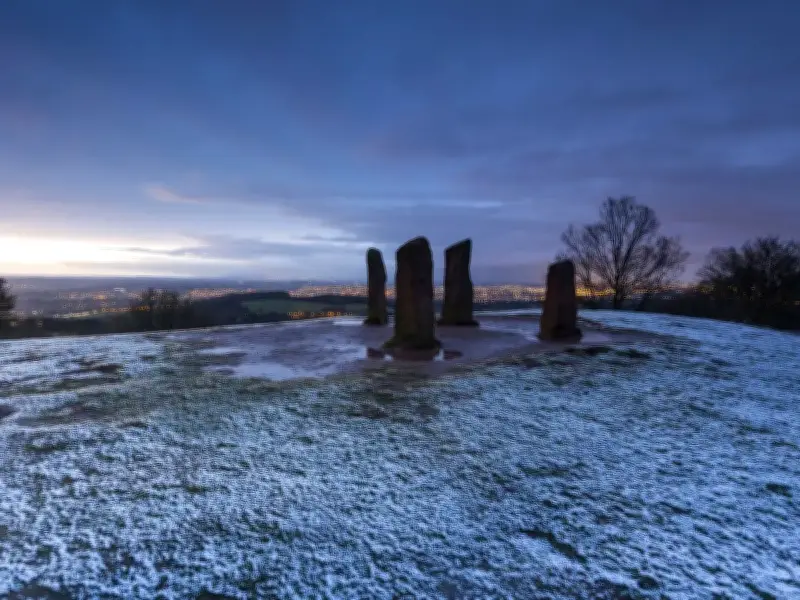
The Four Stones, a mysterious monument perched atop Clent Hill in Worcestershire, just 30 minutes from Birmingham, are actually an 18th-century folly rather than a prehistoric site. Commissioned by Lord George Lyttelton around 1763, the stones were designed as an ornamental feature for his estate at Hagley Hall, not as an ancient megalithic structure.
An Eccentric Nobleman's Vision
During the Georgian era, wealthy landowners like Lyttelton erected grand structures across their landscapes to craft romantic, picturesque vistas. The Four Stones were positioned so they could be admired from Hagley Hall down in the valley. Despite their resemblance to Stonehenge, they were purely decorative, serving as a focal point for the estate's scenic views.
Standing roughly 300 meters above sea level, the summit provides 360-degree panoramas. On clear days, visitors can see Birmingham and the Black Country in one direction, and the Shropshire Hills, Cotswolds, and Welsh borders in the other.
A Solstice Alignment and Popular Trails
While built as a folly, the stones are rumoured to align with the sunset during the summer solstice, drawing evening walkers to the site. Managed by the National Trust, the surrounding Clent Hills offer several miles of well-maintained footpaths, including the Buzzard Trail, which leads directly from the Nimmings Wood car park up to the stones.
Visitors can stop at the National Trust café at Nimmings Wood car park or enjoy coffee, breakfast, or light lunches at The Four Stones Coffee & Brunch near Adam's Hill.
Getting There and Nearby Amenities
By car, the Four Stones are about 30 to 40 minutes via the A456 (Hagley Road), heading southwest from Birmingham city centre. For those using public transport, the journey takes around 1 hour and 20 minutes: take a train from Birmingham New Street or Moor Street to Hagley station (about 30 minutes), then a 10-minute bus or taxi ride to the Clent Hills trailhead.
The National Trust manages the site, ensuring the paths remain accessible for walkers and history enthusiasts alike. Whether drawn by the solstice alignment or the panoramic views, the Four Stones offer a unique glimpse into Georgian landscape design.